
 TonightOnScreen Catalog
Explore Entertainment • Adventure
Search our curated catalog of cinema releases, binge-worthy series, and where to stream them.

Spider-Man: Across the Spider-Verse
Spider-Man: Across the Spider-Verse is an astonishing, visionary animated tour de force directed by Joaquim Dos Santos, Kemp Powers, and Justin K. Thompson, celebrated worldwide for redefining the aesthetic and emotional boundaries of the medium. Settling into his role as Brooklyn’s sole friendly neighborhood Spider-Man, teenager Miles Morales grapples with the suffocating burden of balancing high-school expectations, immigrant family anxieties, and isolating superhero secrecy. His world explodes with kaleidoscopic wonder when Gwen Stacy unexpectedly pays him a clandestine visit from Earth-65, drawing Miles into the boundless multidimensional nexus of the Spider-Society—an elite cross-dimensional union of hundreds of Spider-Heroes led by the brooding, dogmatic futuristic warrior Miguel O'Hara (Spider-Man 2099). Tasked with neutralizing cosmic 'anomalies' threatening the structural integrity of the multiverse, the Spider-Society battles 'The Spot', a formerly comical villain whose expanding dimensional portals threaten universal annihilation. However, when Miguel reveals that every Spider-Hero's existence is rigidly dictated by predetermined 'canon events'—inevitable tragic deaths of loved ones that cannot be averted without unraveling reality itself—Miles refuses to sacrifice his father to satisfy mathematical cosmic order. Fleeing through breathtaking, hand-painted parallel dimensions from futuristic Mumbattan to dystopian Nueva York while hunted by hundreds of his own kind, Miles declares independence over his own story, establishing an awe-inspiring manifesto on autonomy, family, and destiny.
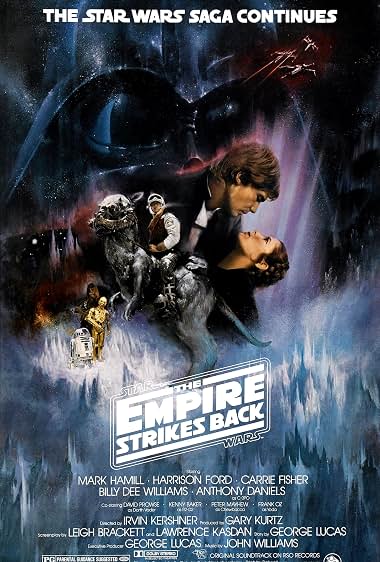
The Empire Strikes Back
Directed by Irvin Kershner under the visionary guidance of George Lucas, Star Wars: Episode V - The Empire Strikes Back is universally revered as the dark, operatic pinnacle of the entire Star Wars saga and the greatest science-fiction sequel in cinematic history. Following the destruction of the Death Star, the Galactic Empire retaliates with overwhelming brutality, forcing the Rebel Alliance into hiding on the desolate ice planet Hoth. When Darth Vader's Imperial fleet and towering AT-AT walkers assault the base, young Jedi hopeful Luke Skywalker (Mark Hamill) is guided by Obi-Wan Kenobi's spirit to the swamp world of Dagobah to be trained in the ancient ways of the Force by the diminutive, 900-year-old Jedi Master Yoda (Frank Oz's legendary puppetry). Meanwhile, Han Solo (Harrison Ford) and Princess Leia Organa (Carrie Fisher) navigate a perilous romance while escaping Imperial Star Destroyers through an asteroid field aboard the Millennium Falcon, seeking refuge in Cloud City under Han's old friend Lando Calrissian (Billy Dee Williams). Their betrayal delivers Han into carbonite freezing and lures Luke into a lethal lightsaber duel against Darth Vader in the bowels of Bespin, culminating in the most shocking, culture-shattering plot twist in film history: 'No, I am your father.' John Williams's 'The Imperial March' score completed this timeless, emotionally complex cinematic milestone.
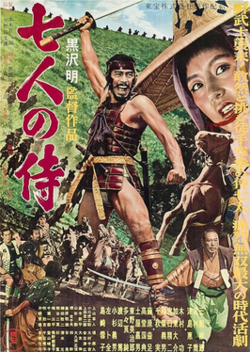
Seven Samurai
Seven Samurai is Akira Kurosawa's universally acclaimed, monumental cinematic masterpiece, widely revered as one of the greatest, most influential, and flawless films in world history, establishing the foundational grammar of modern ensemble action storytelling. Set in late sixteenth-century feudal Japan during the war-torn Sengoku period, a destitute, defenseless farming village learns that a merciless band of forty heavily armed mounted bandits plans to raid their hamlet and seize their entire autumn barley harvest. Facing inevitable starvation and slaughter, the desperate village elders decide to hire masterless samurai—ronin—to defend them, offering nothing as compensation except three daily meals of white rice. The villagers recruit Kambei Shimada, a wise, battle-weary veteran ronin of deep moral integrity who takes pity on their plight and orchestrates the strategic recruitment of six other warriors: his loyal disciple Katsushiro; the cheerful archer Gorobei; the amiable tactician Shichiroji; the stoic master swordsman Kyuzo; the resourceful wood-chopper Heihachi; and Kikuchiyo, a wildly erratic, boisterous rogue who claims samurai lineage but was born a destitute peasant. Over the weeks leading to the bandit assault, Kambei fortifies the village perimeter and trains the terrified peasants to fight with bamboo spears, while Kikuchiyo bridges the deep class resentment between the samurai and the mistrustful farmers. The climax erupts in a torrential, muddy downpour as the samurai and villagers wage a desperate, breathless battle against the bandits, culminating in profound victory tinged with tragic philosophical grief. Seven Samurai remains an immortal monument to human resilience and cinematic artistry.

Anbe Sivam
Directed by Sundar C. and brilliantly penned with philosophical genius and humanist wit by Kamal Haasan, Anbe Sivam (Love Is God, 2003) is universally cherished as one of the most culturally profound, intellectually stimulating, and emotionally touching masterpieces in the history of Indian cinema. Structured as an engaging road movie and ideological clash, the story begins at the flood-stranded Biju Patnaik Airport in Bhubaneswar, Odisha, where two completely opposite individuals are brought together by circumstance: Anbarasu (R. Madhavan in an exceptional comedic and dramatic turn), a handsome, arrogant, capitalistic commercial advertising director eager to return to Chennai for his lavish wedding, and Nallasivam 'Sivam' (Kamal Haasan in a sublime, physically transformative, and unforgettable performance), a scarred, limping, communist labor union leader with a paralyzed hand and a glass eye, possessing infectious optimism, wit, and empathy. When all flights and trains are canceled due to severe cyclonic floods, the reluctant duo embarks on an arduous, comical, and transformative journey across coastal India via buses, stranded freight trains, and ambulances. Through evocative flashbacks, Sivam's past is revealed: a charismatic, fiery street-theatre artist and revolutionary union activist who dared to fall in love with Balasaraswathi (Kiran Rathod), the daughter of a ruthless capitalist industrialist (Nassar), before surviving a horrific orchestrated bus crash that disfigured him. Touching upon communism, atheism, global capitalism, and human solidarity, Vidyasagar's poetic soundtrack and the tear-jerking climax at an Orissa train accident—where Sivam declares that anyone who wipes the tears of a dying fellow human being is God—cement Anbe Sivam as a timeless philosophical gem celebrating unconditional love.

Spirited Away
Written and directed by master animation auteur Hayao Miyazaki and produced by Studio Ghibli, the 2001 animated fantasy masterpiece Spirited Away broke all-time box office records in Japan and captured the Academy Award for Best Animated Feature, standing as one of the greatest animated films ever produced. The story follows Chihiro Ogino (Rumi Hiiragi), a sullen, 10-year-old girl moving to a new town with her parents. Stumbling upon an abandoned amusement park that reveals itself at twilight to be a realm of Kami (Shinto spirits), Chihiro's greedy parents gorge on spirit food and are cursed into giant pigs. Trapped in the mystical world, Chihiro is aided by the mysterious dragon-boy Haku (Miyu Irino) and secures a job at a colossal, opulent bathhouse for gods operated by the formidable sorceress Yubaba (Mari Natsuki), who steals Chihiro's name and renames her 'Sen.' Through hard work, empathy, and courage, Sen pacifies a polluted River Spirit, confronts the lonely, consuming phantom No-Face (Kaonashi), and learns to trust her inner strength to break Haku's curse and save her parents. Infused with Joe Hisaishi's breathtaking orchestral melodies, Spirited Away is a visual marvel of pure imagination.

Grave of the Fireflies
Grave of the Fireflies is a profoundly moving, devastating, and universally acclaimed animated war tragedy written and directed by Isao Takahata, standing as one of the most powerful anti-war cinematic statements ever created. Adapted from Akiyuki Nosaka's semi-autobiographical novella, the narrative opens in September 1945 at Sannomiya Station in Kobe, where Seita, an emaciated teenage boy, succumbs to starvation before his spirit reunites with his sweet four-year-old sister Setsuko, recounting the tragic events of their final months. During the horrific firebombing of Kobe by American B-29 bombers, their mother is fatally burned, and their father, an officer in the Imperial Japanese Navy, is lost at sea. Orphaned and homeless amidst the smoldering ruins of their city, Seita and Setsuko initially seek refuge with an emotionally distant, increasingly hostile aunt who begrudges their rations. Determined to preserve his sister's innocence and protect her from adult cruelty, proud Seita moves Setsuko into an abandoned, damp hillside bomb shelter, illuminating their cavernous dark nights by releasing dozens of luminous fireflies beneath their mosquito netting. However, as extreme wartime famine, isolation, and economic desperation grip the countryside, Setsuko slowly succumbs to severe malnutrition despite Seita's frantic, desperate efforts to forage and steal food amidst air raids. Handled with extraordinary empathy, poetic realism, and gut-wrenching emotional purity, Grave of the Fireflies serves as an indelible, heartbreaking monument to the innocent child victims of warfare and the fragile, enduring bonds of sibling love.
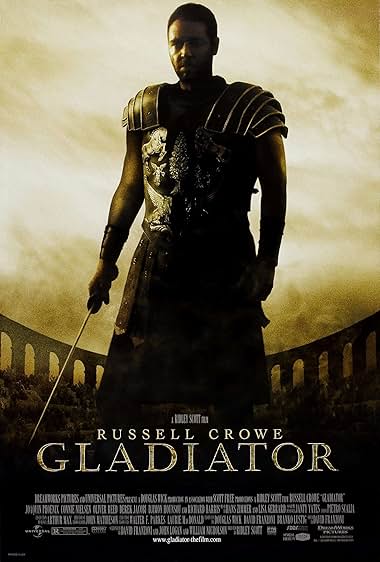
Gladiator
Ridley Scott's colossal historical epic Gladiator revived the long-dormant sword-and-sandal genre with monumental visceral power, grand philosophical gravitas, and operatic emotional resonance. Russell Crowe delivers a career-defining, Oscar-winning performance as General Maximus Decimus Meridius, the brilliant, fiercely loyal commander of the Roman Northern Armies who leads Rome to victory against Germanic tribes in 180 AD. The dying Emperor Marcus Aurelius (Richard Harris) intends to appoint Maximus as protector of Rome to restore the Republic, inciting the murderous jealousy of his corrupt, narcissistic son Commodus (a chilling, Oscar-nominated turn by Joaquin Phoenix). After Commodus murders his father, usurps the throne, and executes Maximus's beloved wife and child, Maximus is sold into slavery and trained as a gladiator in North Africa under the battle-hardened Proximo (Oliver Reed). Rising through the ranks of the Colosseum with unmatched combat prowess and stoic fury, Maximus captivates the Roman plebeians and confronts the Emperor directly in an iconic quest for retribution and justice. Winner of five Academy Awards including Best Picture and powered by Hans Zimmer and Lisa Gerrard's haunting, ethereal musical score, Gladiator remains an undisputed titan of 21st-century cinema.

Inglourious Basterds
Quentin Tarantino's revisionist historical war masterpiece Inglourious Basterds is a dialogue-driven, pulse-pounding alternate-history triumph that famously rewrites the end of World War II inside a Parisian cinema. In Nazi-occupied France, Jewish refugee Shosanna Dreyfus (Mélanie Laurent) witnesses the massacre of her family by the urbane, terrifying SS Colonel Hans Landa (Christoph Waltz, who swept every major acting award on earth, including the Oscar and Cannes Best Actor). Fleeing to Paris, Shosanna assumes a new identity as a cinema proprietor and plots a lethal trap when Nazi high command selects her theater to premiere Joseph Goebbels' propaganda epic. Simultaneously, Lieutenant Aldo Raine (Brad Pitt) leads the 'Basterds'—a ruthless commando squad of Jewish-American soldiers who scalp Nazis and strike terror through the Reich. Collaborating with British intelligence officer Archie Hicox (Michael Fassbender) and German movie star double-agent Bridget von Hammersmark (Diane Kruger), the two revenge plots converge in a blazing, silver-nitrate inferno. Boasting legendary masterclass suspense scenes like the opening French farmhouse interrogation and the subterranean tavern card game, Inglourious Basterds is an unmissable cinematic triumph.

Avengers: Endgame
Directed by Anthony and Joe Russo, Marvel Studios' monumental superhero event Avengers: Endgame served as the breathtaking culmination of the 22-film Infinity Saga, shattering global box office records with an unprecedented $2.799 billion worldwide haul. Picking up in the devastating aftermath of Thanos's (Josh Brolin) catastrophic snap that eradicated fifty percent of all living creatures in the universe, the surviving, grief-stricken Avengers—Tony Stark / Iron Man (Robert Downey Jr.), Steve Rogers / Captain America (Chris Evans), Thor (Chris Hemsworth), Bruce Banner / Hulk (Mark Ruffalo), Natasha Romanoff / Black Widow (Scarlett Johansson), and Clint Barton / Hawkeye (Jeremy Renner)—are shattered. Five years later, the unexpected reappearance of Scott Lang / Ant-Man (Paul Rudd) from the Quantum Realm ignites an audacious glimmer of hope: a desperate, high-stakes 'Time Heist' to retrieve the Infinity Stones from past timelines. The narrative weaves an emotionally powerful victory lap through Marvel Cinematic Universe history, culminating in an awe-inspiring, stadium-shaking final battle at the ruined Avengers compound where generations of resurrected heroes assemble. Powered by Alan Silvestri's triumphant score and Robert Downey Jr.'s tear-jerking, sacrificial finale, Endgame stands as an unprecedented cultural milestone in blockbuster entertainment.

Manjummel Boys
Written and directed by Chidambaram and produced by Parava Films, 2024's Malayalam survival thriller Manjummel Boys created historic box office history, grossing over ₹242 crore worldwide to become the highest-grossing Malayalam film of all time and a cross-cultural cinematic sensation across India. Based on a miracle real-life incident that occurred in 2006, the film follows a tight-knit group of eleven working-class young men from the small town of Manjummel near Kochi, Kerala, who embark on a spirited road trip to the scenic misty hill station of Kodaikanal in Tamil Nadu. Led by the mature, responsible Siju David, affectionately known as 'Kuttan' (Soubin Shahir in a deeply moving, career-defining performance of ordinary heroism and devotion), the friends venture into the restricted, dangerous Guna Caves—infamously known as the 'Devil's Kitchen', where more than a dozen individuals had previously fallen to their deaths with zero successful rescues. Disaster strikes when the free-spirited Subhash (Sreenath Bhasi) slips into a hidden, pitch-black, subterranean crevice plunging over 120 feet into the earth. Faced with callous local police, hostile jurisdiction barriers, and torrential rain threatening to drown Subhash in the cavern, the Manjummel boys refuse to abandon their friend. In an act of unparalleled, heart-stopping courage, Kuttan volunteers to be tied to a frayed rope and lowered headfirst into the pitch-black abyss. Featuring Shyju Khalid's breathtaking naturalistic cinematography and Sushin Shyam's evocative score—culminating in the goosebump-inducing use of Ilaiyaraaja's 'Kanmani Anbodu'—Manjummel Boys is an unforgettable masterpiece on friendship and sacrifice.

Ran
Ran is Akira Kurosawa's colossal, operatic, and visually magnificent historical war tragedy, adapting William Shakespeare's King Lear into sixteenth-century feudal Japan to create one of the most breathtaking spectacles in cinematic history. The narrative focuses on Lord Hidetora Ichimonji, an aging, ruthless warlord who has spent fifty brutal years carving out a powerful domain through slaughter, treachery, and iron conquest. Believing his empire to be secure, Hidetora summons his three sons—Taro, Jiro, and Saburo—to a boar hunt and abruptly announces his abdication, dividing his three fortified castles among them while retaining his royal titles and private retinue. When his fiercely honest youngest son, Saburo, bravely warns that his brothers' professed loyalty is fraudulent and that betrayal will inevitably tear the realm apart, an enraged Hidetora disowns and exiles him. Hidetora's tragic folly is soon made apparent: Taro and Jiro swiftly turn on their father, stripping him of his retinue and driving him into humiliating exile. Prompted by Taro's vengeful, manipulative wife Lady Kaede, whose family Hidetora had previously butchered, the brothers launch a catastrophic, fire-drenched siege against Hidetora's third castle, driving the once-mighty patriarch into howling, disoriented madness as his samurai are massacred. Featuring thousands of costumed extras, unforgettable color-coded armies of yellow, red, and blue clashing across smoking volcanic slopes, and a devastating meditation on the cyclical nature of human cruelty and divine indifference, Ran is a monumental masterpiece of world cinema.

Howl's Moving Castle
Howl's Moving Castle is a visually sumptuous, romantic, and whimsical fantasy adventure directed by Hayao Miyazaki, adapting Diana Wynne Jones's classic novel into an imaginative animated spectacle of magic, love, and pacifism. The storyline introduces Sophie Hatter, a modest, unassertive eighteen-year-old girl working diligently in her late father's millinery boutique in a fictional European-style kingdom teetering on the precipice of an escalating, catastrophic war. Following an impromptu encounter in town with Howl, a dashing, flamboyant, and intensely sought-after wizard, Sophie attracts the jealousy of the spiteful Witch of the Waste, who casts a malevolent spell that transforms Sophie into a frail, ninety-year-old woman. Leaving her home to escape pity, Sophie journeys into the windswept Wastes and seeks refuge aboard Howl's walking castle, a fantastical, steampunk colossus powered by Calcifer, a sarcastic and bound fire demon who makes a clandestine pact with Sophie to break her curse if she helps free him from Howl's servitude. Settling into the chaotic household as an outspoken cleaning woman, Sophie forms deep familial bonds with Calcifer and Howl's young apprentice Markl, while discovering Howl's deep emotional fragility, vanity, and harrowing physical transformations into a monstrous bird-beast as he recklessly resists both warring nations' summons to participate in meaningless aerial devastation. Through mutual devotion, bravery, and unconditional compassion, Sophie and Howl heal each other's emotional wounds and dismantle the destructive curse of warfare. With breathtaking hand-drawn art, romantic charm, and Joe Hisaishi's waltz compositions, the film is an unforgettable celebration of inner beauty.