
 TonightOnScreen Catalog
Explore Entertainment • Drama
Search our curated catalog of cinema releases, binge-worthy series, and where to stream them.
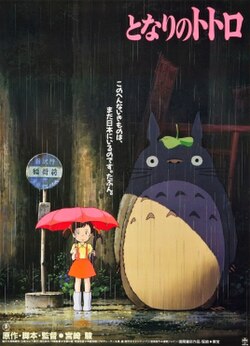
My Neighbor Totoro
My Neighbor Totoro is an enchanting, timelessly heartwarming animated masterpiece written and directed by Hayao Miyazaki, capturing the pure magic of childhood wonder and the healing embrace of the natural world with unmatched emotional resonance. Set in pastoral, postwar rural Japan during the 1950s, the story centers on ten-year-old Satsuki and her spirited four-year-old sister Mei, who move with their scholarly father into an eccentric, weathered country house to be closer to the convalescent rural hospital where their mother is recovering from long-term tuberculosis. As the energetic sisters explore their sunlit, sprawling surroundings, they uncover that the ancient, overgrown camphor tree and surrounding forests are inhabited by playful sootsprites and friendly, unseen forest spirits. While chasing a tiny creature through a briar maze, curious young Mei falls deep into the hollow of the giant camphor tree and meets Totoro, a towering, furry, and benevolent ancient forest spirit with a roaring yawn. Soon, Satsuki joins Mei in encountering Totoro during a poignant, rainy evening at a forest bus stop, witnessing him summon a magnificent, multi-legged feline Catbus that zips effortlessly across telephone wires. When an alarming hospital telegram creates panic and little Mei goes missing while trying to bring fresh garden corn to her ailing mother, Satsuki turns to Totoro and the supernatural spirits of the woods to reunite their family. Universally celebrated for its gentle pacing, evocative watercolors of Japanese countryside, and deep emotional sincerity, My Neighbor Totoro remains one of the most beloved and culturally iconic family treasures in cinematic history.

Logan
Logan, directed with somber, unsparing brilliance by James Mangold, is an Oscar-nominated neo-Western masterpiece and one of the most mature, critically revered comic-book adaptations ever crafted. Set in a bleak, sun-bleached 2029 where mutantkind has been driven to near extinction and no new mutants have been born in over twenty-five years, an aging, weary Logan (Wolverine) works as a hired limousine driver along the Mexican border under his birth name, James Howlett. His adamantium skeleton is slowly poisoning his biological system, degrading his legendary regenerative healing factor and leaving him wracked by chronic pain and alcoholism. Hiding out in an abandoned smelting plant, Logan cares for an ailing, nonagenarian Charles Xavier (Professor X), whose deteriorating telepathic brain suffers violent, fatal seizures that threaten anyone within miles. Logan’s desperate, reclusive dream of purchasing a boat to live out their twilight days at sea is shattered when a desperate nurse begs him to smuggle Laura—an eleven-year-old mute girl possessing adamantium claws and vicious feral reflexes engineered from Logan's own genetic code—to a rumored mutant sanctuary in North Dakota called Eden. Relentlessly pursued by Donald Pierce and his cybernetically enhanced paramilitary Reavers, Logan is forced on a cross-country odyssey of brutal violence and profound emotional awakening. Stripped of comic-book grandeur and grounded by Hugh Jackman’s career-defining farewell performance, Logan is a poetic, heartbreaking meditation on mortality, trauma, family, and redemption.

Dil Chahta Hai
Written and directed by Farhan Akhtar in a historic directorial debut that permanently transformed modern Hindi cinema, Dil Chahta Hai (The Heart Yearns, 2001) won the National Film Award for Best Feature Film in Hindi and two Filmfare Awards, universally hailed as the definitive coming-of-age cultural touchstone for urban Indian youth. Shattering the melodramatic tropes and traditional conventions of Bollywood, the film brought authentic conversational dialogue, chic western fashion, contemporary humor, and emotional maturity to the screen. The narrative chronicles the enduring bond and subsequent emotional fracturing of three inseparable wealthy Mumbai college graduates: Akash Malhotra (Aamir Khan in an iconic goatee and charmingly cynical persona who disbelieves in true love), Sameer (Saif Ali Khan in a career-redefining, delightfully vulnerable comic turn who falls in love at the drop of a hat), and Siddharth 'Sid' Sinha (Akshaye Khanna in a deeply sensitive, poetic, and National Award-worthy dramatic masterclass). Following a legendary, celebratory road trip to the scenic ruins of Chapora Fort in Goa—which permanently turned Goa into an essential pilgrimage site for Indian youth—the trio's carefree fraternity fractures as adult realities intrude. Akash is dispatched to Sydney, Australia, to manage his family's business, where he unexpectedly falls deeply in love with Shalini (Preity Zinta in a radiant, progressive performance). Meanwhile, Sid shocks his family and friends by falling in love with Tara Jaiswal (Dimple Kapadia), an older, divorced alcoholic interior designer, leading to a bitter confrontation with Akash. Featuring Shankar-Ehsaan-Loy's fresh pop-rock soundtrack and Ravi K. Chandran's glossy cinematography, Dil Chahta Hai is an immortal celebration of youthful brotherhood, love, and maturity.
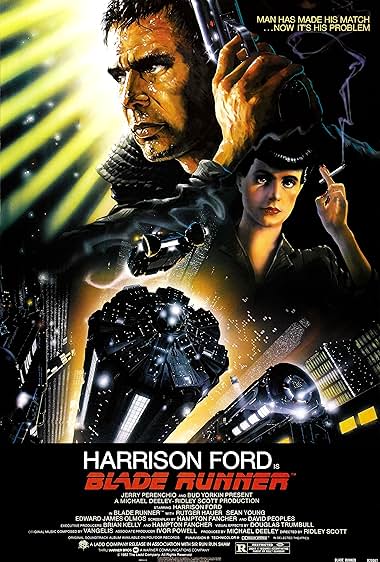
Blade Runner
Directed by Ridley Scott and adapted from Philip K. Dick's seminal 1968 novel Do Androids Dream of Electric Sheep?, the original 1982 cyberpunk sci-fi noir masterpiece Blade Runner fundamentally revolutionized modern cinema's visual grammar, setting the definitive aesthetic blueprint for dystopian futurism, industrial neo-noir, and existential science fiction. Set in the perpetually rain-slicked, smog-choked, and neon-drenched vertical megalopolis of Los Angeles in November 2019, the narrative follows world-weary former police detective Rick Deckard (Harrison Ford in a moody, cynical, and emotionally complex performance). Deckard is forcibly pulled out of retirement as a specialized 'Blade Runner'—a government operative tasked with tracking down and 'retiring' four rogue Nexus-6 bioengineered humanoid replicants who have violently escaped an off-world slave colony to seek out their creator, Dr. Eldon Tyrell, in a desperate quest to extend their programmed four-year lifespans. As Deckard conducts psychological Voight-Kampff empathy tests and falls in love with Tyrell's experimental replicant assistant Rachael (Sean Young), the moral boundary between synthetic life and authentic humanity dissolves into ambiguity. Deckard's hunt leads to a harrowing nocturnal duel across the crumbling architecture of the Bradbury Building against replicant leader Roy Batty (Rutger Hauer in an unforgettable, poetic tour de force). Spared by Batty in his final moments, Deckard listens to the immortal 'Tears in rain' monologue: 'I've seen things you people wouldn't believe... All those moments will be lost in time, like tears in rain. Time to die.' Scored by Vangelis's iconic synthesizer soundscapes and framed by Jordan Cronenweth's chiaroscuro lighting, Blade Runner remains a peerless philosophical meditation on mortality, memory, and the human soul.

Karnan
Written and directed by visionary filmmaker Mari Selvaraj in his second directorial triumph and produced by Kalaipuli S. Thanu, 2021's Tamil action drama Karnan is widely celebrated as one of the most powerful, visually poetic, and politically urgent masterpieces in modern Indian cinema, loosely inspired by the real-life 1995 Kodiyankulam caste violence in rural southern Tamil Nadu. Set in the barren, sun-scorched landscape of Podiyankulam, an oppressed, marginalized Dalit village, the community is subjected to systemic indignity and economic strangulation by the refusal of authorities and adjacent dominant-caste villages to grant them a bus stop, forcing schoolgirls and laborers to endure daily harassment. The village finds its fiery, mythic savior in Karnan (superstar Dhanush in an astonishing, physically monumental performance of righteous fury, vulnerability, and heroic stature), a rebellious young youth waiting for military recruitment who refuses to bow his head to institutional humiliation. When a pregnant village girl collapses after a passing bus refuses to stop, Karnan and the village youth pelt the bus with stones, sparking a retaliatory crackdown orchestrated by ruthless, casteist district police officer Kannabiran (Natty Natraj in a chilling villainous turn). Karnan rises with ancestral sword in hand, aided by his loving elderly mentor Yaeman (veteran actor Lal in an unforgettable, emotionally grounding performance) and his beloved Draupadi (Rajisha Vijayan), transforming his people's defense into an epic stand for human dignity and constitutional rights. Packed with striking metaphorical folk allegories—a headless statue, a sacrificial horse, a tied-up donkey symbolizing oppression, and a child wearing the mask of Goddess Kattu Pechi—Santhosh Narayanan's soul-stirring folk soundtrack ('Kandaa Vara Sollunga') and Theni Eswar's cinematography make Karnan an immortal milestone.

Trainspotting
Directed with kinetic, hyper-stylized brilliance by Danny Boyle and adapted by John Hodge from Irvine Welsh's gritty 1993 cult novel, Trainspotting (1996) stands as a watershed cultural phenomenon that revolutionized British cinema, grossing over $72 million on an economical budget and earning an Academy Award nomination for Best Adapted Screenplay. Set against the economically depressed urban wasteland of late-1980s Edinburgh, Scotland, the film plunges into the chaotic, hedonistic, and tragic subculture of heroin addiction. Ewan McGregor delivers a magnetic, career-launching breakthrough performance as Mark Renton, an intelligent, cynical twenty-something youth who has consciously chosen to reject the banal consumerist conventions of mainstream bourgeois society in favor of the ecstatic chemical euphoria of narcotics. Narrated with dark, biting Scottish humor and opening with the immortal 'Choose Life' manifesto scored to Iggy Pop's pulsating anthem 'Lust for Life', Renton navigates his chaotic existence alongside a dysfunctional circle of eccentric companions: amiable, dim-witted Spud (Ewen Bremner), suave James Bond-obsessed womanizer Sick Boy (Jonny Lee Miller), clean-cut athletic doomed athlete Tommy (Kevin McKidd), and the terrifyingly volatile, psychopathic alcoholic Francis Begbie (Robert Carlyle in an unforgettable, explosive performance). Through surreal visual set pieces—including Renton diving into 'The Worst Toilet in Scotland' to retrieve opium suppositories and enduring a nightmarish, hallucinatory cold-turkey withdrawal featuring a ceiling-crawling dead infant—Boyle balances exhilarating stylistic energy with unflinching tragic horror. Featuring an iconic Britpop and electronic soundtrack (Underworld's 'Born Slippy .NUXX', Brian Eno, Lou Reed), Trainspotting is an immortal masterpiece of youthful alienation and survival.
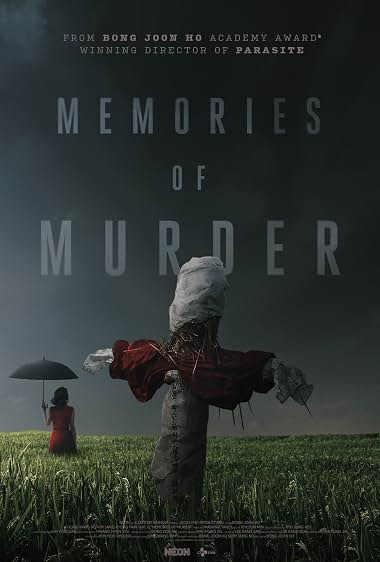
Memories of Murder
Directed by South Korean auteur Bong Joon-ho and co-written with Shim Sung-bo, Memories of Murder (Salinui chueok, 2003) is universally revered by critics and filmmakers as one of the finest, most atmospheric, and psychologically devastating crime procedurals in the history of world cinema, widely cited by David Fincher and Quentin Tarantino as an enduring benchmark for murder mysteries. Based on the real-life Hwaseong serial murders—Korea's first recorded serial killings between 1986 and 1991—the film is set in the rural province of Gyeonggi against the oppressive, rain-soaked backdrop of South Korea's decaying military dictatorship. The investigation is initially spearheaded by bungling, hot-tempered local detective Park Doo-man (superstar Song Kang-ho in a nuanced, layered masterclass blending buffoonery with growing existential dread), who relies on physical intuition, shamanistic superstitions, and violent custodial torture to force coerced confessions out of mentally disabled suspects. Desperate for professional help, the department brings in modern, analytical Seoul detective Seo Tae-yoon (Kim Sang-kyung), who meticulously pieces together empirical clues, discovering that the phantom killer only strikes on rainy nights, targeting women dressed in red while requesting a specific melancholic pop song on the radio. As the body count mounts and forensic evidence is repeatedly contaminated by incompetence and lack of modern DNA testing facilities, the detectives' rational facades disintegrate into madness and despair. Culminating in the unforgettable, haunting final freeze-frame where Song Kang-ho stares directly into the camera lens—staring directly into the eyes of the real killer who might be sitting in the theater—Memories of Murder is an unsparing, poetic tragedy on institutional failure, memory, and the banality of evil.
Chak De! India
Directed by Shimit Amin, written by Jaideep Sahni, and produced by Yash Raj Films, Chak De! India (2007) is universally hailed as the greatest sports drama in the history of Indian cinema, winning the National Film Award for Best Popular Film Providing Wholesome Entertainment. Shah Rukh Khan delivers a stripped-down, career-best performance devoid of romantic tropes as Kabir Khan, a disgraced former captain of the Indian men's national field hockey team who was falsely accused of match-fixing against Pakistan in a World Cup final. Seven years later, carrying the agonizing weight of public condemnation and questioned patriotism, Kabir takes on the seemingly hopeless position of head coach for the neglected, underfunded Indian women's national field hockey team. Kabir inherits a divided squad of 16 young women from diverse linguistic, regional, and socioeconomic backgrounds across India, plagued by ethnic prejudice, petty rivalries, and low self-esteem. Through uncompromising physical discipline, tactical acumen, and his famous 'Sattar Minute' (Seventy Minutes) inspirational locker-room monologue, Kabir welds them into a cohesive, united national unit, guiding them to the World Cup in Melbourne, Australia to conquer world hockey giants. Celebrating female empowerment, secular unity, and national pride, Chak De! India remains an evergreen cultural phenomenon and timeless cinematic classic.

Indian
Directed by S. Shankar, the 1996 vigilante action thriller Indian (Hindustani) made history as India's official submission for the Best Foreign Language Film at the 69th Academy Awards, winning three National Film Awards including Best Actor for Kamal Haasan. Haasan delivers an immortal, prosthetic-laden double performance as Senapathy, a 70-year-old former veteran of Subhas Chandra Bose's Indian National Army (INA), and his corrupt modern son Chandrabose. Living in Chennai, Senapathy is sickened by the systemic cancer of bribery and administrative corruption that poisons public healthcare, transport, and police services, leading to the tragic death of his daughter Kasturi. Utilizing the ancient, lethal martial art of Varma Kalai (pressure point strikes that paralyze or kill), Senapathy launches an unyielding vigilante crusade, assassinating corrupt municipal commissioners, doctors, and treasury clerks on live television. The moral tragedy peaks when Senapathy discovers his own son Chandrabose took bribes that resulted in a fatal school bus brake failure, forcing the father to hunt down his own child in the name of justice. With A. R. Rahman's legendary score, Indian remains a monumental masterpiece.

Omkara
Directed by Vishal Bhardwaj, the 2006 crime tragedy Omkara adapted Shakespeare's Othello into the rustic, gun-toting hinterlands of Western Uttar Pradesh with ferocious authenticity and literary brilliance, winning three National Film Awards. Ajay Devgn stars with smoldering intensity as Omkara 'Omi' Shukla, an outlaw gang leader and political enforcer for corrupt local politician Bhaisaab (Naseeruddin Shah). Omi elopes with the fair, innocent Dolly Mishra (Kareena Kapoor Khan in an acclaimed performance of Desdemona). When Omi promotes the educated, loyal Kesu Firangi (Vivek Oberoi as Cassio) over his faithful, limping lieutenant Ishwar 'Langda' Tyagi (Saif Ali Khan in a career-defining, historic performance of Iago), Langda's ego is mortally wounded. Langda plots a venomous psychological revenge, using an embroidered bridal waistband (kamarbandh) to convince the deeply insecure Omi that Dolly is having an illicit affair with Kesu. Driven to madness by the green-eyed monster of jealousy, Omi suffocates his beloved on their wedding bed before discovering the truth too late. Featuring Saif's unhinged genius and the iconic dance track 'Beedi Jalaile', Omkara is an undisputed classic.
Maqbool
Vishal Bhardwaj's 2003 crime masterpiece Maqbool kicked off his legendary Shakespearean trilogy by brilliantly adapting Macbeth into the ruthless, superstitious Mumbai underworld. Irrfan Khan delivers a career-defining, tour de force performance as Miyan Maqbool, the loyal, right-hand enforcer of aging underworld don Jahangir Khan, known respectfully as 'Abbaji' (Pankaj Kapur in a National Film Award-winning masterclass in understated power and casual menace). Maqbool is secretly in love with Nimmi (Tabu in an unforgettable, seductive turn as Lady Macbeth), Abbaji's young mistress. Nimmi insidiously fuels Maqbool's ambition, urging him to murder Abbaji in his bed and seize the syndicate. Two corrupt, astrology-obsessed police inspectors, Pandit and Purohit (Om Puri and Naseeruddin Shah playing the legendary Three Witches), predict that Maqbool will indeed take over the empire, but his reign will end in blood. When Maqbool executes the assassination, he is consumed by guilt, visual hallucinations, and the mutiny of loyal gang members. Maqbool established Vishal Bhardwaj and Irrfan Khan as titans of realistic Indian cinema. With unforgettable turns by Pankaj Kapur as the ruthless underworld don Jahangir Khan (Abbaji) and Tabu as the seductive Nimmi, Maqbool proved that classical literary tragedy could seamlessly illuminate the gritty realities of Mumbai's underworld, becoming a timeless classic of contemporary world cinema.
Article 15
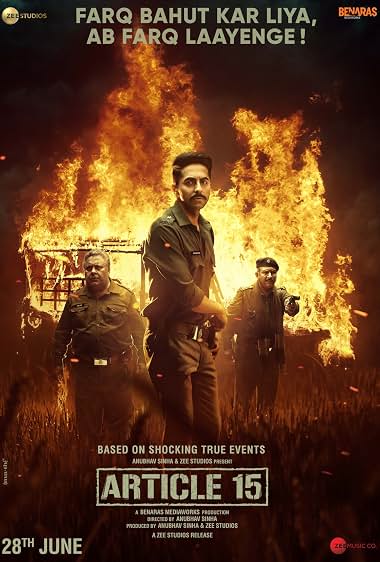
Anubhav Sinha's hard-hitting 2019 crime procedural drama Article 15 stands as one of the most courageous, socially provocative, and critically lauded films in modern Hindi cinema, winning three Filmfare Awards. Inspired by true events, the film stars Ayushmann Khurrana as Ayan Ranjan, a privileged, foreign-educated IPS officer who receives his first posting in the rural hinterlands of Lalgaon, Uttar Pradesh. When two teenage Dalit girls are found gang-raped and hanged from a banyan tree, local subordinate officers—led by the deeply corrupt, casteist Circle Officer Brahmadutt Singh (Manoj Pahwa) and Jatav officer Nishad (Zeeshan Ayyub)—attempt to cover up the crime as an honor killing to protect high-caste landlords. Horrified by the entrenched, dehumanizing caste hierarchy that dictates who can touch whom or draw water from which well, Ayan invokes Article 15 of the Indian Constitution, which prohibits discrimination on grounds of religion, race, caste, sex, or place of birth. Navigating swampy fields, political threats, and departmental apathy, Ayan leads a tireless manhunt for a missing third victim, delivering an unsparing, searing indictment of institutional caste prejudice. Anubhav Sinha's uncompromising directorial vision, Ewan Mulligan's gritty cinematography, and Ayushmann Khurrana's measured intensity make Article 15 a watershed moment in socially conscious Indian cinema that confronts prejudice with unflinching honesty.