
 TonightOnScreen Catalog
Explore Entertainment • Drama
Search our curated catalog of cinema releases, binge-worthy series, and where to stream them.

The Lord of the Rings: The Two Towers
The middle chapter of Peter Jackson's immortal Tolkien saga, The Lord of the Rings: The Two Towers, masterfully deepened the emotional stakes, dark atmospheric tension, and visual ambition of the fantasy epic, grossing nearly $950 million worldwide and winning two Academy Awards. Following the fracturing of the Fellowship, the narrative splits across three perilous journeys. Frodo Baggins (Elijah Wood) and Samwise Gamgee (Sean Astin) trek into the dead marshes, captured by the tragic, schizophrenic creature Gollum / Sméagol (Andy Serkis in a historic, motion-capture revolution that permanently transformed modern visual effects acting). Across the plains of Rohan, Aragorn (Viggo Mortensen), Legolas (Orlando Bloom), and Gimli track captured hobbits Merry and Pippin, reuniting with the resurrected Gandalf the White (Ian McKellen) to free King Théoden of Rohan (Bernard Hill) from the dark sorcery of Saruman's treacherous spy Gríma Wormtongue. The narrative converges on the legendary, rain-swept Siege of Helm's Deep—a 40-minute nocturnal battle masterpiece featuring 10,000 Uruk-hai soldiers that remains the gold standard of cinematic siege warfare. Infused with Howard Shore's evocative Hardanger fiddle themes, ancient walking Ents razing Isengard, and Samwise's stirring monologue on why stories matter, The Two Towers is a colossal, emotionally resonant cinematic triumph.

The Last of Us
Co-created by Craig Mazin (Chernobyl) and Neil Druckmann (creator of the original Naughty Dog video game), HBO's post-apocalyptic drama The Last of Us shattered the long-standing 'video game adaptation curse,' earning universal critical acclaim and 24 Primetime Emmy nominations. Twenty years after a mutated Cordyceps fungal pandemic collapses modern civilization, turning infected humans into feral, blind monstrosities known as Clickers, the world is reduced to brutal military quarantine zones and lawless wilderness. Pedro Pascal delivers a raw, soul-stirring performance as Joel Miller, a hardened, traumatized black-market smuggler haunted by the murder of his daughter during the initial outbreak. Joel is tasked by rebel Firefly leader Marlene with a perilous cross-country smuggling mission: escorting Ellie (Bella Ramsey in a breakthrough, powerhouse performance), a defiant 14-year-old orphan who is mysteriously immune to the fungal infection and may hold the secret to a cure. As the surrogate father-daughter pair trek across an overgrown, ruined America, facing cannibalistic raiders and fungal horrors, their bond deepens into a fierce, heartbreaking love that culminates in an agonizing moral crossroads, cementing the series as an emotional landmark.

Forrest Gump
Robert Zemeckis's 1994 phenomenon Forrest Gump is a deeply moving, heartwarming, and technologically groundbreaking modern American fable that captured global hearts and dominated the 67th Academy Awards. Tom Hanks delivers an iconic, deeply empathetic performance as Forrest Gump, a gentle, kind-hearted man from Greenbow, Alabama with an IQ of 75 and an extraordinary capacity for unconditional love. Sitting on a bus stop bench with a box of chocolates, Forrest recounts his wondrous life story to strangers, revealing how his innocence and sheer physical speed propelled him through three pivotal decades of tumultuous 20th-century American history. From college football stardom to the bloody jungles of Vietnam alongside his devoted friend Bubba and the cynical Lieutenant Dan Taylor (Gary Sinise), to ping-pong diplomacy in China, Watergate, and founding the Bubba Gump Shrimp Company, Forrest touches historic moments without losing his purity. Through it all, his compass remains his troubled childhood sweetheart Jenny Curran (Robin Wright), whose wanderings mirror the turbulent counterculture era. Winner of six Oscars including Best Picture, Director, and Actor, Forrest Gump remains a timeless triumph of hope, loyalty, and human kindness.
Nayakan
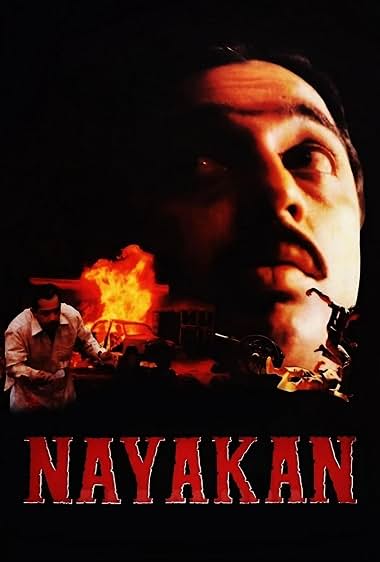
Written and directed by maestro Mani Ratnam and starring the legendary Kamal Haasan in an earth-shattering tour de force, Nayakan (1987) was India's official entry for the 60th Academy Awards, won three National Film Awards including Best Actor for Kamal Haasan and Best Cinematography for P.C. Sreeram, and was included in TIME Magazine's prestigious list of the All-Time 100 Greatest Movies. Drawing inspiration from Francis Ford Coppola's The Godfather and the real-life saga of legendary Mumbai underworld don Varadarajan Mudaliar, the film follows Sakthivelu 'Velu' (Kamal Haasan), an orphaned boy from Tamil Nadu who flees to the sprawling slums of Dharavi in Bombay after witnessing the murder of his union-leader father by corrupt police. Adopted by a Muslim smuggling family, Velu grows up witnessing the daily extortion, police brutality, and institutional neglect suffered by poor south Indian migrant communities in Mumbai. When an honest elderly resident is killed in custody, Velu retaliates by executing the corrupt police inspector, instantly becoming a revered Robin Hood-like savior, patriarch, and underworld don known as 'Velu Naicker'. Velu establishes a parallel court of justice, distributing wealth, shielding the oppressed, and funding healthcare and education. However, his life of violence demands a devastating moral and personal toll, resulting in the tragic murder of his beloved wife and the bitter alienation of his daughter Charumathi, who despises his criminal empire. Culminating in an emotionally shattering, ambiguous courtroom climax where his innocent young grandson asks: 'Are you a good man or a bad man?', and Velu tearfully whispers 'I don't know', Ilaiyaraaja's immortal soundtrack ('Thenpandi Cheemayile') and P.C. Sreeram's chiaroscuro lighting cement Nayakan as an immortal landmark of Indian cinema.
Severance
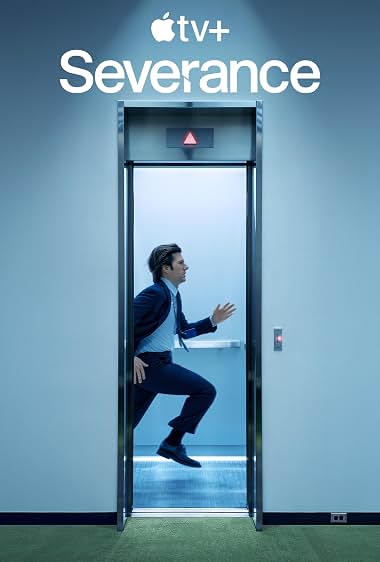
Created by Dan Erickson and directed with chilling geometric precision by Ben Stiller and Aoife McArdle, Apple TV+'s dystopian workplace thriller Severance emerged as one of the most brilliant, captivating television debuts of the decade, earning 14 Primetime Emmy Award nominations. Set within the sterile, labyrinthine corporate headquarters of Lumon Industries, the series explores a radical medical procedure known as 'severance,' which surgically divides an employee's memories between their personal life ('Outie') and work life ('Innie'). Adam Scott delivers a career-best, deeply moving dual performance as Mark Scout, a grieving widower on the outside whose severed workplace persona leads the mysterious Macrodata Refinement division alongside Dylan (Zach Cherry), rule-abiding Irving (John Turturro), and defiant new hire Helly R. (Britt Lower). As Helly rebels against the torture of being trapped in an endless corporate purgatory with no memory of sleep or sunlight, and Mark's Outie is contacted by a rogue former supervisor who has been 'reintegrated,' the terrifying secrets of Lumon's cult-like founder Kier Eagan begin to unravel. Featuring Theodore Shapiro's hypnotic four-note piano score and an all-time great season finale, Severance is a masterclass in modern sci-fi.

The Family Man
Created, directed, and produced by the acclaimed duo Raj & DK (Raj Nidimoru and Krishna D.K.), Amazon Prime Video's espionage action-thriller The Family Man is widely recognized as one of the finest television series in Indian history. Manoj Bajpayee delivers an effortless, masterclass performance as Srikant Tiwari, a relatable, middle-class family man living in Mumbai who constantly struggles with home loans, school admissions, and marital friction with his ambitious wife Suchitra (Priyamani). In reality, Srikant is a top-tier field operative and senior analyst for T.A.S.C. (Threat Analysis and Surveillance Cell)—a secretive wing of India's National Investigation Agency. Alongside his loyal, jovial partner JK Talpade (Sharib Hashmi), Srikant must prevent catastrophic terror strikes orchestrated by international cartels while pretending to work an ordinary clerical desk job. The critically lauded second season expanded the scope to Chennai, introducing Samantha Ruth Prabhu in a career-defining, ferocious turn as Sri Lankan Tamil rebel Raji. Featuring breathtaking single-take shootout sequences, sharp social commentary, and genuine domestic humor, The Family Man is an undisputed triumph.

Salaar: Part 1 – Ceasefire
<p><strong>Salaar: Part 1 – Ceasefire</strong> is an intense neo-noir action thriller written and directed by <a href="/person/prashanth-neel">Prashanth Neel</a> (the mastermind behind KGF), bringing together <a href="/person/prabhas">Prabhas</a> and Malayalam superstar <a href="/person/prithviraj-sukumaran">Prithviraj Sukumaran</a> in a fierce tale of childhood brotherhood and blood-soaked sovereignty.</p><p>Deva (<a href="/person/prabhas">Prabhas</a>) lives peacefully in self-imposed exile with his mother in Assam, having pledged never to shed blood again. However, when his childhood soulmate Varadharaja Mannar (<a href="/person/prithviraj-sukumaran">Prithviraj Sukumaran</a>) faces a lethal coup inside the fortified city-state of Khansaar where ruthless warlords vie for the royal throne, Deva breaks his vow. Armed with lethal weapons and unmatched savagery, he returns to Khansaar to crown his friend, unleashing a wave of retribution.</p>

Stranger Things
Created by the Duffer Brothers, Netflix's runaway flagship sensation Stranger Things is a nostalgic, spellbinding homage to 1980s pop culture, Steven Spielberg adventures, Stephen King horror novels, and John Carpenter synth thrillers. Set in the deceptively peaceful fictional town of Hawkins, Indiana in November 1983, the mystery erupts when 12-year-old Will Byers vanishes under inexplicable, terrifying circumstances. As his distraught mother Joyce (Winona Ryder) and haunted police chief Jim Hopper (David Harbour) spearhead the investigation, Will's nerdy best friends Mike, Dustin, and Lucas conduct their own bicycle search and encounter 'Eleven' (Millie Bobby Brown)—a traumatized, telekinetic runaway from a sinister secret Department of Energy laboratory. Eleven reveals the existence of the 'Upside Down'—a decayed, toxic alternate dimension lurking beneath their town, home to nightmarish apex predators like the Demogorgon and the towering Mind Flayer. Packed with heartwarming Dungeons & Dragons camaraderie, pulsing vintage synthesizer scores by Kyle Dixon and Michael Stein, and indelible coming-of-age emotional warmth, Stranger Things captured global pop culture, launched a new generation of superstars, and became one of streaming television's all-time triumphs.

Goodfellas
Martin Scorsese's 1990 tour de force Goodfellas is widely hailed as the definitive modern mob chronicle and a pinnacle of dynamic, kinetic American film grammar. Adapted from Nicholas Pileggi's non-fiction bestseller Wiseguy, the electrifying crime saga traces three decades in the exhilarating and degenerate life of Henry Hill (Ray Liotta in his crowning dramatic performance). Beginning with the famous opening line, 'As far back as I can remember, I always wanted to be a gangster,' the film immerses viewers into the opulent, seductive, and hyper-violent underworld of the Lucchese crime family in Brooklyn. Alongside his calculating mentor Jimmy 'The Gent' Conway (Robert De Niro) and the unhinged, psychopathic firebrand Tommy DeVito (Joe Pesci, who won the Academy Award for Best Supporting Actor for his explosive performance), Henry orchestrates lavish heists, including the historic Lufthansa robbery at JFK airport. However, as the 1970s slide into cocaine paranoia, betrayal, and federal crackdowns, Henry's glamorous empire spirals into a terrifying fight for survival. Featuring Michael Ballhaus's iconic, fluid Steadicam long-takes—including the legendary Copacabana tracking shot—Thelma Schoonmaker's razor-sharp rhythmic editing, and an exhilarating rock-and-roll soundtrack, Goodfellas redefined the mob genre forever.
Seven Samurai
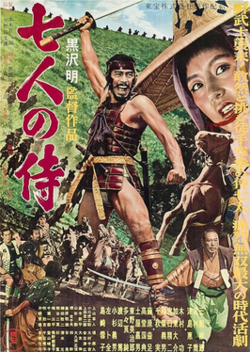
Seven Samurai is Akira Kurosawa's universally acclaimed, monumental cinematic masterpiece, widely revered as one of the greatest, most influential, and flawless films in world history, establishing the foundational grammar of modern ensemble action storytelling. Set in late sixteenth-century feudal Japan during the war-torn Sengoku period, a destitute, defenseless farming village learns that a merciless band of forty heavily armed mounted bandits plans to raid their hamlet and seize their entire autumn barley harvest. Facing inevitable starvation and slaughter, the desperate village elders decide to hire masterless samurai—ronin—to defend them, offering nothing as compensation except three daily meals of white rice. The villagers recruit Kambei Shimada, a wise, battle-weary veteran ronin of deep moral integrity who takes pity on their plight and orchestrates the strategic recruitment of six other warriors: his loyal disciple Katsushiro; the cheerful archer Gorobei; the amiable tactician Shichiroji; the stoic master swordsman Kyuzo; the resourceful wood-chopper Heihachi; and Kikuchiyo, a wildly erratic, boisterous rogue who claims samurai lineage but was born a destitute peasant. Over the weeks leading to the bandit assault, Kambei fortifies the village perimeter and trains the terrified peasants to fight with bamboo spears, while Kikuchiyo bridges the deep class resentment between the samurai and the mistrustful farmers. The climax erupts in a torrential, muddy downpour as the samurai and villagers wage a desperate, breathless battle against the bandits, culminating in profound victory tinged with tragic philosophical grief. Seven Samurai remains an immortal monument to human resilience and cinematic artistry.

Anbe Sivam
Directed by Sundar C. and brilliantly penned with philosophical genius and humanist wit by Kamal Haasan, Anbe Sivam (Love Is God, 2003) is universally cherished as one of the most culturally profound, intellectually stimulating, and emotionally touching masterpieces in the history of Indian cinema. Structured as an engaging road movie and ideological clash, the story begins at the flood-stranded Biju Patnaik Airport in Bhubaneswar, Odisha, where two completely opposite individuals are brought together by circumstance: Anbarasu (R. Madhavan in an exceptional comedic and dramatic turn), a handsome, arrogant, capitalistic commercial advertising director eager to return to Chennai for his lavish wedding, and Nallasivam 'Sivam' (Kamal Haasan in a sublime, physically transformative, and unforgettable performance), a scarred, limping, communist labor union leader with a paralyzed hand and a glass eye, possessing infectious optimism, wit, and empathy. When all flights and trains are canceled due to severe cyclonic floods, the reluctant duo embarks on an arduous, comical, and transformative journey across coastal India via buses, stranded freight trains, and ambulances. Through evocative flashbacks, Sivam's past is revealed: a charismatic, fiery street-theatre artist and revolutionary union activist who dared to fall in love with Balasaraswathi (Kiran Rathod), the daughter of a ruthless capitalist industrialist (Nassar), before surviving a horrific orchestrated bus crash that disfigured him. Touching upon communism, atheism, global capitalism, and human solidarity, Vidyasagar's poetic soundtrack and the tear-jerking climax at an Orissa train accident—where Sivam declares that anyone who wipes the tears of a dying fellow human being is God—cement Anbe Sivam as a timeless philosophical gem celebrating unconditional love.

City of God
Directed by Fernando Meirelles and co-directed by Kátia Lund from Bráulio Mantovani's adaptation of Paulo Lins's semi-autobiographical 1997 novel, City of God (Cidade de Deus, 2002) is universally heralded as a revolutionary landmark in world cinema, earning four historic Academy Award nominations including Best Director, Best Adapted Screenplay, Best Cinematography, and Best Film Editing. Set in the impoverished, violence-plagued favela of Cidade de Deus on the outskirts of Rio de Janeiro, Brazil, the sprawling non-linear epic traces the brutal evolution of organized crime, poverty, and teenage gang warfare across three volatile decades, from the late 1960s to the early 1980s. The narrative is chronicled through the perceptive eyes and camera lens of Rocket (Alexandre Rodrigues), a gentle, sensitive Afro-Brazilian youth who dreams of escaping the favela's cycle of poverty and early death to become a professional photojournalist. Rocket's journey contrasts sharply with that of his childhood contemporary, the demonic, psychopathic prodigy Li'l Zé (Leandro Firmino in an electrifying, terrifyingly charismatic performance), who ruthlessly murders rival drug dealers to establish an absolute cocaine monopoly over the favela alongside his loyal, level-headed enforcer Benny (Phellipe Haagensen). When Benny is killed, a brutal turf war erupts between Li'l Zé's gang and peaceful bus conductor Knockout Ned (Seu Jorge), whose family was brutally violated by Zé. Employing dizzying kinetic handheld camera movement, revolutionary jump-cuts, rapid-fire rhythmic editing, and non-professional actors drawn directly from Rio's favelas, César Charlone's golden-hued cinematography elevates City of God into a breathtaking, pulse-pounding, and heartbreaking sociological masterpiece that permanently transformed global cinematic visual language.