
 TonightOnScreen Catalog
Explore Movies • Drama
Search our curated catalog of cinema releases, binge-worthy series, and where to stream them.
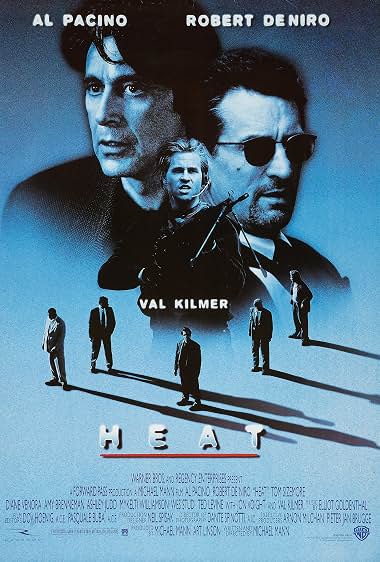
Heat
Written and directed by visionary filmmaker Michael Mann, Heat (1995) is widely revered by critics and filmmakers as the undisputed crown jewel of modern urban crime cinema and the ultimate heist epic. Marking the historic first on-screen pairing of cinema titans Al Pacino and Robert De Niro, the film is an operatic, multi-layered existential duel staged across the sleek, neon-drenched glass and concrete architecture of contemporary Los Angeles. De Niro portrays Neil McCauley, a cold, ascetic master thief who lives by a strict professional survival code: 'Don't let yourself get attached to anything you are not willing to walk out on in 30 seconds flat if you feel the heat around the corner.' Pacino plays Lieutenant Vincent Hanna, an obsessive, hyper-caffeinated LAPD robbery-homicide detective whose relentless pursuit of high-end predators has wrecked his third marriage. When McCauley's crew—including Val Kilmer and Tom Sizemore—pulls off a bloody armored car heist, Hanna locks onto their trail, sparking an intellectual and tactical chess match between two mirrored men who recognize each other as two sides of the same driven coin. Their legendary, understated conversation over coffee at Kate Mantilini diner remains one of the greatest dramatic scenes in Hollywood history. Culminating in a breathtaking, thunderous 10-minute daylight downtown bank shootout with authentic, non-foley live gunfire echoes and an atmospheric climax under the runway lights of LAX, Dante Spinotti's cinematography and Elliot Goldenthal's ambient score elevate Heat into an immortal American tragedy on obsession, discipline, and loneliness.

Satya
Ram Gopal Varma's 1998 underworld masterpiece Satya fundamentally destroyed the glamorous, melodramatic conventions of Bollywood cinema, pioneering the realistic, gritty 'Mumbai Noir' movement and winning six Filmfare Awards and a National Film Award. Co-written by Anurag Kashyap and Saurabh Shukla, the film follows Satya (J.D. Chakravarthy), an innocent, jobless immigrant from South India who arrives in Mumbai seeking honest work. Falsely implicated in a restaurant bar fight and brutalized in jail, Satya befriends the charismatic, uninhibited gangster Bhiku Mhatre (Manoj Bajpayee in an explosive, legendary performance that made him an overnight star). Released into Mhatre's underworld syndicate, Satya's sharp intellect and fearless efficiency quickly elevate him to the gang's mastermind strategist, waging war against rival boss Guru Narayan. Satya's burgeoning romance with his naive neighbor Vidya (Urmila Matondkar) represents his dream of redemption, but the arrival of ruthless Police Commissioner Amod Shukla (Paresh Rawal) triggers an unavoidable, blood-soaked tragedy. With Vishal Bhardwaj's visceral score ('Sapne Mein Milti Hai') and Gerard Hooper's handheld camera, Satya changed Indian cinema forever.
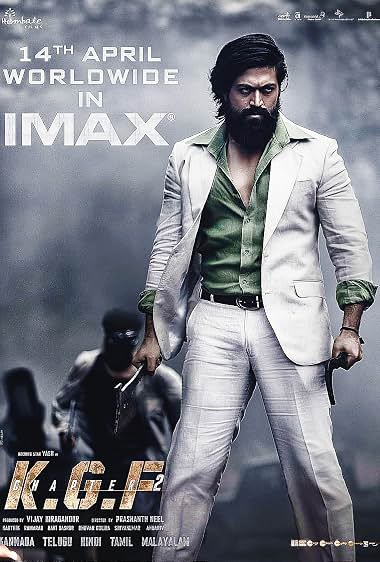
K.G.F: Chapter 2
Prashanth Neel's gargantuan 2022 magnum opus K.G.F: Chapter 2 obliterated Indian box office records, grossing over ₹1,250 crore ($150 million) worldwide to become the third highest-grossing Indian film of all time. Picking up immediately from the blood-soaked climax of Chapter 1, Rocky Bhai (Yash) reigns supreme as the undisputed overlord of the Kolar Gold Fields, transforming the slave encampment into a fortified, prosperous kingdom for the liberated miners while defying the entire global gold cartel. However, Rocky's reign is besieged by mortal peril on multiple fronts: Adheera (a menacing, Viking-inspired Sanjay Dutt), the brutal brother of KGF's founder who seeks to reclaim his birthright with an army of bloodthirsty zealots; Inayat Khalil, the formidable Dubai crime lord; and Ramika Sen (Raveena Tandon), the uncompromising, iron-willed Prime Minister of India who signs the order to destroy Rocky's criminal empire. Featuring Bhuvan Gowda's hyper-stylized monochrome cinematography, unrivaled mass elevation sequences, and Ravi Basrur's roaring symphonies, K.G.F: Chapter 2 concludes with a tragic, ocean-bound finale of epic operatic proportions. Beyond its earth-shattering domestic collections, K.G.F: Chapter 2 commanded unprecedented international theatrical runs across North America, the United Kingdom, the Gulf, and Southeast Asia. The film's thunderous dialogue delivery, stylized action choreography, and themes of undying maternal devotion cemented director Prashanth Neel and superstar Yash as the definitive architects of modern Indian elevation cinema.

Good Will Hunting
Directed by Gus Van Sant and written by then-unknown childhood friends Matt Damon and Ben Affleck—who won the Academy Award for Best Original Screenplay in one of Oscar history's most emotional moments—Good Will Hunting is an endearing, deeply moving triumph of the human spirit. Matt Damon stars as Will Hunting, a 20-year-old janitor at the Massachusetts Institute of Technology in South Boston who possesses a photographic memory and mathematical genius that exceeds the greatest minds in the world. When Fields Medal-winning MIT professor Gerald Lambeau (Stellan Skarsgård) discovers that Will anonymously solved a fiendishly complex combinatorial algebraic equation on a hallway chalkboard, he rescues Will from jail following a street fight. Lambeau offers a plea bargain: Will must study advanced mathematics and attend mandatory therapy sessions. After rejecting numerous psychologists, Will meets Dr. Sean Maguire (Robin Williams in an immortal, Oscar-winning performance of profound warmth and emotional vulnerability). As Sean breaks through Will's protective psychological armor of childhood trauma and abandonment, Will confronts his fear of intimacy with Harvard student Skylar (Minnie Driver) and learns the life-altering truth: 'It's not your fault.' A timeless, beloved masterpiece.

Chithha
Directed by S.U. Arun Kumar and produced by Siddharth under Etaki Entertainment, 2023's Tamil drama thriller Chithha (Little Paternal Uncle) swept seven Filmfare Awards South, including Best Film – Tamil, Best Director, and Best Actor, celebrated by critics and human rights organizations as one of the most mature, sensitive, and emotionally devastating cinematic masterworks on child safety and restorative justice ever produced in India. Set in the quiet municipal town of Palani in Tamil Nadu, the story explores the deeply affectionate, pure bond between Eeswaran (superstar Siddharth in an astonishing, career-best performance of raw emotional vulnerability and helpless grief), a humble government office clerk, and his eight-year-old orphaned niece Sundari, whom he affectionately calls 'Settai'. Eeswaran has raised Sundari as his own child following his brother's untimely death, sharing everyday joys alongside his supportive romantic partner Shakthi (Nimisha Sajayan in a grounded, powerful performance). Their warm, idyllic world is shattered when a ruthless serial child abductor and predator begins operating in their district. When a colleague's daughter goes missing and is tragically found murdered, suspicion falls unjustly upon Eeswaran due to circumstantial town gossip. Shortly after clearing his name, tragedy strikes home when little Sundari is kidnapped from school. Eeswaran embarks on an agonizing, desperate quest to find his niece, confronting the unimaginable horror of predatory abuse. Refusing cheap sensationalism, Arun Kumar crafts a profoundly empathetic, heart-stopping narrative that focuses on healing, trauma-recovery, and unconditional paternal love. Featuring Dhibu Ninan Thomas's haunting score and Balaji Subramanyam's cinematography, Chithha is an unforgettable masterpiece of human compassion.

Rangasthalam
Directed and written with rustic intensity and storytelling genius by Sukumar, 2018's Telugu rural period action drama Rangasthalam (The Stage) shattered all box office records to gross over ₹216 crore, universally hailed by critics and audiences as a monumental milestone in modern South Indian cinema and one of the finest revenge dramas ever made. Set in the lush, sun-drenched, but feudal Godavari basin village of Rangasthalam in the 1980s, the community has been held in a thirty-year stranglehold of crippling debt slavery, land-grabbing, and caste-based servitude by the sinister, tyrannical village president Phanindra Bhupathi (Jagapathi Babu in a chilling villainous turn). The heart of the narrative is Chitti Babu (mega-power star Ram Charan in a volcanic, transformative, and career-best performance of raw physical naturalism and emotional vulnerability), a semi-deaf, cheerful engine driver who irrigates village fields with his water pump and uses his hearing disability to ignore gossip while expressing immense loyalty to his family and his spirited love interest Ramalakshmi (Samantha Ruth Prabhu in a radiant, deglamorized performance). When Chitti Babu's idealistic, educated elder brother Kumar Babu (Aadhi Pinisetty) returns from Dubai and dares to challenge Bhupathi's autocratic regime by contesting village panchayat elections, a brutal conspiracy threatens their lives. When Kumar Babu is ruthlessly murdered, Chitti Babu's grief ignites an incandescent, bloodthirsty crusade for vengeance that exposes dark layers of political betrayal and casteist duplicity. Propelled by Devi Sri Prasad's thumping, folk-infused musical score ('Ranga Ranga Rangasthalaana') and R. Rathnavelu's earthy cinematography, Rangasthalam is an epic masterpiece.
1917
Directed and co-written by Academy Award winner Sam Mendes alongside Krysty Wilson-Cairns and inspired by real-life wartime stories told by Mendes's grandfather, 1917 (2019) is a monumental technical and emotional triumph of modern warfare cinema, grossing over $384 million globally and winning three Academy Awards including Best Cinematography, Best Visual Effects, and Best Sound Mixing. Set during the brutal Western Front of World War I in northern France in April 1917, the narrative is masterfully constructed and edited to appear as two unbroken, continuous real-time continuous shots. Two young British lance corporals, Tom Blake (Dean-Charles Chapman) and Will Schofield (George MacKay in an astonishing, physically punishing performance of quiet resolve and indomitable courage), are summoned by General Erinmore (Colin Firth) and assigned an impossible, time-sensitive mission across enemy lines. With telegraph communication lines severed, they must traverse treacherous, corpse-littered No Man's Land and booby-trapped German trenches on foot to deliver an urgent cancellation order to the 2nd Battalion of the Devonshire Regiment—led by Colonel Mackenzie (Benedict Cumberbatch)—before 1,600 British soldiers, including Blake's beloved older brother, walk into a deadly German ambush trap. From surviving crumbling subterranean bunkers to dodging sniper fire through the flare-lit burning nocturnal ruins of the town of Écoust-Saint-Mein, Schofield's desperate sprint across an exploding battlefield amidst charging infantry soldiers stands as one of the most iconic action sequences in cinema history. Sir Roger Deakins's revolutionary fluid camerawork and Thomas Newman's soaring score ('The Night Window') elevate 1917 into an unforgettable, breathless masterwork on sacrifice and duty.
There Will Be Blood
Written, directed, and co-produced by American auteur Paul Thomas Anderson and loosely inspired by Upton Sinclair's 1927 novel Oil!, There Will Be Blood (2007) is widely heralded by international film critics, historians, and scholars as the single greatest cinematic achievement of the twenty-first century, winning two Academy Awards for Best Actor and Best Cinematography. The film charts the ruthless, monstrous rise of Daniel Plainview (Sir Daniel Day-Lewis in an astounding, Oscar-winning tour de force of terrifying gravitas and unhinged physical immersion), a solitary silver prospector who transforms himself into an all-powerful, predatory oil tycoon in the barren frontier scrubland of turn-of-the-century California. Posing as a wholesome family businessman alongside his adopted orphaned son H.W., Plainview travels to the impoverished town of Little Boston to swindle devout ranchers out of drilling rights over immense subterranean petroleum reserves. Plainview's obsessive, misanthropic thirst for wealth and absolute autonomy—famously declaring: 'I have a competition in me. I want no one else to succeed. I hate most people'—brings him into apocalyptic ideological warfare with charismatic young evangelical preacher Eli Sunday (Paul Dano in an equally brilliant performance of narcissistic religious zeal). As roaring wooden oil derricks burst into fiery geysers and Plainview's soul curdles into paranoid isolation, their conflict escalates to a horrific, bowling-alley confrontation: 'I drink your milkshake! I drink it up!' Lensed with stark epic majesty by Robert Elswit and propelled by Jonny Greenwood's dissonant, percussive orchestral score, There Will Be Blood is an unyielding American tragedy dissecting capitalism, faith, and greed.

Pan's Labyrinth
Written and directed by Mexican visionary auteur Guillermo del Toro, Pan's Labyrinth (El laberinto del fauno, 2006) stands as one of the most visually stunning, emotionally haunting, and critically revered dark fantasy masterworks in cinema history, earning six Academy Award nominations and winning three Oscars for Best Cinematography, Best Art Direction, and Best Makeup. Set in 1944 in the lush, suffocating mountain forests of northern Spain during the early Francoist dictatorship, the story centers on Ofelia (Ivana Baquero in a luminous, deeply empathetic breakthrough), a quiet, book-loving ten-year-old girl who travels with her pregnant, ailing mother Carmen to an isolated military outpost. There, they reside under the iron fist of her new stepfather, Captain Vidal (Sergi López in a chillingly sadistic, sociopathic portrayal of fascist brutality), who is ruthlessly hunting down anti-fascist republican Maquis rebels hiding in the surrounding hills. Seeking psychological and spiritual refuge from Vidal's horrifying violence, Ofelia is led by an insect fairy into the crumbling stone heart of an ancient, moss-covered subterranean labyrinth. There she encounters the enigmatic, towering Faun (Doug Jones under astonishing practical makeup), who reveals that she is Princess Moanna, the lost daughter of the underground realm. To reclaim her immortal kingdom and royal lineage before the full moon rises, Ofelia must complete three perilous, mythic trials—confronting a colossal woodland toad, evading the terrifying, child-devouring Pale Man with eyeballs embedded in his palms, and making the ultimate moral choice between selfish survival and innocent sacrifice. Interweaving stark historical horror with poetic fairy-tale allegory, Javier Navarrete's melancholic lullaby score, and del Toro's peerless monster design, Pan's Labyrinth is an unforgettable cinematic masterpiece on disobedience, grace, and innocence.
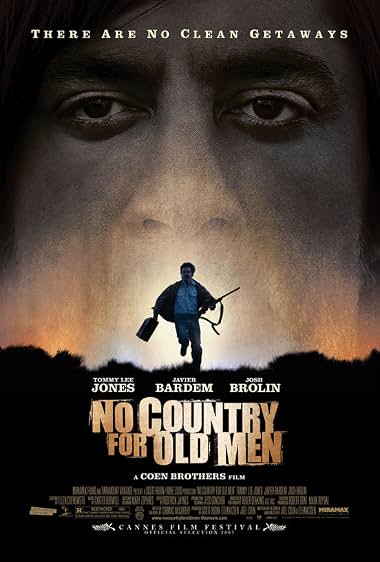
No Country for Old Men
Directed, written, and edited by Joel and Ethan Coen based on Cormac McCarthy's bleak 2005 novel, No Country for Old Men swept four Academy Awards including Best Picture, Best Director, and Best Adapted Screenplay, widely acknowledged as the greatest modern neo-Western crime thriller of the twenty-first century. Set against the desolate, sun-bleached scrubland of 1980 West Texas, the cataclysmic narrative is ignited when welder and Vietnam veteran Llewelyn Moss (Josh Brolin) stumbles upon the bloody aftermath of a desert drug shootout gone wrong, discovering a pickup truck loaded with heroin and a leather satchel containing $2.4 million in cash. Moss's fateful decision to abscond with the fortune unleashes Anton Chigurh (Javier Bardem in a chilling, Oscar-winning portrayal of psychotic sociopathy), an unstoppable hitman who executes victims with a captive bolt pistol, speaks in eerie philosophical paradoxes, and decides human lives on the flip of a coin. As Moss desperately evades Chigurh across dusty roadside motels, weary aging Sheriff Ed Tom Bell (Tommy Lee Jones) investigates the escalating carnage, lamenting his inability to comprehend or combat the senseless, remorseless wave of modern violent evil. Devoid of a traditional musical score and shot with stark, breathtaking precision by Roger Deakins, No Country for Old Men is an unyielding, haunting meditation on fate, mortality, and the terrifying randomness of human existence.

Taxi Driver
Martin Scorsese's 1976 psychological neo-noir masterpiece Taxi Driver, penned by Paul Schrader, captured the Palme d'Or at the Cannes Film Festival and earned four Academy Award nominations, establishing itself as the definitive, harrowing exploration of urban alienation, loneliness, and vigilante obsession in American cinema. Robert De Niro delivers one of the most electrifying and culturally transformative performances in screen history as Travis Bickle, an honorably discharged, insomniac Vietnam War veteran drifting through the gritty, neon-soaked decay of 1970s New York City as a nighttime yellow cab driver. Disgusted by the city's open prostitution, crime, and moral squalor—which he longs for 'a real rain' to wash away—Travis's profound social disconnection curdles into dangerous delusions of saviorhood. After a disastrous attempt to court a glamorous presidential campaign worker (Cybill Shepherd), Travis purchases black-market handguns, embarks on a fanatical physical regimen, and fixates on assassinating a politician before turning his violent impulses toward 'saving' Iris (Jodie Foster in a breakthrough, Oscar-nominated turn), an exploited 12-year-old runaway prostitute. Featuring Bernard Herrmann's sultry, ominous jazz score, Michael Chapman's atmospheric cinematography, and Bickle's iconic mirror improvisation—'You talkin' to me?'—Taxi Driver is an unsparing, profoundly influential psychological portrait of a ticking human time bomb that permanently revolutionized contemporary character studies.
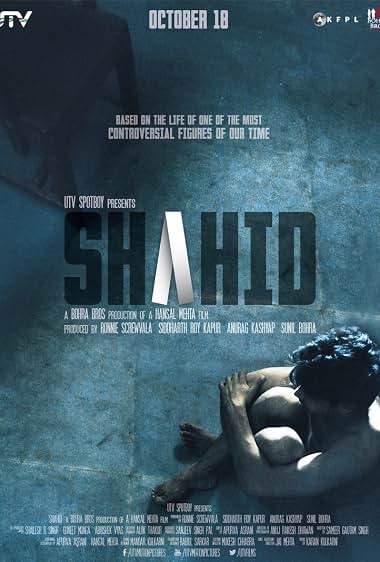
Shahid
Directed by Hansal Mehta, the 2013 biographical legal drama Shahid premiered at the Toronto International Film Festival and won two prestigious National Film Awards—Best Director for Mehta and Best Actor for Rajkummar Rao—standing as a watershed moment in modern Indian independent cinema. The film dramatizes the extraordinary, tragic life of Shahid Azmi, a human rights activist and lawyer who was assassinated in Mumbai in 2010 at age 32. Traumatized as a teenager by the 1992 Bombay riots, Shahid flees to Pakistan-administered Kashmir to join a militant camp, only to be disgusted by their brutality and escape. Falsely arrested under anti-terror laws (TADA), Shahid spends seven grueling years in Delhi's Tihar Jail, where an enlightened fellow inmate encourages him to complete his education. Upon release, Shahid earns his law degree and dedicates his practice to providing pro-bono defense for impoverished, wrongfully detained Muslim youth accused of terrorism without evidence. Facing violent court assaults, hate mail, and death threats, Shahid's unyielding belief in the Indian Constitution costs him his life. Rajkummar Rao's raw, unvarnished performance remains one of the finest acting achievements in Indian cinema.