
 TonightOnScreen Catalog
Explore Entertainment • Drama
Search our curated catalog of cinema releases, binge-worthy series, and where to stream them.

Mindhunter
Executive produced and directed by cinematic master David Fincher alongside Charlize Theron, Netflix's 2017 psychological crime drama series Mindhunter stands as the benchmark for intellectual, procedurally authentic television on the origin of modern criminal profiling. Based on the 1995 true-crime memoir Mindhunter: Inside the FBI's Elite Serial Crime Unit by John E. Douglas and Mark Olshaker, the series is set in the late 1970s at the dawn of modern forensic psychology. Visionary young FBI Special Agent Holden Ford (Jonathan Groff) and cynical, world-weary veteran agent Bill Tench (Holt McCallany), collaborating with brilliant psychology professor Dr. Wendy Carr (Anna Torv), establish the FBI's nascent Behavioral Science Unit inside the basement of Quantico. Traveling across the United States, Ford and Tench conduct groundbreaking, deeply disturbing in-depth interviews with incarcerated, high-profile serial murderers—including the chillingly articulate, hulking 'Co-ed Killer' Ed Kemper (Cameron Britton in an Emmy-nominated tour de force), Jerry Brudos, and Charles Manson—to decipher abnormal behavioral psychology, motives, and behavioral signatures to aid ongoing active investigations. Distinguished by Fincher's trademark clinical precision, moody desaturated color grading, and razor-sharp dialogue, Mindhunter is a cerebral, chillingly realistic examination of the psychological toll of staring into the abyss of human evil.

The Green Mile
Directed by Frank Darabont and adapted from Stephen King's serialized 1996 novel, The Green Mile stands as one of the most emotionally profound, spiritually transcendent, and universally acclaimed prison dramas in cinematic history. Set during the height of the Great Depression in 1935 at Cold Mountain Penitentiary in Louisiana, the film follows Paul Edgecomb (Tom Hanks in a deeply humane, compassionate performance), a veteran death row corrections officer who oversees 'The Green Mile'—the lime-colored corridor leading condemned men to the electric chair. Paul's cynical worldview and agonizing chronic ailment are overturned with the arrival of John Coffey (Michael Clarke Duncan in an unforgettable, Oscar-nominated breakthrough of gentle vulnerability), a towering, mild-mannered Black man convicted of the horrific rape and murder of two young sisters. Edgecomb and his empathetic fellow guards quickly discover that Coffey possesses an inexplicable, miraculous supernatural power to heal disease, absorb human suffering, and breathe life back into the dead, notably resurrecting a beloved pet mouse named Mr. Jingles. As Coffey's innocent, saint-like nature becomes unmistakably evident, Edgecomb is plunged into an agonizing moral crisis, grappling with the devastating tragedy of executing a true miracle of God in an unjust world. Nominated for four Academy Awards including Best Picture, The Green Mile blends supernatural allegory, tragic racial injustice, and heartbreaking empathy to deliver an unforgettable masterwork on the cruelty of human society and the enduring grace of the human spirit.

The Bear
Created by Christopher Storer, FX on Hulu's culinary comedy-drama sensation The Bear took television by storm, winning 21 Primetime Emmy Awards and becoming a cultural tour de force. Jeremy Allen White delivers a raw, volcanic, and deeply vulnerable performance as Carmen 'Carmy' Berzatto, an elite, James Beard Award-winning fine dining chef who leaves Michelin-starred restaurants in New York to return home to Chicago to take over The Original Beef of Chicagoland following the tragic suicide of his older brother Mikey. Inheriting mountains of debt, a decaying kitchen, and a stubborn, resistant kitchen crew, Carmy hires ambitious young culinary institute graduate Sydney Adamu (Ayo Edebiri in an Emmy-winning breakthrough) as his sous chef, while clashing with Mikey's hot-headed, insecure best friend Richie Jerimovich (Ebon Moss-Bachrach in an extraordinary redemption arc). Known for its breathless, heart-stopping culinary panic, realistic depictions of generational trauma and addiction, and historic virtuoso filmmaking (including Season 1's uninterrupted 18-minute single-take episode and Season 2's star-studded family Christmas episode 'Fishes'), The Bear captured global reverence for its message that 'every second counts.'

Saving Private Ryan
Steven Spielberg's 1998 war epic Saving Private Ryan redefined combat realism in cinema history, capturing five Academy Awards including Best Director and grossing over $482 million worldwide. The film opens with an unforgettable, visceral 27-minute depiction of the Allied invasion of Normandy on Omaha Beach on D-Day (June 6, 1944). Filmed with handheld 45-degree shutter cameras, de-saturated colors, and sickening acoustic design, Spielberg placed audiences directly into the chaos, dismemberment, and terror endured by American soldiers under merciless German machine-gun fire. In the aftermath of the slaughter, Army Ranger Captain John H. Miller (Tom Hanks in a deeply moving, understated performance) is ordered by General George C. Marshall to lead an eight-man squad deep behind enemy lines in Normandy to locate and extract Private James Francis Ryan (Matt Damon), whose three brothers have all been killed in action within days of each other. As the squad navigates deadly sniper ambushes and moral arguments about risking eight lives to save one, Miller reveals his quiet past as a schoolteacher, culminating in a ferocious defense of a strategic bridge in Ramelle. Hanks's dying whisper, 'Earn this... earn it,' remains one of the most haunting emotional climaxes in world cinema.

Pushpa: The Rise
<p><strong>Pushpa: The Rise</strong> is the super-hit action thriller written and directed by <a href="/person/sukumar">Sukumar</a> that turned <a href="/person/allu-arjun">Allu Arjun</a> into a pan-Indian household name, co-starring <a href="/person/rashmika-mandanna">Rashmika Mandanna</a> and <a href="/person/fahadh-faasil">Fahadh Faasil</a>.</p><p>Set against the backdrop of the dense Seshachalam forests of Andhra Pradesh, the plot follows Pushpa Raj (<a href="/person/allu-arjun">Allu Arjun</a>), a courageous daily wage laborer who cuts rare red sandalwood trees. Blessed with sharp intelligence and fearless daring, Pushpa outsmarts forest rangers, police checks, and senior smuggling bosses to climb the ranks of the syndicate. Along the way, he falls in love with milk vendor Srivalli (<a href="/person/rashmika-mandanna">Rashmika Mandanna</a>), while facing an unexpected rival in the eccentric police officer Bhanwar Singh Shekhawat (<a href="/person/fahadh-faasil">Fahadh Faasil</a>).</p>
The Silence of the Lambs
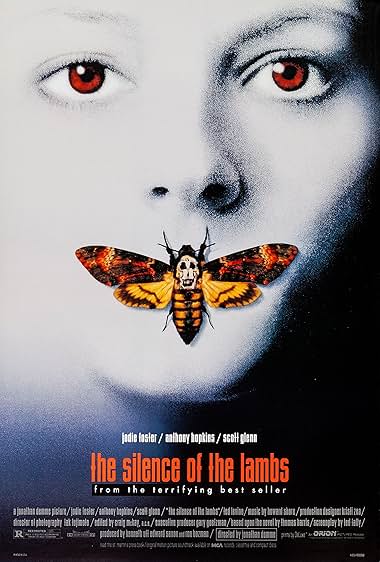
Jonathan Demme's 1991 psychological horror thriller The Silence of the Lambs is one of only three films in Academy Awards history to sweep the prestigious 'Big Five' Oscars: Best Picture, Director, Actor, Actress, and Adapted Screenplay. Jodie Foster stars with fierce, vulnerable brilliance as Clarice Starling, an ambitious FBI trainee assigned by Behavioral Science head Jack Crawford (Scott Glenn) to interview the notorious, imprisoned forensic psychiatrist and cannibalistic serial killer Dr. Hannibal Lecter (Anthony Hopkins in an immortal, terrifying 16-minute performance). The FBI seeks Lecter's morbid psychological insights to track down 'Buffalo Bill' (Ted Levine), a depraved killer who kidnaps and skins young women. Lecter engages Starling in a treacherous game of quids pro quo, trading behavioral clues for intimate disclosures of her childhood trauma and the haunting screams of slaughtered spring lambs. Demme's claustrophobic direct-to-camera close-ups, Tak Fujimoto's clinical cinematography, and Hopkins's razor-sharp, chilling intellect created the definitive standard for modern psychological thrillers. A masterclass in suspense, gender dynamics, and forensic deduction, The Silence of the Lambs remains an unassailable benchmark of cinematic art.

Grave of the Fireflies
Grave of the Fireflies is a profoundly moving, devastating, and universally acclaimed animated war tragedy written and directed by Isao Takahata, standing as one of the most powerful anti-war cinematic statements ever created. Adapted from Akiyuki Nosaka's semi-autobiographical novella, the narrative opens in September 1945 at Sannomiya Station in Kobe, where Seita, an emaciated teenage boy, succumbs to starvation before his spirit reunites with his sweet four-year-old sister Setsuko, recounting the tragic events of their final months. During the horrific firebombing of Kobe by American B-29 bombers, their mother is fatally burned, and their father, an officer in the Imperial Japanese Navy, is lost at sea. Orphaned and homeless amidst the smoldering ruins of their city, Seita and Setsuko initially seek refuge with an emotionally distant, increasingly hostile aunt who begrudges their rations. Determined to preserve his sister's innocence and protect her from adult cruelty, proud Seita moves Setsuko into an abandoned, damp hillside bomb shelter, illuminating their cavernous dark nights by releasing dozens of luminous fireflies beneath their mosquito netting. However, as extreme wartime famine, isolation, and economic desperation grip the countryside, Setsuko slowly succumbs to severe malnutrition despite Seita's frantic, desperate efforts to forage and steal food amidst air raids. Handled with extraordinary empathy, poetic realism, and gut-wrenching emotional purity, Grave of the Fireflies serves as an indelible, heartbreaking monument to the innocent child victims of warfare and the fragile, enduring bonds of sibling love.

Maharaja
Written and directed with mind-bending non-linear screenwriting brilliance by Nithilan Saminathan, 2024's Tamil revenge thriller Maharaja marked superstar Vijay Sethupathi's monumental 50th career feature film, becoming an explosive commercial blockbuster grossing over ₹107 crore worldwide and a massive international streaming sensation. The narrative centers on Maharaja (Vijay Sethupathi in a career-defining tour de force of quiet stoicism, tender paternal love, and terrifying physical fury), an unassuming, middle-aged Chennai barber who lives a humble existence with his school-going daughter Jothi. Maharaja's life was scarred years earlier when a truck crashed through his home, killing his wife while an empty iron dustbin miraculously fell over infant Jothi, saving her life; consequently, the family cherishes the metal dustbin, affectionately naming it 'Lakshmi'. One day, a battered and bruised Maharaja walks into the local police station with a bizarre complaint: three masked burglars broke into his home, assaulted him, and stole 'Lakshmi' the dustbin. Mocked and dismissed by corrupt police inspectors Varadhan (Natty Natraj) and his colleagues, Maharaja refuses to leave, offering a ₹5 lakh bribe to retrieve the seemingly worthless item. As the police scheme to manufacture a fake identical dustbin to pocket the cash, Nithilan's intricate non-linear narrative reveals the horrifying, heartbreaking reality: the burglary was a cover story concealing a monstrous home-invasion sexual assault perpetrated against his teenage daughter by ruthless serial criminal Selvam (filmmaker Anurag Kashyap in a terrifying, depraved villainous role). Featuring Philomin Raj's razor-sharp editing, B. Ajaneesh Loknath's haunting score, and an emotionally gut-wrenching climax, Maharaja is a modern thriller masterpiece.

Kumbalangi Nights
Directed by Madhu C. Narayanan in a sensational directorial debut and written by the master screenwriting architect Syam Pushkaran, 2019's Malayalam family drama Kumbalangi Nights is universally cherished as a modern cinematic triumph of Indian cinema, winning four Kerala State Film Awards and earning international critical adulation for its progressive, empathetic, and groundbreaking deconstruction of toxic masculinity and patriarchal family structures. Set against the serene, backwater island fishing village of Kumbalangi near Kochi, the story revolves around four estranged, dysfunctional half-brothers living together in a dilapidated, unfinished house devoid of a mother: hot-tempered eldest brother Saji (Soubin Shahir in a deeply moving, emotionally transcendent performance of grief, vulnerability, and redemption), rebellious and jobless young drifter Bobby (Shane Nigam in a charismatic, naturalistic turn), mute and gentle school-dropout Bonny (Sreenath Bhasi), and school-going youngest brother Frankie. The brothers share a tense, combative household characterized by emotional alienation and domestic squalor. However, when Bobby falls in love with Baby (Anna Ben in a sparkling debut), an obstacle emerges in the form of Baby's brother-in-law Shammi (superstar Fahadh Faasil in an unforgettable, chillingly brilliant performance of fragile hyper-masculinity and patriarchal vanity, famous for admiring his own mustache in the mirror as 'The Complete Man'). Shammi's authoritarian, psychopathic control over the household forces the four broken brothers to overcome their differences, welcome outsiders, and forge a genuine, loving family founded on mutual respect rather than bloodline purity. Elevated by Sushin Shyam's soul-stirring, atmospheric musical landscape ('Cherathukal') and Shyju Khalid's painterly, luminous cinematography capturing the bioluminescent waters of Kumbalangi, Kumbalangi Nights is an emotionally resonant, timeless masterpiece celebrating warmth, brotherhood, and mental health.
Sarpatta Parambarai
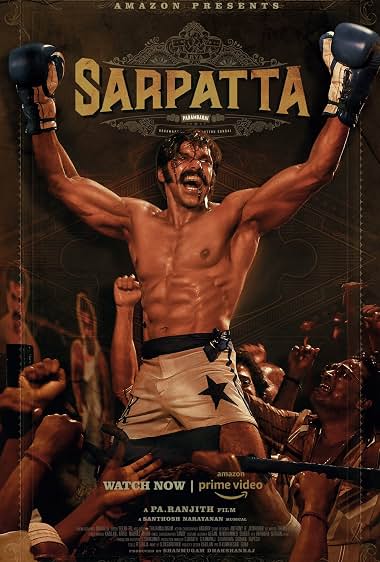
Directed and co-written by visionary filmmaker Pa. Ranjith alongside novelist Tamil Prabha, 2021's Tamil sports period drama Sarpatta Parambarai is widely celebrated as one of the greatest, most authentic, and politically astute boxing epics in world cinema, earning universal critical acclaim and a massive global following upon its release on Amazon Prime Video. Set in the vibrant, subaltern working-class harbor neighborhoods of North Madras during the tumultuous Emergency era of the mid-1970s, the film delves deep into the rich, ancestral boxing rivalry between two historic subaltern clans: the indigenous Sarpatta Parambarai and the aristocratic Idiyappa Parambarai. When Sarpatta's revered coach Rangan Vaathiyar (Pasupathy in a career-best, quietly dignified masterclass of theatrical gravitas) is humiliated in the ring by the seemingly invincible Idiyappa champion Vembuli (John Kokken), he issues a desperate public ultimatum: a Sarpatta boxer will dethrone Vembuli in the next bout, or the Sarpatta clan will disband forever. Stepping up to defend the honor of his clan is Kabilan (Arya in an astonishing, physically monumental transformation of sweat, blood, and emotional vulnerability), a harbor coolie and son of a deceased boxer who has trained in secret due to his mother's trauma over ring violence. Mentored by Rangan, Kabilan defeats ferocious contenders like Dancing Rose (Shabeer Kallarakkal) before personal success, political corruption, and alcoholism threaten to destroy his life. Kabilan's arduous path to redemption—undergoing grueling old-school physical training on the coastal sands of Madras—leads to an earth-shattering boxing final. Elevated by Santhosh Narayanan's electrifying background score and Murali G.'s authentic 1970s period recreation, Sarpatta Parambarai is an exhilarating triumph on dignity, working-class resilience, and social justice.
Léon: The Professional
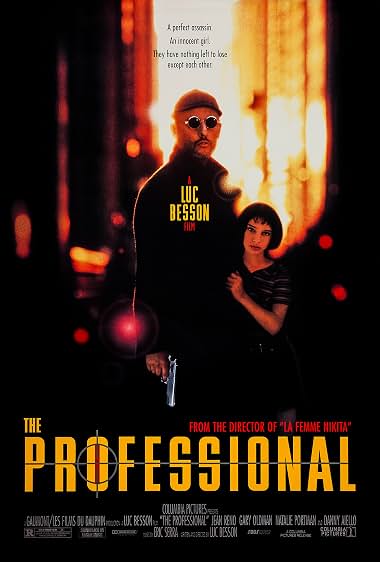
Written and directed by visionary French filmmaker Luc Besson in his thrilling English-language debut, Léon: The Professional (1994) is an iconic, emotionally poignant, and stylistically electrifying neo-noir crime thriller that redefined international action cinema. Set in the gritty, atmospheric urban labyrinth of New York City's Little Italy, the narrative centers on Léon Montana (Jean Reno in an unforgettable, melancholic tour de force), an illiterate, solitary Italian hitman—or 'cleaner'—who lives a spartan, disciplined life drinking milk, caring tenderly for a potted aglaonema plant, and executing high-risk underworld contracts with silent, lethal precision for mob boss Tony (Danny Aiello). Léon's carefully isolated, monastic existence is permanently upended when the family of his neglected 12-year-old apartment neighbor, Mathilda Lando (Natalie Portman in an extraordinary, star-making cinematic debut of astounding maturity and emotional depth), is ruthlessly massacred in a corridor drug dispute by psychotic, Beethoven-worshiping, pill-popping DEA agent Norman Stansfield (Gary Oldman in one of the most explosive, terrifyingly charismatic villainous performances in screen history, roaring 'Bring me everyone... EVERYONE!'). Léon reluctantly opens his door to shelter the traumatized girl, leading to a tender, unorthodox surrogate bond where Mathilda teaches Léon to read and feel, while Léon trains her in the deadly mechanics of weaponry so she can avenge her murdered four-year-old brother. Featuring Thierry Arbogast's dynamic widescreen cinematography and Eric Serra's atmospheric score, Léon: The Professional culminates in an earth-shattering tactical siege that cements its status as a timeless action-drama classic celebrated for its heart and explosive thrills.

The Pianist
Directed by Roman Polanski and adapted by Ronald Harwood from the autobiographical Holocaust memoir by Polish-Jewish musician Władysław Szpilman, The Pianist (2002) stands as one of the most devastating, emotionally staggering, and historically authentic cinematic masterpieces ever created, capturing the prestigious Palme d'Or at the Cannes Film Festival and winning three Academy Awards including Best Director, Best Adapted Screenplay, and Best Actor. Adrien Brody delivers a transformative, career-defining performance of agonizing vulnerability and quiet dignity as Szpilman, a brilliant classical pianist performing Frédéric Chopin live on Polish Radio in Warsaw when German Luftwaffe bombs shatter the studio in September 1939. As Nazi tyranny engulfs Poland, Szpilman and his aristocratic family are subjected to escalating humiliations, starvation, and confinement within the brutal walled squalor of the Warsaw Ghetto, before his entire family is rounded up and deported to the Treblinka extermination camp. Rescued at the cattle cars by a Jewish ghetto policeman, Szpilman endures years of solitary, terrified concealment in the bombed-out ruins of Warsaw, witnessing the heroic Warsaw Ghetto Uprising and the Warsaw Uprising from attic windows. Emaciated, shivering, and near death from jaundice and starvation in a frost-bitten derelict mansion, Szpilman is discovered by a cultured German Wehrmacht officer, Captain Wilm Hosenfeld (Thomas Kretschmann), who asks him to play an abandoned grand piano—resulting in a breathtaking, tear-stained rendition of Chopin's Ballade No. 1 in G minor that restores their shared humanity amidst the apocalypse of war. Pawel Edelman's stark cinematography, Wojciech Kilar's haunting score, and Brody's profound commitment make The Pianist a timeless testament to human resilience and art.