
 TonightOnScreen Catalog
Explore Entertainment • Drama
Search our curated catalog of cinema releases, binge-worthy series, and where to stream them.

Oppenheimer
Oppenheimer is an epic biographical drama directed by Christopher Nolan that explores the brilliant life, moral struggles, and devastating legacy of theoretical physicist J. Robert Oppenheimer, portrayed with haunting intensity by Cillian Murphy. The narrative follows Oppenheimer from his early days studying quantum physics in Europe to his appointment as the scientific director of the secretive Manhattan Project in Los Alamos, New Mexico, where world-class scientists raced against Nazi Germany to build the world's first atomic weapon. The film revolves around pivotal characters who shape Oppenheimer's scientific journey and personal life. Major General Leslie Groves, played by Matt Damon, acts as the no-nonsense military leader who cuts through bureaucratic red tape to keep the atomic lab moving forward. Katherine "Kitty" Oppenheimer, played by Emily Blunt, stands by her husband as a fierce, razor-sharp biologist grappling with emotional isolation and family pressure. Jean Tatlock, portrayed by Florence Pugh, is a passionate psychiatrist whose romantic ties to Oppenheimer and Communist associations later fuel intense political scrutiny. Meanwhile, Lewis Strauss, played by Robert Downey Jr. in an Oscar-winning performance, emerges as Oppenheimer's vindictive political rival inside the Atomic Energy Commission, orchestrating a closed-door security hearing aimed at stripping the physicist of his national security clearance and credibility. Legendary physicist Albert Einstein, played by Tom Conti, offers quiet, foreboding wisdom about how the world eventually turns on its most celebrated visionaries once their creations become dangerous. Written in thoughtful, clear prose, this powerful historical narrative captures the thrilling countdown to the Trinity test, the devastating bombings of Hiroshima and Nagasaki, and the profound guilt that plagued Oppenheimer as he foresaw an uncontrolled nuclear arms race. It stands as a timeless warning about human ingenuity, political betrayal, and moral consequence.
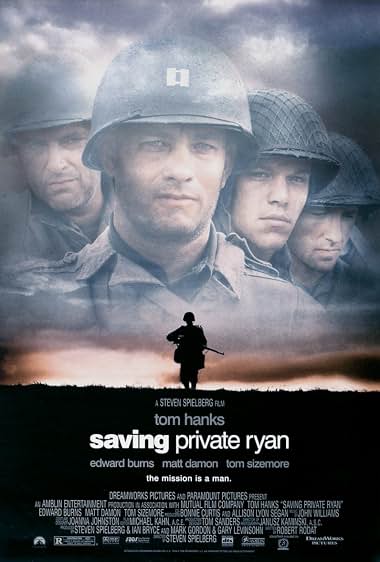
Saving Private Ryan
Steven Spielberg's 1998 war epic Saving Private Ryan redefined combat realism in cinema history, capturing five Academy Awards including Best Director and grossing over $482 million worldwide. The film opens with an unforgettable, visceral 27-minute depiction of the Allied invasion of Normandy on Omaha Beach on D-Day (June 6, 1944). Filmed with handheld 45-degree shutter cameras, de-saturated colors, and sickening acoustic design, Spielberg placed audiences directly into the chaos, dismemberment, and terror endured by American soldiers under merciless German machine-gun fire. In the aftermath of the slaughter, Army Ranger Captain John H. Miller (Tom Hanks in a deeply moving, understated performance) is ordered by General George C. Marshall to lead an eight-man squad deep behind enemy lines in Normandy to locate and extract Private James Francis Ryan (Matt Damon), whose three brothers have all been killed in action within days of each other. As the squad navigates deadly sniper ambushes and moral arguments about risking eight lives to save one, Miller reveals his quiet past as a schoolteacher, culminating in a ferocious defense of a strategic bridge in Ramelle. Hanks's dying whisper, 'Earn this... earn it,' remains one of the most haunting emotional climaxes in world cinema.

The Pianist
Directed by Roman Polanski and adapted by Ronald Harwood from the autobiographical Holocaust memoir by Polish-Jewish musician Władysław Szpilman, The Pianist (2002) stands as one of the most devastating, emotionally staggering, and historically authentic cinematic masterpieces ever created, capturing the prestigious Palme d'Or at the Cannes Film Festival and winning three Academy Awards including Best Director, Best Adapted Screenplay, and Best Actor. Adrien Brody delivers a transformative, career-defining performance of agonizing vulnerability and quiet dignity as Szpilman, a brilliant classical pianist performing Frédéric Chopin live on Polish Radio in Warsaw when German Luftwaffe bombs shatter the studio in September 1939. As Nazi tyranny engulfs Poland, Szpilman and his aristocratic family are subjected to escalating humiliations, starvation, and confinement within the brutal walled squalor of the Warsaw Ghetto, before his entire family is rounded up and deported to the Treblinka extermination camp. Rescued at the cattle cars by a Jewish ghetto policeman, Szpilman endures years of solitary, terrified concealment in the bombed-out ruins of Warsaw, witnessing the heroic Warsaw Ghetto Uprising and the Warsaw Uprising from attic windows. Emaciated, shivering, and near death from jaundice and starvation in a frost-bitten derelict mansion, Szpilman is discovered by a cultured German Wehrmacht officer, Captain Wilm Hosenfeld (Thomas Kretschmann), who asks him to play an abandoned grand piano—resulting in a breathtaking, tear-stained rendition of Chopin's Ballade No. 1 in G minor that restores their shared humanity amidst the apocalypse of war. Pawel Edelman's stark cinematography, Wojciech Kilar's haunting score, and Brody's profound commitment make The Pianist a timeless testament to human resilience and art.

Django Unchained
Quentin Tarantino's revisionist Southern Western Django Unchained is an audacious, explosive, and relentlessly entertaining cinematic epic that grossed over $426 million worldwide, winning Academy Awards for Best Original Screenplay and Best Supporting Actor. Set in the Antebellum South two years before the Civil War, the film follows Django (Jamie Foxx), an enslaved African-American purchased by eccentric, civilized German bounty hunter Dr. King Schultz (Christoph Waltz in an unforgettable, Oscar-winning tour de force). Schultz despises the institution of slavery and trains Django in the lethal art of bounty hunting in exchange for assistance identifying the murderous Brittle brothers. Forming a lethal and affectionate brotherhood, the duo embarks on a daring, perilous rescue mission across Mississippi to liberate Django's long-lost wife, Broomhilda von Shaft (Kerry Washington), who is enslaved at Candyland—a notorious plantation owned by the charming, depraved francophile Calvin Candie (Leonardo DiCaprio in a ferocious, hand-bleeding performance) and his fiercely complicit house slave Stephen (Samuel L. Jackson). Infused with spaghetti western aesthetics, Ennio Morricone melodies, hip-hop anthems, and stylized violence, Django Unchained is a thrilling triumph.
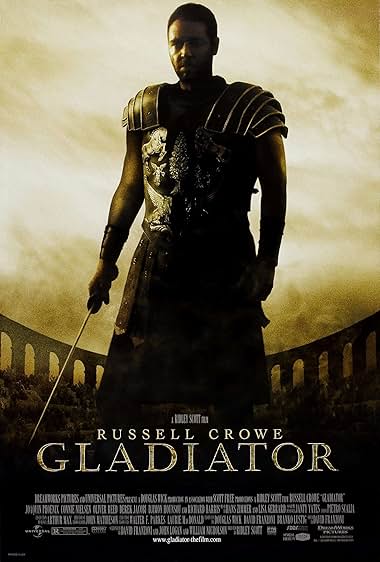
Gladiator
Ridley Scott's colossal historical epic Gladiator revived the long-dormant sword-and-sandal genre with monumental visceral power, grand philosophical gravitas, and operatic emotional resonance. Russell Crowe delivers a career-defining, Oscar-winning performance as General Maximus Decimus Meridius, the brilliant, fiercely loyal commander of the Roman Northern Armies who leads Rome to victory against Germanic tribes in 180 AD. The dying Emperor Marcus Aurelius (Richard Harris) intends to appoint Maximus as protector of Rome to restore the Republic, inciting the murderous jealousy of his corrupt, narcissistic son Commodus (a chilling, Oscar-nominated turn by Joaquin Phoenix). After Commodus murders his father, usurps the throne, and executes Maximus's beloved wife and child, Maximus is sold into slavery and trained as a gladiator in North Africa under the battle-hardened Proximo (Oliver Reed). Rising through the ranks of the Colosseum with unmatched combat prowess and stoic fury, Maximus captivates the Roman plebeians and confronts the Emperor directly in an iconic quest for retribution and justice. Winner of five Academy Awards including Best Picture and powered by Hans Zimmer and Lisa Gerrard's haunting, ethereal musical score, Gladiator remains an undisputed titan of 21st-century cinema.
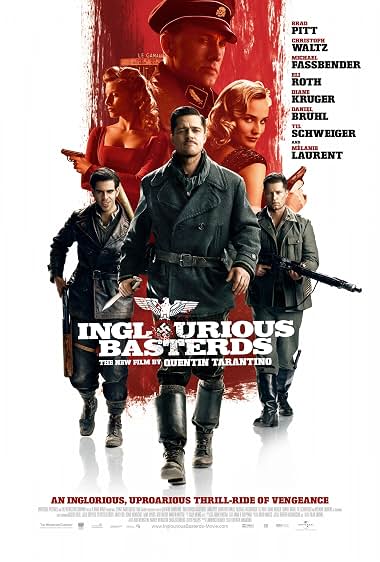
Inglourious Basterds
Quentin Tarantino's revisionist historical war masterpiece Inglourious Basterds is a dialogue-driven, pulse-pounding alternate-history triumph that famously rewrites the end of World War II inside a Parisian cinema. In Nazi-occupied France, Jewish refugee Shosanna Dreyfus (Mélanie Laurent) witnesses the massacre of her family by the urbane, terrifying SS Colonel Hans Landa (Christoph Waltz, who swept every major acting award on earth, including the Oscar and Cannes Best Actor). Fleeing to Paris, Shosanna assumes a new identity as a cinema proprietor and plots a lethal trap when Nazi high command selects her theater to premiere Joseph Goebbels' propaganda epic. Simultaneously, Lieutenant Aldo Raine (Brad Pitt) leads the 'Basterds'—a ruthless commando squad of Jewish-American soldiers who scalp Nazis and strike terror through the Reich. Collaborating with British intelligence officer Archie Hicox (Michael Fassbender) and German movie star double-agent Bridget von Hammersmark (Diane Kruger), the two revenge plots converge in a blazing, silver-nitrate inferno. Boasting legendary masterclass suspense scenes like the opening French farmhouse interrogation and the subterranean tavern card game, Inglourious Basterds is an unmissable cinematic triumph.
1917
Directed and co-written by Academy Award winner Sam Mendes alongside Krysty Wilson-Cairns and inspired by real-life wartime stories told by Mendes's grandfather, 1917 (2019) is a monumental technical and emotional triumph of modern warfare cinema, grossing over $384 million globally and winning three Academy Awards including Best Cinematography, Best Visual Effects, and Best Sound Mixing. Set during the brutal Western Front of World War I in northern France in April 1917, the narrative is masterfully constructed and edited to appear as two unbroken, continuous real-time continuous shots. Two young British lance corporals, Tom Blake (Dean-Charles Chapman) and Will Schofield (George MacKay in an astonishing, physically punishing performance of quiet resolve and indomitable courage), are summoned by General Erinmore (Colin Firth) and assigned an impossible, time-sensitive mission across enemy lines. With telegraph communication lines severed, they must traverse treacherous, corpse-littered No Man's Land and booby-trapped German trenches on foot to deliver an urgent cancellation order to the 2nd Battalion of the Devonshire Regiment—led by Colonel Mackenzie (Benedict Cumberbatch)—before 1,600 British soldiers, including Blake's beloved older brother, walk into a deadly German ambush trap. From surviving crumbling subterranean bunkers to dodging sniper fire through the flare-lit burning nocturnal ruins of the town of Écoust-Saint-Mein, Schofield's desperate sprint across an exploding battlefield amidst charging infantry soldiers stands as one of the most iconic action sequences in cinema history. Sir Roger Deakins's revolutionary fluid camerawork and Thomas Newman's soaring score ('The Night Window') elevate 1917 into an unforgettable, breathless masterwork on sacrifice and duty.