
 TonightOnScreen Catalog
Explore Entertainment • Mystery
Search our curated catalog of cinema releases, binge-worthy series, and where to stream them.

Oldboy
Directed by South Korean auteur Park Chan-wook as the second and most legendary installment of his celebrated The Vengeance Trilogy, Oldboy (2003) won the Grand Prix at the 2004 Cannes Film Festival, receiving rapturous praise from jury president Quentin Tarantino and permanently cementing the global dominance of modern South Korean cinema. Loosely adapted from the Japanese manga series by Garon Tsuchiya and Nobuaki Minegishi, the narrative begins in 1988 with Oh Dae-su (Choi Min-sik in a volcanic, feral, and emotionally shattering tour de force of method acting), an ordinary, obnoxious businessman and father who is abruptly kidnapped off a rainy street and imprisoned inside a bizarre, windowless hotel room with only a television set for company. Kept alive on fried dumplings and unaware of his captor's identity or motives, Dae-su learns via the TV that his beloved wife has been brutally murdered and that he is the prime suspect. For fifteen agonizing years, Dae-su conditions his body into a lethal weapon through shadowboxing against the wallpaper, feeding an insatiable hunger for retribution. Without warning, he is suddenly released inside a suitcase on a grassy rooftop, handed cash and a mobile phone, and given exactly five days by his enigmatic, wealthy captor Lee Woo-jin (Yoo Ji-tae) to solve the mystery: not why he was imprisoned for fifteen years, but why he was let go. Aided by a sympathetic young sushi chef named Mi-do (Kang Hye-jung), Dae-su embarks on a blood-drenched odyssey through Seoul's underworld, famously culminating in the legendary three-minute single-take side-scrolling corridor brawl where Dae-su battles dozens of armed thugs with only a claw hammer. Featuring Cho Young-wuk's lush, melancholic waltz soundtrack and Chung Chung-hoon's green-tinted cinematography, Oldboy is an operatic Greek tragedy of revenge, guilt, and devastating cosmic irony.

The Shining
Stanley Kubrick's 1980 adaptation of Stephen King's horror novel The Shining is universally recognized as one of the most terrifying, meticulously crafted, and endlessly analyzed psychological horror masterworks in cinematic history. Jack Nicholson delivers an iconic, unhinged performance as Jack Torrance, an aspiring writer and recovering alcoholic who accepts a job as the winter caretaker of the secluded, snowbound Overlook Hotel in the Colorado Rockies, accompanied by his anxious wife Wendy (Shelley Duvall) and psychic young son Danny (Danny Lloyd). Danny possesses the 'shining'—a telepathic ability that reveals the hotel's horrific history of Native American burial desecration, ax murders, and ghostly apparitions (including the blood-flooding elevators and the creepy Grady twins). As blinding blizzards cut off all communication with the outside world, the hotel's malevolent supernatural forces prey on Jack's fragile sanity, turning him into a homicidal maniac wielding a fire ax with the legendary cry: 'Here's Johnny!' Pioneering Garrett Brown's revolutionary Steadicam tracking shots through the hotel's geometrical corridors and hedge maze, The Shining's cold, symmetrical visual perfection and psychological ambiguity continue to haunt generations of cinema lovers.
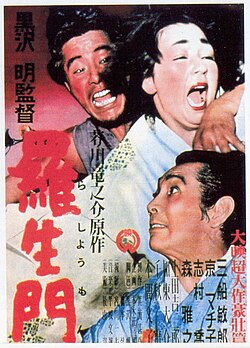
Rashomon
Rashomon is Akira Kurosawa's groundbreaking, globally celebrated psychological crime drama and philosophical milestone, winner of the Venice Golden Lion and an honorary Academy Award, which introduced Japanese cinema to the Western world and gave birth to the universally recognized psychological concept of the 'Rashomon Effect'. Set in eighth-century Heian-period Kyoto amidst civil war and societal decay, a horrified woodcutter, an emotionally shattered Buddhist priest, and a cynical commoner seek shelter from a torrential thunderstorm beneath the decaying, cavernous ruins of the southern city gate, the Rashomon. As the storm rages, the priest and woodcutter recount their harrowing experiences testifying at a police inquest regarding the brutal rape of a noblewoman and the murder of her samurai husband, Takehiro, in a dense forest clearing. The narrative unfolds through four radically contradictory, self-serving subjective flashbacks detailing the same violent tragedy: Tajomaru, a notorious bandit, portrays himself as a daring, swashbuckling warrior who won the woman in a heroic duel; the wife depicts herself as a helpless, victimized innocent driven by despair to accidentally kill her disdainful husband; the murdered samurai, testifying from beyond the grave through a spirit medium, claims he took his own life out of unbearable dishonor and betrayal; and the woodcutter reveals an unromantic, pathetic brawl driven by cowardice and stolen daggers. Through revolutionary cinematic techniques, dynamic camera tracking through sun-dappled forests, and haunting existential inquiries into human vanity and deceptive self-delusion, Rashomon is a peerless exploration of subjective truth.

Shutter Island
Martin Scorsese's 2010 psychological neo-noir thriller Shutter Island, adapted from Dennis Lehane's 2003 bestselling novel, grossed nearly $300 million worldwide and remains one of the director's most commercially successful, atmospheric, and endlessly analyzed cinematic achievements. Set in the autumn of 1954 against the paranoid backdrop of the Cold War, U.S. Marshal Edward 'Teddy' Daniels (Leonardo DiCaprio in a raw, emotionally tortured performance) and his newly assigned partner Chuck Aule (Mark Ruffalo) travel by ferry to Ashecliffe Hospital for the Criminally Insane, a heavily fortified facility situated on a storm-lashed island in Boston Harbor. They are tasked with investigating the baffling, impossible disappearance of patient Rachel Solando, who vanished from a locked room without a trace. Haunted by traumatic memories of liberating the Dachau concentration camp during World War II and agonizing grief over his wife Dolores (Michelle Williams), who died in an arson attack, Teddy suspects the asylum's enigmatic chief psychiatrist Dr. John Cawley (Ben Kingsley) is conducting unethical mind-control experiments on lobotomized patients. As a violent hurricane cuts off all communication with the mainland, Teddy's investigation unravels into a labyrinth of hallucinations, paranoia, and shifting realities, culminating in a devastating psychological twist: 'Which would be worse: to live as a monster, or to die as a good man?'
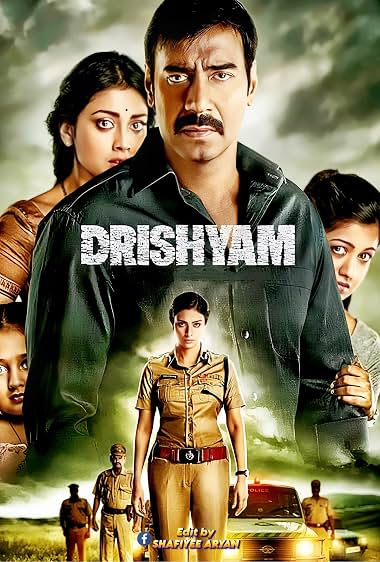
Drishyam
Directed by the late Nishikant Kamat, the 2015 Hindi suspense thriller Drishyam is celebrated as one of the sharpest, most gripping mystery masterclasses in Indian cinematic history. Adapted from Jeethu Joseph's legendary Malayalam original, the film stars Ajay Devgn as Vijay Salgaonkar, an uneducated, street-smart cable television operator and devoted family man living in a quiet Goan village. Vijay's peaceful life is shattered when an arrogant boy named Sameer—the only son of Goa's ruthless Inspector General of Police Meera Deshmukh (a formidable, steely Tabu)—blackmails Vijay's teenage daughter Anju with illicit camera footage. During a late-night confrontation, Sameer is accidentally killed by the family in self-defense. Drawing upon his encyclopedic knowledge of cinema thrillers, Vijay orchestrates an audacious, foolproof alibi around the dates of October 2nd and 3rd, conditioning his family to withstand brutal third-degree police interrogation while hiding the body under the very foundation of the police station itself. A riveting psychological chess match between a desperate father and an implacable mother, Drishyam achieved cult classic status and huge commercial success. Celebrated for its tight narrative pacing and peerless screenwriting, Drishyam became a widespread cultural reference point across India for police procedure and tactical alibis. Ajay Devgn's restrained, simmering performance and Tabu's ferocious maternal grief turned this psychological thriller into an enduring cult classic that continues to captivate mystery enthusiasts.
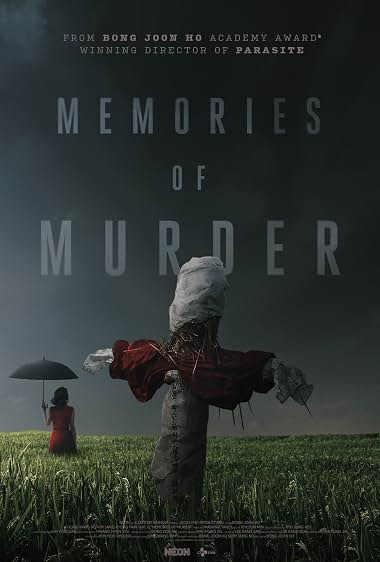
Memories of Murder
Directed by South Korean auteur Bong Joon-ho and co-written with Shim Sung-bo, Memories of Murder (Salinui chueok, 2003) is universally revered by critics and filmmakers as one of the finest, most atmospheric, and psychologically devastating crime procedurals in the history of world cinema, widely cited by David Fincher and Quentin Tarantino as an enduring benchmark for murder mysteries. Based on the real-life Hwaseong serial murders—Korea's first recorded serial killings between 1986 and 1991—the film is set in the rural province of Gyeonggi against the oppressive, rain-soaked backdrop of South Korea's decaying military dictatorship. The investigation is initially spearheaded by bungling, hot-tempered local detective Park Doo-man (superstar Song Kang-ho in a nuanced, layered masterclass blending buffoonery with growing existential dread), who relies on physical intuition, shamanistic superstitions, and violent custodial torture to force coerced confessions out of mentally disabled suspects. Desperate for professional help, the department brings in modern, analytical Seoul detective Seo Tae-yoon (Kim Sang-kyung), who meticulously pieces together empirical clues, discovering that the phantom killer only strikes on rainy nights, targeting women dressed in red while requesting a specific melancholic pop song on the radio. As the body count mounts and forensic evidence is repeatedly contaminated by incompetence and lack of modern DNA testing facilities, the detectives' rational facades disintegrate into madness and despair. Culminating in the unforgettable, haunting final freeze-frame where Song Kang-ho stares directly into the camera lens—staring directly into the eyes of the real killer who might be sitting in the theater—Memories of Murder is an unsparing, poetic tragedy on institutional failure, memory, and the banality of evil.

Kahaani
Directed by Sujoy Ghosh and starring Vidya Balan in an unforgettable tour de force, 2012's suspense thriller Kahaani grossed over ₹104 crore on an economical ₹8 crore budget, won three National Film Awards, and stands as one of the most brilliant, tightly plotted female-led mysteries in Indian cinematic history. Arriving alone in Kolkata during the vibrant, chaotic festivities of Durga Puja, heavily pregnant London-based software engineer Vidya Bagchi (Vidya Balan) sets out to find her missing husband Arnab, who supposedly traveled to India for an assignment at the National Data Center and vanished without a trace. Assisted by sympathetic local police sub-inspector Satyoki 'Rana' Sinha (Parambrata Chatterjee), Vidya navigates Kolkata's bustling alleyways, guest houses, and bureaucracy, only to find that all official records of Arnab's existence have been wiped clean. Her search draws the hostile attention of abrasive Intelligence Bureau officer A. Khan (Nawazuddin Siddiqui in a fiercely commanding breakthrough) and a contract killer named Bob Biswas (Saswata Chatterjee). Showcasing Setu's atmospheric cinematography, Kolkata as a living, breathing character, and an earth-shattering climax celebrating female divinity and vengeance, Kahaani is a masterpiece.
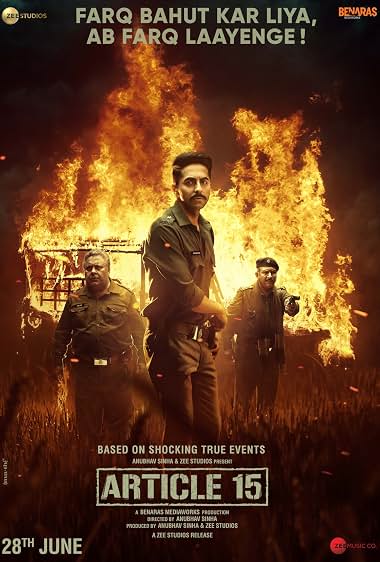
Article 15
Anubhav Sinha's hard-hitting 2019 crime procedural drama Article 15 stands as one of the most courageous, socially provocative, and critically lauded films in modern Hindi cinema, winning three Filmfare Awards. Inspired by true events, the film stars Ayushmann Khurrana as Ayan Ranjan, a privileged, foreign-educated IPS officer who receives his first posting in the rural hinterlands of Lalgaon, Uttar Pradesh. When two teenage Dalit girls are found gang-raped and hanged from a banyan tree, local subordinate officers—led by the deeply corrupt, casteist Circle Officer Brahmadutt Singh (Manoj Pahwa) and Jatav officer Nishad (Zeeshan Ayyub)—attempt to cover up the crime as an honor killing to protect high-caste landlords. Horrified by the entrenched, dehumanizing caste hierarchy that dictates who can touch whom or draw water from which well, Ayan invokes Article 15 of the Indian Constitution, which prohibits discrimination on grounds of religion, race, caste, sex, or place of birth. Navigating swampy fields, political threats, and departmental apathy, Ayan leads a tireless manhunt for a missing third victim, delivering an unsparing, searing indictment of institutional caste prejudice. Anubhav Sinha's uncompromising directorial vision, Ewan Mulligan's gritty cinematography, and Ayushmann Khurrana's measured intensity make Article 15 a watershed moment in socially conscious Indian cinema that confronts prejudice with unflinching honesty.
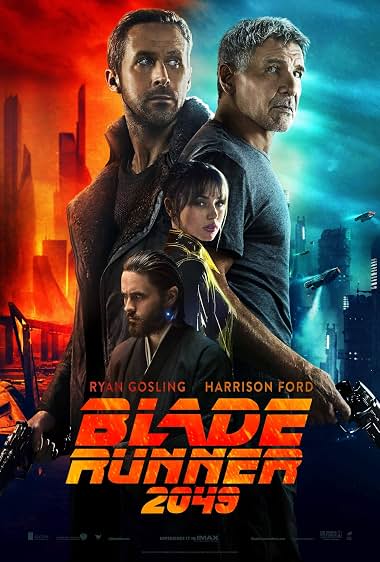
Blade Runner 2049
Directed by visionary auteur Denis Villeneuve, Blade Runner 2049 achieved the extraordinary feat of crafting a sequel to Ridley Scott's 1982 landmark that matches—and in many aspects surpasses—the atmospheric philosophical depth of the original. Set thirty years later in a freezing, neon-soaked Los Angeles choking in smog and climate collapse, Ryan Gosling stars as K, a Nexus-9 replicant working as an LAPD 'blade runner' who hunts down and 'retires' rogue older android models. During a routine assignment, K unearths a long-buried box containing the skeletal remains of a female replicant who miraculously died giving birth. Realizing that the revelation of replicant reproduction could shatter the fragile order between humans and synthetic slaves, LAPD Lieutenant Joshi (Robin Wright) orders K to destroy all evidence, while eccentric industrialist Niander Wallace (Jared Leto) hunts the child to build an interstellar workforce. Accompanied by his holographic AI companion Joi (Ana de Armas), K's existential quest leads him to former blade runner Rick Deckard (Harrison Ford), who has lived in hiding in irradiated Las Vegas. Winner of two Oscars including Roger Deakins's breathtaking cinematography, 2049 is a sci-fi masterpiece.

Arrival
Directed with breathtaking philosophical depth by Denis Villeneuve and adapted by Eric Heisserer from Ted Chiang's Nebula Award-winning novella Story of Your Life, Arrival (2016) is widely recognized as one of the most profound, emotionally resonant, and intellectually thrilling science-fiction masterworks of the twenty-first century, earning eight Academy Award nominations including Best Picture and Best Director. When twelve colossal, monolithic extraterrestrial shell spacecraft hover silently over disparate locations across the globe, global civilization teeters on the brink of geopolitical panic and nuclear war. The U.S. military enlists elite linguistics professor Dr. Louise Banks (Amy Adams in an astounding, emotionally transcendent performance of quiet grace and heartbreak) alongside theoretical physicist Ian Donnelly (Jeremy Renner) and Colonel Weber (Forest Whitaker) to enter the Montana spacecraft and decipher the fundamental mystery: what is their purpose on Earth? Entering the gravity-defying chamber to communicate with two seven-limbed cephalopod alien beings dubbed 'heptapods' (Abbott and Costello), Louise discovers that their language is non-linear and visual, expressed through intricate, circular inky logograms that transcend human concepts of time. As Louise immerses herself in the alien syntax, the Sapir-Whorf hypothesis alters her cognitive brain chemistry, unlocking memories of a beloved daughter who died of a terminal illness—only to reveal an earth-shattering temporal truth about free will, destiny, and the bittersweet choices of human existence. Elevated by Bradford Young's painterly, mist-shrouded cinematography and Jóhann Jóhannsson's haunting score, Arrival is an unforgettable cinematic masterpiece on love, grief, and the unifying power of human empathy.

Brahmayugam
Written and directed by Rahul Sadasivan with dialogues penned by acclaimed Malayalam novelist T.D. Ramakrishnan, 2024's period psychological folk-horror masterpiece Brahmayugam (The Age of Madness) captured universal critical acclaim and major box office success, grossing over ₹85 crore worldwide and celebrated as an audacious, groundbreaking artistic triumph in Indian genre cinema. Filmed entirely in gorgeous, high-contrast black-and-white, the film is set in the seventeenth century during the Kali Yuga against the haunting, rain-drenched wilderness of feudal Malabar. The narrative follows Thevan (Arjun Ashokan in a raw, physically demanding performance), a Paanan folk singer and runaway slave fleeing the horrors of Portuguese capture, who loses his companion to a woodland Yakshi and stumbles upon a decaying, moss-covered feudal mansion (Mana) hidden deep within the mist-shrouded jungle. Seeking shelter and food, Thevan is welcomed by the mansion's sole master, Kodumon Potti (megastar Mammootty in a demonic, terrifying, and career-defining masterclass of aristocratic menace and sinister supernatural malevolence), and his subservient, terrified cook (Sidharth Bharathan). Initially seduced by Potti's opulent feasts, game of dice (Chaupar), and flattering praise of his singing, Thevan soon realizes to his horror that he has entered a gilded psychological prison and that the mansion's master is an ancient, demonic shape-shifting entity known as a Chaathan, who feeds upon the servitude, despair, and souls of mortals. Exploring allegories of systemic feudal caste oppression, totalitarian enslavement, and the corrupting nature of absolute power, Shehnad Jalal's breathtaking monochrome cinematography and Christo Xavier's chilling tribal-choral musical score elevate Brahmayugam into an immortal gothic horror masterpiece of world cinema.

Drive My Car
Drive My Car is an exquisite, meditative, and emotionally profound drama directed by Ryusuke Hamaguchi, based on Haruki Murakami's short story, which captivated global critics and became the first Japanese film in history to be nominated for the Academy Award for Best Picture while winning the Academy Award for Best International Feature Film. The narrative follows Yusuke Kafuku, an accomplished, introspective Tokyo theater director and actor who enjoys a deeply intimate, creative marriage with his screenwriter wife, Oto, who invents intricate stories during their moments of intimacy. When Oto suddenly dies of a cerebral hemorrhage, Kafuku is left emotionally paralyzed by grief and unanswered questions regarding her hidden infidelities. Two years later, Kafuku accepts an artistic residency at a theater festival in Hiroshima to direct a multilingual stage production of Anton Chekhov's Uncle Vanya. Per insurance policy rules, the festival assigns him Misaki Watari, a reserved, stoic twenty-year-old chauffeur, to drive his cherished red Saab 900 Turbo along the coastal highways between his apartment and the rehearsals. Initially uncomfortable sharing his quiet automobile sanctuary, Kafuku develops an unexpected, tender therapeutic bond with Misaki during their daily coastal commutes. As Kafuku directs his diverse cast—including a volatile young television star who was Oto's former secret lover—he and Misaki gradually exchange confessions regarding their shared guilt, past tragedies, and unresolved grief. Praised for its sublime pacing, quiet humanism, and emotional catharsis, Drive My Car is an unforgettable journey through loss and the courage to endure.