
 TonightOnScreen Catalog
Explore Entertainment • Romance
Search our curated catalog of cinema releases, binge-worthy series, and where to stream them.
Amélie
Directed with boundless visual whimsy, warm nostalgic lyricism, and eccentric genius by Jean-Pierre Jeunet, Amélie (Le Fabuleux Destin d'Amélie Poulain, 2001) is universally celebrated as one of the most beloved, enchanting, and internationally successful French films in motion picture history, grossing over $174 million worldwide and earning five Academy Award nominations including Best Original Screenplay and Best Foreign Language Film. Set in a hyper-stylized, romanticized Parisian village of Montmartre saturated in warm sepia, emerald greens, and vibrant reds, the narrative follows Amélie Poulain (Audrey Tautou in an immortal, career-defining performance of wide-eyed innocence, mischievous charm, and radiant soul), an imaginative, introverted young waitress working at the Two Windmills café. Having endured an isolated childhood with an eccentric, emotionally distant father following her mother's tragic demise, Amélie retreats into a rich interior world of simple pleasures: cracking crème brûlée with a teaspoon, skipping stones on the Canal Saint-Martin, and observing Parisian eccentrics. On the night Princess Diana dies in August 1997, Amélie discovers a secret tin box of childhood memorabilia hidden behind her bathroom wall forty years earlier. Tracking down the now-elderly owner and witnessing his overwhelming, tearful joy upon its return, Amélie adopts a secret vocation: executing elaborate, anonymous acts of kindness to transform the lives of lonely neighbors, shopkeepers, and a reclusive painter with brittle bones. However, when she becomes captivated by Nino Quincampoix (Mathieu Kassovitz), an eccentric collector of discarded photo-booth snapshots, Amélie must summon the courage to confront her own fear of vulnerability and pursue her own happiness. Scored by Yann Tiersen's accordion and piano melodies, Amélie is a timeless celebration of human empathy.
Eternal Sunshine of the Spotless Mind
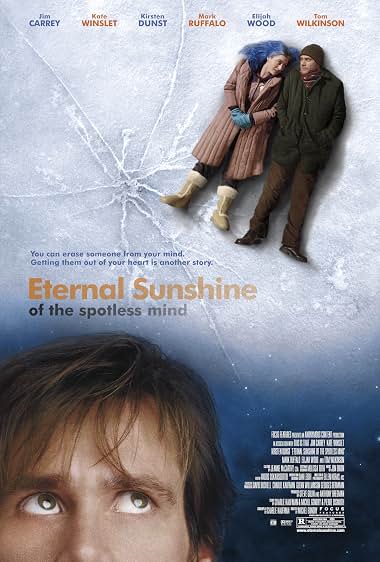
Directed with dazzling visual ingenuity by French auteur Michel Gondry and penned by screenwriting genius Charlie Kaufman—who won the Academy Award for Best Original Screenplay—Eternal Sunshine of the Spotless Mind (2004) stands as an immortal romantic masterpiece that explores memory, grief, heartbreak, and the inevitable beauty of human connection. The narrative follows Joel Barish (Jim Carrey in an extraordinary, deeply melancholic, and subdued dramatic triumph), a shy, introverted New Yorker who is devastated to discover that his ex-girlfriend, the impulsive, free-spirited, Clementine Kruczynski (Kate Winslet in an electrifying, Oscar-nominated tour de force with ever-changing hair colors from blue ruin to tangerine), has undergone a radical neurological procedure at Lacuna, Inc. to surgically erase all memories of their tumultuous two-year relationship. Overcome by agony and spite, Joel visits Dr. Howard Mierzwiak (Tom Wilkinson) to undergo the identical memory-erasure process. However, as Lacuna technicians (Mark Ruffalo, Kirsten Dunst, and Elijah Wood) map and systematically delete Joel's memories in reverse chronological order while he sleeps, Joel relives the initial spark, joy, and tenderness of falling in love with Clementine on a frozen beach in Montauk. Desperately regretting his decision, Joel fights within the crumbling, surreal architecture of his own subconscious mind, attempting to hide Clementine in childhood memories before she vanishes forever: 'Meet me in Montauk.' Shot with ingenious in-camera practical effects and scored by Jon Brion, Eternal Sunshine is a poignant, universally cherished triumph on why love is worth the inevitable pain of living.