
 TonightOnScreen Catalog
Explore Entertainment • Thriller
Search our curated catalog of cinema releases, binge-worthy series, and where to stream them.
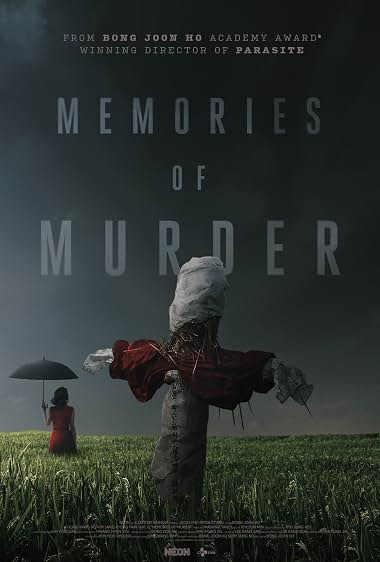
Memories of Murder
Directed by South Korean auteur Bong Joon-ho and co-written with Shim Sung-bo, Memories of Murder (Salinui chueok, 2003) is universally revered by critics and filmmakers as one of the finest, most atmospheric, and psychologically devastating crime procedurals in the history of world cinema, widely cited by David Fincher and Quentin Tarantino as an enduring benchmark for murder mysteries. Based on the real-life Hwaseong serial murders—Korea's first recorded serial killings between 1986 and 1991—the film is set in the rural province of Gyeonggi against the oppressive, rain-soaked backdrop of South Korea's decaying military dictatorship. The investigation is initially spearheaded by bungling, hot-tempered local detective Park Doo-man (superstar Song Kang-ho in a nuanced, layered masterclass blending buffoonery with growing existential dread), who relies on physical intuition, shamanistic superstitions, and violent custodial torture to force coerced confessions out of mentally disabled suspects. Desperate for professional help, the department brings in modern, analytical Seoul detective Seo Tae-yoon (Kim Sang-kyung), who meticulously pieces together empirical clues, discovering that the phantom killer only strikes on rainy nights, targeting women dressed in red while requesting a specific melancholic pop song on the radio. As the body count mounts and forensic evidence is repeatedly contaminated by incompetence and lack of modern DNA testing facilities, the detectives' rational facades disintegrate into madness and despair. Culminating in the unforgettable, haunting final freeze-frame where Song Kang-ho stares directly into the camera lens—staring directly into the eyes of the real killer who might be sitting in the theater—Memories of Murder is an unsparing, poetic tragedy on institutional failure, memory, and the banality of evil.

Kahaani
Directed by Sujoy Ghosh and starring Vidya Balan in an unforgettable tour de force, 2012's suspense thriller Kahaani grossed over ₹104 crore on an economical ₹8 crore budget, won three National Film Awards, and stands as one of the most brilliant, tightly plotted female-led mysteries in Indian cinematic history. Arriving alone in Kolkata during the vibrant, chaotic festivities of Durga Puja, heavily pregnant London-based software engineer Vidya Bagchi (Vidya Balan) sets out to find her missing husband Arnab, who supposedly traveled to India for an assignment at the National Data Center and vanished without a trace. Assisted by sympathetic local police sub-inspector Satyoki 'Rana' Sinha (Parambrata Chatterjee), Vidya navigates Kolkata's bustling alleyways, guest houses, and bureaucracy, only to find that all official records of Arnab's existence have been wiped clean. Her search draws the hostile attention of abrasive Intelligence Bureau officer A. Khan (Nawazuddin Siddiqui in a fiercely commanding breakthrough) and a contract killer named Bob Biswas (Saswata Chatterjee). Showcasing Setu's atmospheric cinematography, Kolkata as a living, breathing character, and an earth-shattering climax celebrating female divinity and vengeance, Kahaani is a masterpiece.

Indian
Directed by S. Shankar, the 1996 vigilante action thriller Indian (Hindustani) made history as India's official submission for the Best Foreign Language Film at the 69th Academy Awards, winning three National Film Awards including Best Actor for Kamal Haasan. Haasan delivers an immortal, prosthetic-laden double performance as Senapathy, a 70-year-old former veteran of Subhas Chandra Bose's Indian National Army (INA), and his corrupt modern son Chandrabose. Living in Chennai, Senapathy is sickened by the systemic cancer of bribery and administrative corruption that poisons public healthcare, transport, and police services, leading to the tragic death of his daughter Kasturi. Utilizing the ancient, lethal martial art of Varma Kalai (pressure point strikes that paralyze or kill), Senapathy launches an unyielding vigilante crusade, assassinating corrupt municipal commissioners, doctors, and treasury clerks on live television. The moral tragedy peaks when Senapathy discovers his own son Chandrabose took bribes that resulted in a fatal school bus brake failure, forcing the father to hunt down his own child in the name of justice. With A. R. Rahman's legendary score, Indian remains a monumental masterpiece.

Fargo
Joel and Ethan Coen's 1996 neo-noir black comedy crime masterpiece Fargo stands as a pitch-perfect synthesis of regional Midwestern eccentricity, tragic greed, and shocking violence, winning two Academy Awards for Best Actress and Best Original Screenplay. Set across the blinding, frozen, snow-swept tundra of Minnesota and North Dakota, the narrative begins when pathetic, debt-ridden Minneapolis car salesman Jerry Lundegaard (William H. Macy in a sweat-drenched, iconic turn) concocts a desperate, half-baked scheme: hiring two sleazy petty criminals, Carl Showalter (Steve Buscemi) and the mute psychopath Gaear Grimsrud (Peter Stormare), to kidnap his own wealthy wife to extort a $1 million ransom from his disdainful father-in-law. When the botched abduction results in three senseless roadside murders, cheerful, seven-months-pregnant Brainerd police chief Marge Gunderson (Frances McDormand in an Oscar-winning, immortal performance of warmth and moral clarity) takes charge of the investigation. Featuring Carter Burwell's majestic Scandinavian-inspired score and Roger Deakins's vast whiteout cinematography—culminating in the infamous woodchipper sequence—Fargo is cinematic genius. Roger Deakins's stark, snow-drenched cinematography combined with Carter Burwell's haunting orchestral score cements Fargo as an enduring dark comedy milestone celebrated for its eccentric regional dialogue and eccentric moral worldview.
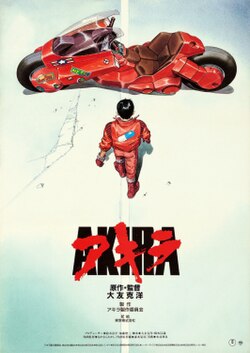
Akira
Akira is a landmark, visually groundbreaking, and culturally transformative cyberpunk anime masterpiece directed by Katsuhiro Otomo, adapting his monumental manga epic into a revolutionary cinematic work that permanently changed global animation and modern science fiction. Set in the dystopian, sprawling cyberpunk metropolis of Neo-Tokyo in the year 2019—built upon artificial islands in Tokyo Bay following a catastrophic nuclear explosion that triggered World War III thirty-one years earlier—the city is plagued by anti-government riots, religious cult fanaticism, and violent street gang warfare. The storyline follows Shotaro Kaneda, the brash, charismatic leader of a rogue teenage motorcycle capsule gang, and his insecure childhood best friend, Tetsuo Shima. During a fierce territorial motorcycle skirmish against the rival Clown gang, Tetsuo collides with a psychic child escapee from a secret government laboratory, inadvertently triggering latent, terrifying telekinetic abilities within his mind. Captured by a clandestine military agency overseen by the stern Colonel Shikishima, Tetsuo is subjected to invasive biological experimentation that rapidly accelerates his godlike psychic power, overwhelming his fragile sanity and breeding an insatiable, destructive rage. Driven by feelings of inferiority toward Kaneda, Tetsuo goes on a catastrophic, murderous rampage through Neo-Tokyo, seeking to awaken Akira, the legendary psychic child entombed beneath the Olympic Stadium whose catastrophic awakening originally destroyed the old world. Brimming with jaw-dropping hand-drawn destruction, kinetic neon motorcycle streaks, and Geinoh Yamashirogumi's hypnotic tribal soundtrack, Akira is a peerless sci-fi milestone.

Haider
Directed by Vishal Bhardwaj and co-written with Kashmiri journalist Basharat Peer, Haider completed Bhardwaj's monumental Shakespearean tragedy trilogy (following Maqbool and Omkara), winning five National Film Awards and the People's Choice Award at the Rome Film Festival. Transposing Shakespeare's Hamlet to the snow-covered, conflict-torn Kashmir Valley in 1995, Shahid Kapoor delivers a career-defining, volcanic performance as Haider Meer, a student of poetry who returns to Srinagar to discover his doctor father has disappeared following an army raid, his ancestral home burned down, and his mother Ghazala (Tabu in an astonishing, incestuously charged performance of Queen Gertrude) living cheerfully with his devious politician uncle Khurram (Kay Kay Menon as Claudius). Driven to the brink of madness, Haider is approached by the enigmatic Roohdar (Irrfan Khan in an immortal cameo), who reveals that Khurram betrayed Haider's father to his death in an army interrogation camp. Featuring Shahid Kapoor's unhinged 'Chutzpah' town square monologue, Pankaj Kumar's pristine snow cinematography, and Vishal Bhardwaj's haunting Kashmiri folk compositions, Haider is a cinematic milestone. Vishal Bhardwaj's evocative musical compositions, Gulzar's poetic lyrics, and Pankaj Kumar's snowbound cinematography in Kashmir establish Haider as one of the most intellectually rigorous and emotionally devastating literary adaptations in world cinema.

Ghost in the Shell
Ghost in the Shell is a seminal, philosophically profound, and visually dazzling cyberpunk neo-noir animated masterpiece directed by Mamoru Oshii, exploring the complex existential boundaries of humanity, consciousness, and technology in an interconnected future. Set in the sprawling, rain-soaked cybernetic metropolis of New Port City in 2029, advances in cybernetics allow humans to replace biological organs with synthetic cyberware and connect their biological minds directly to the global electronic data web. The narrative centers on Major Motoko Kusanagi, an elite cybernetic combat operative and field commander of Public Security Section 9, a specialized clandestine counter-cyberterrorist intelligence task force. Possessing a formidable, state-of-the-art synthetic cyborg body housing only a sliver of her original biological human brain—her unique 'ghost'—Major Kusanagi is plagued by profound existential doubts regarding the authenticity of her identity and free will. Section 9 is mobilized to hunt down the 'Puppet Master', an elusive, omnipotent cyber-hacker who infiltrates cyberbrains, altering victims' memories and manipulating foreign diplomats. However, as Kusanagi and her trusted tactical partner Batou pursue the digital entity, they discover that the Puppet Master is not a human hacker, but an autonomous, sentient artificial intelligence known as Project 2501, born organically from the sea of information. Seeking asylum and physical evolution, the entity desires to merge with Kusanagi's consciousness to transcend individual existence. Renowned for Kenji Kawai's haunting choral score and revolutionary cyber aesthetics that directly inspired The Matrix, Ghost in the Shell is a philosophical tour de force.

Captain America: The Winter Soldier
Captain America: The Winter Soldier, directed by Anthony and Joe Russo, is a masterclass in political espionage cinema and visceral action filmmaking, universally celebrated as one of the very finest achievements in the Marvel Cinematic Universe. Adapting to the modern world in Washington D.C., Steve Rogers serves as a covert operative for S.H.I.E.L.D., but grows deeply uneasy with Director Nick Fury’s preemptive surveillance agenda, Project Insight—a network of sub-orbital Helicarriers designed to eliminate potential domestic threats before they occur. The thriller detonates into high gear when Fury is ruthlessly ambushed in downtown D.C. by a shadowy, bionic-armed phantom assassin known as the Winter Soldier. Branded a fugitive traitor by senior S.H.I.E.L.D. official Alexander Pierce, Captain America goes on the run alongside Natasha Romanoff, unearthing a horrifying historical conspiracy: Hydra, the fascist organization Rogers defeated in World War II, was never extinguished; it secretly metastasized within S.H.I.E.L.D. for seven decades, manipulating global geopolitical conflicts to induce humanity to surrender their freedom for manufactured security. Steve's personal universe shatters completely when he discovers that the unstoppable, brainwashed assassin hunting him is none other than Bucky Barnes, his childhood best friend believed killed in 1945. Renowned for its breathtaking highway knife fight, intense elevator ambush, and hard-edged thematic integrity, The Winter Soldier transformed the MCU into a mature, sophisticated cinematic powerhouse.

Brahmayugam
Written and directed by Rahul Sadasivan with dialogues penned by acclaimed Malayalam novelist T.D. Ramakrishnan, 2024's period psychological folk-horror masterpiece Brahmayugam (The Age of Madness) captured universal critical acclaim and major box office success, grossing over ₹85 crore worldwide and celebrated as an audacious, groundbreaking artistic triumph in Indian genre cinema. Filmed entirely in gorgeous, high-contrast black-and-white, the film is set in the seventeenth century during the Kali Yuga against the haunting, rain-drenched wilderness of feudal Malabar. The narrative follows Thevan (Arjun Ashokan in a raw, physically demanding performance), a Paanan folk singer and runaway slave fleeing the horrors of Portuguese capture, who loses his companion to a woodland Yakshi and stumbles upon a decaying, moss-covered feudal mansion (Mana) hidden deep within the mist-shrouded jungle. Seeking shelter and food, Thevan is welcomed by the mansion's sole master, Kodumon Potti (megastar Mammootty in a demonic, terrifying, and career-defining masterclass of aristocratic menace and sinister supernatural malevolence), and his subservient, terrified cook (Sidharth Bharathan). Initially seduced by Potti's opulent feasts, game of dice (Chaupar), and flattering praise of his singing, Thevan soon realizes to his horror that he has entered a gilded psychological prison and that the mansion's master is an ancient, demonic shape-shifting entity known as a Chaathan, who feeds upon the servitude, despair, and souls of mortals. Exploring allegories of systemic feudal caste oppression, totalitarian enslavement, and the corrupting nature of absolute power, Shehnad Jalal's breathtaking monochrome cinematography and Christo Xavier's chilling tribal-choral musical score elevate Brahmayugam into an immortal gothic horror masterpiece of world cinema.

Chatrapathi
Chatrapathi is an intense, emotionally volcanic, and profoundly moving action drama directed by S. S. Rajamouli, marking his first historic collaboration with superstar Prabhas and establishing the director-actor partnership that would eventually conquer Indian cinema with the Baahubali franchise. The film opens in a coastal village in Sri Lanka, where Sivaji, an orphaned boy, is adopted and showered with maternal love by a kind-hearted woman named Parvati, much to the bitter, festering resentment of her biological son Ashok. When ethnic riots erupt in Sri Lanka, the refugees are forcibly evacuated to India on overcrowded boats. During the harrowing escape, Ashok maliciously deceives his mother into believing Sivaji drowned at sea, cruelly severing mother and son. Reaching the port city of Visakhapatnam, Sivaji and fellow refugees are enslaved by local port mafioso Baji Rao and his sadistic younger brother Ras Bihari, who exploit the undocumented migrants as bonded laborers under subhuman conditions. For twelve years, Sivaji endures the torment while tirelessly searching for his lost mother. However, when Ras Bihari's goons kill an innocent refugee child and demand obedience, Sivaji's patience turns into raw, unstoppable fury. In an iconic, rain-soaked confrontation, Sivaji single-handedly decapitates the tyrant, liberating the entire coastal colony. The oppressed refugees hail him as their supreme savior and christen him 'Chatrapathi' — a warrior king defending the helpless. But as Sivaji wages war against international smuggler Katraju, his treacherous stepbrother Ashok resurfaces, threatening to destroy Sivaji's empire and poison his long-sought reunion with his beloved mother.
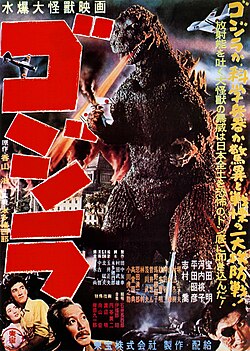
Godzilla
Godzilla (1954) is the seminal, historically monumental, and emotionally devastating original Japanese kaiju masterpiece directed by Ishirō Honda, which not only launched the world's longest-running film franchise but stands as a profound, heartbreaking allegory for Japan's nuclear trauma, the destruction of Hiroshima and Nagasaki, and the terrifying psychological aftermath of the atomic age. When Japanese fishing vessels near Odo Island are suddenly incinerated and capsized by a mysterious, catastrophic force accompanied by massive flooding, investigators discover that the destruction matches no known natural phenomenon. A prehistoric, radioactively awakened leviathan — Godzilla — emerges from the depths of Tokyo Bay, making its first landfall in Tokyo during a harrowing nighttime rampage of incomprehensible scale, obliterating the city's infrastructure with atomic breath and thundering footsteps as civilians are incinerated in their tens of thousands. The narrative centers on Dr. Kyohei Yamane, a paleontologist who believes Godzilla must be studied rather than destroyed as a living relic of prehistory; his daughter Emiko; her fiancé, the disillusioned biologist Dr. Serizawa who has developed a terrifying and morally catastrophic secret weapon called the Oxygen Destroyer; and Naval officer Hideto Ogata, who loves Emiko. As Tokyo burns and the Japanese government debates military versus scientific response, the moral weight of deploying Serizawa's annihilation weapon — a device so powerful it could end all ocean life — forms the film's devastating ethical core. Honda's somber masterpiece gave voice to an entire generation's collective nuclear horror, creating cinema's most iconic monster as a metaphor for mankind's most dangerous invention.

Battle Royale
Battle Royale is a controversial, explosive, and relentlessly gripping dystopian survival action thriller directed by Kinji Fukasaku, adapting Koushun Takami's novel into an iconic cultural touchstone that pioneered the entire modern battle-royale genre across international cinema and video games. Set in an alternate, near-future totalitarian Japan suffering from economic collapse, massive adult unemployment, and rampant youth insubordination, the authoritarian government passes the Millennial Educational Reform Act (the BR Act) to terrorize the youth and restore societal discipline. Under the brutal law, an entire ninth-grade class of forty-two high school students from Shiroiwa Junior High is gassed unconscious during a supposed school field trip and transported to a deserted, quarantined island. Overseen by their cynical, sadistic former teacher Kitano, the terrified teenagers awaken fitted with explosive metal collars designed to detonate if they attempt escape or enter rotating forbidden danger zones. Armed with survival bags containing randomized weapons—ranging from submachine guns and crossbows to pot lids and binoculars—the classmates are presented with a horrific ultimatum: kill each other until only one surviving victor remains within three days, or all collars will detonate simultaneously. The narrative follows sensitive student Shuya Nanahara, who vows to protect his deceased friend's crush, Noriko Nakagawa, forging alliances with transfer student Shogo Kawada while evading psychopathic classmates like Kiriyama and Soma. Blending dark satire, visceral action, and tragic teen camaraderie, Battle Royale is a provocative exploration of societal mistrust.