
 TonightOnScreen Catalog
Explore Movies
Search our curated catalog of cinema releases, binge-worthy series, and where to stream them.
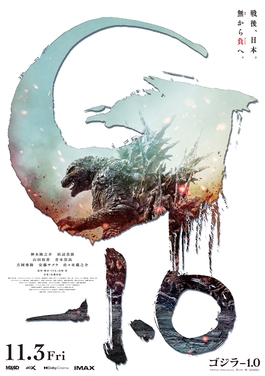
Godzilla Minus Zero
<p><strong>Godzilla Minus Zero</strong> (ゴジラ マイナス ゼロ) is the monumental direct sequel to the Academy Award-winning international phenomenon <a href="/title/godzilla-minus-one-2023">Godzilla Minus One</a>, written, directed, and visual effects-supervised by acclaimed visionary <a href="/person/takashi-yamazaki">Takashi Yamazaki</a>.</p><p>Set in 1954 as Japan strives to rebuild its war-torn infrastructure and enter the modern industrial era, the peace achieved by former kamikaze pilot Koichi Shikishima (<a href="/person/ryunosuke-kamiki">Ryunosuke Kamiki</a>) and his family is shattered. A mysterious biological sample retrieved from the depths of Tokyo Bay displays rapid, uncontrollable regenerative cell multiplication. At the same time, Noriko Oishi (<a href="/person/minami-hamabe">Minami Hamabe</a>) begins experiencing strange physical symptoms connected to the black cellular mark on her neck. When deep ocean seismic sensors detect an immense thermal surge moving toward the Japanese archipelago, a larger, more terrifying atomic titan emerges from the icy abyss, forcing ordinary citizens and veteran engineers to unite once more in a desperate battle for survival.</p>
Godzilla Minus One
Godzilla Minus One is an emotionally devastating, visually extraordinary, and historically resonant monster blockbuster written, directed, and with visual effects by Takashi Yamazaki, becoming the first film in the seventy-year history of the Godzilla franchise to win an Academy Award. Set in the immediate aftermath of World War II, the storyline focuses on Koichi Shikishima, a guilt-ridden Imperial Japanese Navy kamikaze pilot who faked mechanical plane failure on Odo Island in the final days of the war to avoid a suicidal death. On the island, he freezes in terror during a nocturnal rampage by a juvenile, prehistoric dinosaur-like creature, resulting in the horrific massacre of the island's aircraft mechanics. Returning to a completely devastated, firebombed Tokyo, Koichi is consumed by survivor's guilt and shame, finding tenuous solace by sheltering Noriko Oishi, a courageous homeless woman, and an orphaned baby girl named Akiko. However, as postwar Japan struggles to rebuild from zero, American nuclear testing at Bikini Atoll severely mutates and irradiates the beast into Godzilla, a colossal, near-indestructible leviathan armed with a devastating blue atomic thermal breath. When Godzilla decimates the Ginza district of Tokyo, Koichi joins an elite, clandestine civilian armada of demobilized naval veterans led by an inventive former weapons engineer. Devising an audacious plan to sink and rapidly decompress Godzilla using deep-sea freon gas canisters in Sagami Bay, Koichi risks everything in an experimental fighter plane to reclaim his life and protect his newfound family. A profound human drama of trauma, redemption, and collective resilience, Minus One is an undisputed modern classic.

Demon Slayer: Kimetsu no Yaiba – The Movie: Mugen Train
Demon Slayer: Kimetsu no Yaiba – The Movie: Mugen Train is a record-shattering, emotionally electrifying, and visually spectacular supernatural action anime blockbuster directed by Haruo Sotozaki and produced by Ufotable, becoming the highest-grossing Japanese movie of all time worldwide. Continuing directly from the first season of the acclaimed anime phenomenon, the story follows young Demon Slayer Tanjiro Kamado, his demon sister Nezuko, and his spirited companions Zenitsu Agatsuma and Inosuke Hashibira, who board the colossal Mugen locomotive. The train has become a site of mysterious disappearances, with over forty passengers and several high-ranking demon slayers vanishing without a trace. Aboard the speeding iron train, the young swordsmen join forces with Kyojuro Rengoku, the towering, charismatic, and unyieldingly valiant Flame Hashira, whose blazing blade and indomitable warrior spirit inspire everyone around him. Soon, the demon slayers fall into deep, enchanted slumbers orchestrated by Enmu, the sinister Lower Rank One demon, who has biologically fused his physical anatomy into the locomotive itself, manipulating passengers' deepest dreams and tormenting Tanjiro with idyllic visions of his murdered family. Waking through agonizing self-sacrifice, Tanjiro and Inosuke battle along the carriage rooftops to sever Enmu's spinal connection and save the two hundred passengers. However, their triumph is abruptly shattered by the unexpected arrival of Akaza, the terrifyingly powerful Upper Rank Three demon, forcing Rengoku into a ferocious, mortal duel of wills and ideals that demands supreme sacrifice. Featuring revolutionary kinetic sword-fighting animations and unforgettable emotional pathos, Mugen Train is a modern blockbuster legend.
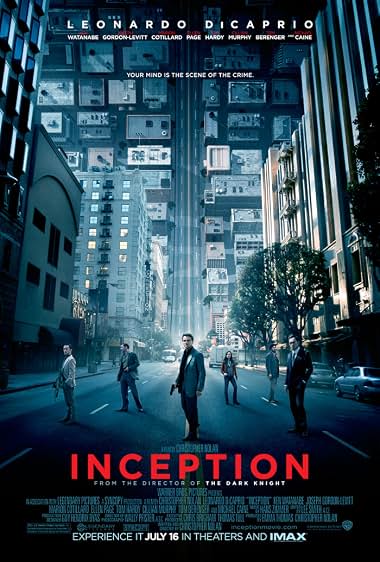
Inception
Inception is an exhilarating, mind-bending sci-fi heist thriller directed by Christopher Nolan that takes audiences into the clandestine architecture of human dreams. The narrative centers on Dom Cobb, played by Leonardo DiCaprio, a world-class corporate thief who specializes in "extraction"—stealing valuable secrets from deep within the subconscious minds of high-profile targets while they sleep. Haunted by personal guilt and barred from returning home to his children in America, Cobb is offered an impossible deal by powerful Japanese energy tycoon Mr. Saito, played by Ken Watanabe: perform "inception"—the reverse act of planting an original idea inside someone's mind—in exchange for a clean legal slate. To pull off this unprecedented mental heist, Cobb assembles an elite crew of specialists, each possessing unique skills and distinct personalities. Arthur, played with sharp professionalism by Joseph Gordon-Levitt, acts as the reliable point man who manages logistics, research, and zero-gravity tactical combat. Ariadne, played by Elliot Page, is a brilliant young architecture student recruited to design complex, multi-layered dream labyrinths; she quickly becomes the only crew member who understands the dark psychological trauma eating away at Cobb's sanity. Eames, played with charismatic swagger by Tom Hardy, serves as the master forger capable of shifting identities within dreams to manipulate target emotions. Yusuf, played by Dileep Rao, is the gifted chemist who concocts powerful sedatives necessary to stabilize three deeper dream tiers simultaneously. Their target is Robert Fischer, played by Cillian Murphy, a vulnerable corporate heir whose unresolved emotional issues with his dying father make him receptive to the inception. Complicating the entire mission is Mal, played with chilling beauty by Marion Cotillard, the phantom projection of Cobb's late wife whose disruptive appearances threaten to trap the entire team in subconscious limbo forever. Combining practical physics-defying stunts, emotional depth, and Hans Zimmer's pulsating musical themes, Inception remains one of the most inventive and beloved cinematic triumphs of the twenty-first century.
The Samurai and the Prisoner
<p><strong>The Samurai and the Prisoner</strong> (侍と囚人) is a gripping, historically authentic Japanese Jidaigeki samurai suspense thriller that combines the moral gravity of classic Bushido literature with the airtight deduction of a classic locked-room mystery.</p><p>Set in 1688 during the frosty winter of the Genroku period in the mountainous Echigo province. Inside a heavily fortified castle, a respected clan elder is discovered poisoned inside a snow-surrounded tea pavilion that was barred from the inside with no footprints leaving the perimeter. The sole person found hiding in the castle attic is Genkuro, a silent, one-armed wandering ronin who refuses to speak or plead for his life. With clan elders demanding a swift public execution, honorable magistrate samurai Jurozaemon is granted exactly thirty days to interrogate the prisoner, verify his guilt, and prevent an all-out civil war between rival retainer clans. Through fierce psychological duels across iron bars, Jurozaemon begins to suspect that the prisoner is not a ruthless assassin, but a guardian protecting an explosive secret that could shatter the Tokugawa shogunate.</p>
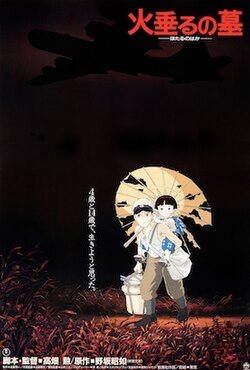
Grave of the Fireflies
Grave of the Fireflies is a profoundly moving, devastating, and universally acclaimed animated war tragedy written and directed by Isao Takahata, standing as one of the most powerful anti-war cinematic statements ever created. Adapted from Akiyuki Nosaka's semi-autobiographical novella, the narrative opens in September 1945 at Sannomiya Station in Kobe, where Seita, an emaciated teenage boy, succumbs to starvation before his spirit reunites with his sweet four-year-old sister Setsuko, recounting the tragic events of their final months. During the horrific firebombing of Kobe by American B-29 bombers, their mother is fatally burned, and their father, an officer in the Imperial Japanese Navy, is lost at sea. Orphaned and homeless amidst the smoldering ruins of their city, Seita and Setsuko initially seek refuge with an emotionally distant, increasingly hostile aunt who begrudges their rations. Determined to preserve his sister's innocence and protect her from adult cruelty, proud Seita moves Setsuko into an abandoned, damp hillside bomb shelter, illuminating their cavernous dark nights by releasing dozens of luminous fireflies beneath their mosquito netting. However, as extreme wartime famine, isolation, and economic desperation grip the countryside, Setsuko slowly succumbs to severe malnutrition despite Seita's frantic, desperate efforts to forage and steal food amidst air raids. Handled with extraordinary empathy, poetic realism, and gut-wrenching emotional purity, Grave of the Fireflies serves as an indelible, heartbreaking monument to the innocent child victims of warfare and the fragile, enduring bonds of sibling love.

Oldboy
Directed by South Korean auteur Park Chan-wook as the second and most legendary installment of his celebrated The Vengeance Trilogy, Oldboy (2003) won the Grand Prix at the 2004 Cannes Film Festival, receiving rapturous praise from jury president Quentin Tarantino and permanently cementing the global dominance of modern South Korean cinema. Loosely adapted from the Japanese manga series by Garon Tsuchiya and Nobuaki Minegishi, the narrative begins in 1988 with Oh Dae-su (Choi Min-sik in a volcanic, feral, and emotionally shattering tour de force of method acting), an ordinary, obnoxious businessman and father who is abruptly kidnapped off a rainy street and imprisoned inside a bizarre, windowless hotel room with only a television set for company. Kept alive on fried dumplings and unaware of his captor's identity or motives, Dae-su learns via the TV that his beloved wife has been brutally murdered and that he is the prime suspect. For fifteen agonizing years, Dae-su conditions his body into a lethal weapon through shadowboxing against the wallpaper, feeding an insatiable hunger for retribution. Without warning, he is suddenly released inside a suitcase on a grassy rooftop, handed cash and a mobile phone, and given exactly five days by his enigmatic, wealthy captor Lee Woo-jin (Yoo Ji-tae) to solve the mystery: not why he was imprisoned for fifteen years, but why he was let go. Aided by a sympathetic young sushi chef named Mi-do (Kang Hye-jung), Dae-su embarks on a blood-drenched odyssey through Seoul's underworld, famously culminating in the legendary three-minute single-take side-scrolling corridor brawl where Dae-su battles dozens of armed thugs with only a claw hammer. Featuring Cho Young-wuk's lush, melancholic waltz soundtrack and Chung Chung-hoon's green-tinted cinematography, Oldboy is an operatic Greek tragedy of revenge, guilt, and devastating cosmic irony.
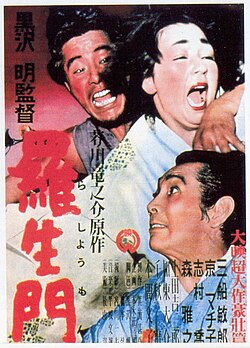
Rashomon
Rashomon is Akira Kurosawa's groundbreaking, globally celebrated psychological crime drama and philosophical milestone, winner of the Venice Golden Lion and an honorary Academy Award, which introduced Japanese cinema to the Western world and gave birth to the universally recognized psychological concept of the 'Rashomon Effect'. Set in eighth-century Heian-period Kyoto amidst civil war and societal decay, a horrified woodcutter, an emotionally shattered Buddhist priest, and a cynical commoner seek shelter from a torrential thunderstorm beneath the decaying, cavernous ruins of the southern city gate, the Rashomon. As the storm rages, the priest and woodcutter recount their harrowing experiences testifying at a police inquest regarding the brutal rape of a noblewoman and the murder of her samurai husband, Takehiro, in a dense forest clearing. The narrative unfolds through four radically contradictory, self-serving subjective flashbacks detailing the same violent tragedy: Tajomaru, a notorious bandit, portrays himself as a daring, swashbuckling warrior who won the woman in a heroic duel; the wife depicts herself as a helpless, victimized innocent driven by despair to accidentally kill her disdainful husband; the murdered samurai, testifying from beyond the grave through a spirit medium, claims he took his own life out of unbearable dishonor and betrayal; and the woodcutter reveals an unromantic, pathetic brawl driven by cowardice and stolen daggers. Through revolutionary cinematic techniques, dynamic camera tracking through sun-dappled forests, and haunting existential inquiries into human vanity and deceptive self-delusion, Rashomon is a peerless exploration of subjective truth.
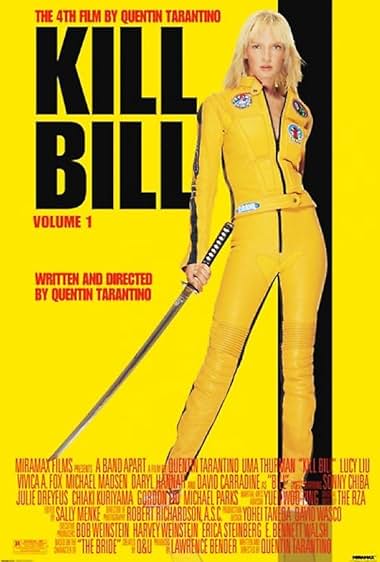
Kill Bill: Vol. 1
Written and directed with kinetic pop-culture virtuosity and blood-drenched martial arts reverence by Quentin Tarantino, Kill Bill: Vol. 1 (2003) is universally celebrated as one of the most stylish, iconic, and exhilarating revenge action epics in cinematic history, grossing over $180 million worldwide. Conceived as a passionate love letter to 1970s Shaw Brothers kung fu cinema, Japanese samurai chambara, spaghetti westerns, and anime, the narrative follows Beatrix Kiddo, universally known as 'The Bride' or 'Black Mamba' (Uma Thurman in a magnificent, physical, and emotionally fierce tour de force of martial arts mastery). A former elite assassin belonging to the deadly Deadly Viper Assassination Squad, The Bride is betrayed on her wedding rehearsal day in a rural El Paso chapel, where her treacherous mentor and former lover Bill (David Carradine) and her former squad colleagues slaughter her unborn child, fiancé, and guests, leaving her for dead with a bullet in her brain. Awakening from a four-year comatose slumber in a hospital, The Bride embarks on a relentless global crusade of vengeance, compiling a five-name hit list. Traveling to Okinawa to acquire a priceless, razor-sharp Hattori Hanzo katana forged by a legendary master swordsmith (Sonny Chiba), The Bride tracks her first target, Yakuza crime queen O-Ren Ishii (Lucy Liu), to the lavish House of Blue Leaves restaurant in Tokyo. There, she single-handedly decimates the Crazy 88 sword gang in a breathtaking, fountain-of-blood brawl and slashes through bodyguard Gogo Yubari, culminating in an ethereal, snowbound zen duel. Featuring an iconic yellow-and-black tracksuit tribute to Bruce Lee and Production I.G's violent anime sequence, Kill Bill: Vol. 1 is an undisputed action masterpiece.
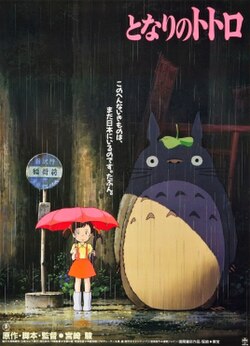
My Neighbor Totoro
My Neighbor Totoro is an enchanting, timelessly heartwarming animated masterpiece written and directed by Hayao Miyazaki, capturing the pure magic of childhood wonder and the healing embrace of the natural world with unmatched emotional resonance. Set in pastoral, postwar rural Japan during the 1950s, the story centers on ten-year-old Satsuki and her spirited four-year-old sister Mei, who move with their scholarly father into an eccentric, weathered country house to be closer to the convalescent rural hospital where their mother is recovering from long-term tuberculosis. As the energetic sisters explore their sunlit, sprawling surroundings, they uncover that the ancient, overgrown camphor tree and surrounding forests are inhabited by playful sootsprites and friendly, unseen forest spirits. While chasing a tiny creature through a briar maze, curious young Mei falls deep into the hollow of the giant camphor tree and meets Totoro, a towering, furry, and benevolent ancient forest spirit with a roaring yawn. Soon, Satsuki joins Mei in encountering Totoro during a poignant, rainy evening at a forest bus stop, witnessing him summon a magnificent, multi-legged feline Catbus that zips effortlessly across telephone wires. When an alarming hospital telegram creates panic and little Mei goes missing while trying to bring fresh garden corn to her ailing mother, Satsuki turns to Totoro and the supernatural spirits of the woods to reunite their family. Universally celebrated for its gentle pacing, evocative watercolors of Japanese countryside, and deep emotional sincerity, My Neighbor Totoro remains one of the most beloved and culturally iconic family treasures in cinematic history.
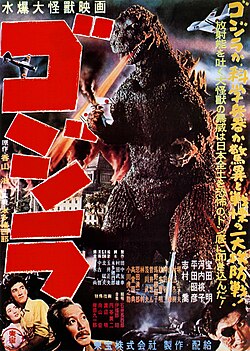
Godzilla
Godzilla (1954) is the seminal, historically monumental, and emotionally devastating original Japanese kaiju masterpiece directed by Ishirō Honda, which not only launched the world's longest-running film franchise but stands as a profound, heartbreaking allegory for Japan's nuclear trauma, the destruction of Hiroshima and Nagasaki, and the terrifying psychological aftermath of the atomic age. When Japanese fishing vessels near Odo Island are suddenly incinerated and capsized by a mysterious, catastrophic force accompanied by massive flooding, investigators discover that the destruction matches no known natural phenomenon. A prehistoric, radioactively awakened leviathan — Godzilla — emerges from the depths of Tokyo Bay, making its first landfall in Tokyo during a harrowing nighttime rampage of incomprehensible scale, obliterating the city's infrastructure with atomic breath and thundering footsteps as civilians are incinerated in their tens of thousands. The narrative centers on Dr. Kyohei Yamane, a paleontologist who believes Godzilla must be studied rather than destroyed as a living relic of prehistory; his daughter Emiko; her fiancé, the disillusioned biologist Dr. Serizawa who has developed a terrifying and morally catastrophic secret weapon called the Oxygen Destroyer; and Naval officer Hideto Ogata, who loves Emiko. As Tokyo burns and the Japanese government debates military versus scientific response, the moral weight of deploying Serizawa's annihilation weapon — a device so powerful it could end all ocean life — forms the film's devastating ethical core. Honda's somber masterpiece gave voice to an entire generation's collective nuclear horror, creating cinema's most iconic monster as a metaphor for mankind's most dangerous invention.

Drive My Car
Drive My Car is an exquisite, meditative, and emotionally profound drama directed by Ryusuke Hamaguchi, based on Haruki Murakami's short story, which captivated global critics and became the first Japanese film in history to be nominated for the Academy Award for Best Picture while winning the Academy Award for Best International Feature Film. The narrative follows Yusuke Kafuku, an accomplished, introspective Tokyo theater director and actor who enjoys a deeply intimate, creative marriage with his screenwriter wife, Oto, who invents intricate stories during their moments of intimacy. When Oto suddenly dies of a cerebral hemorrhage, Kafuku is left emotionally paralyzed by grief and unanswered questions regarding her hidden infidelities. Two years later, Kafuku accepts an artistic residency at a theater festival in Hiroshima to direct a multilingual stage production of Anton Chekhov's Uncle Vanya. Per insurance policy rules, the festival assigns him Misaki Watari, a reserved, stoic twenty-year-old chauffeur, to drive his cherished red Saab 900 Turbo along the coastal highways between his apartment and the rehearsals. Initially uncomfortable sharing his quiet automobile sanctuary, Kafuku develops an unexpected, tender therapeutic bond with Misaki during their daily coastal commutes. As Kafuku directs his diverse cast—including a volatile young television star who was Oto's former secret lover—he and Misaki gradually exchange confessions regarding their shared guilt, past tragedies, and unresolved grief. Praised for its sublime pacing, quiet humanism, and emotional catharsis, Drive My Car is an unforgettable journey through loss and the courage to endure.