 Curated Genre Showcase
Thriller
Fast-paced, suspenseful narratives that evoke strong emotional responses.
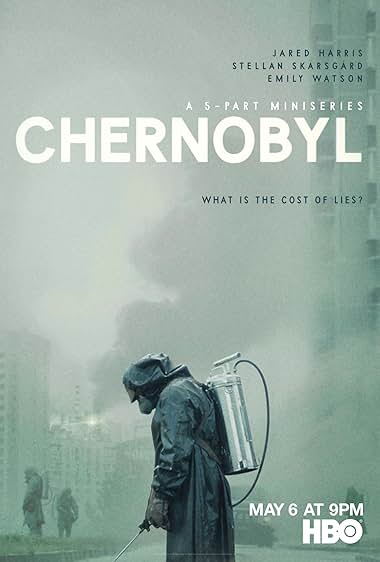

Chernobyl
"What is the cost of lies?"
Written and created by Craig Mazin and directed with suffocating tension by Johan Renck, HBO and Sky UK's five-part historical miniseries Chernobyl is a harrowing, astonishingly detailed autopsy of the worst man-made nuclear disaster in human history. In the early morning hours of April 26, 1986, Reactor No. 4 at the Chernobyl Nuclear Power Plant in Soviet Ukraine violently explodes during an unauthorized safety test, exposing the radioactive core to the atmosphere and sending deadly fallout across Europe. Jared Harris delivers a tour-de-force, quiet performance as Valery Legasov, an honest inorganic chemist who is paired with Soviet Deputy Prime Minister Boris Shcherbina (Stellan Skarsgård) and tireless Belarusian nuclear physicist Ulana Khomyuk (Emily Watson) to contain the catastrophe. The series exposes not only the horrifying physical brutality of acute radiation sickness endured by heroic firefighters and coal miners, but the even more lethal radiation of bureaucratic denial, state secrecy, and institutional cowardice under the Soviet regime. Winner of ten Primetime Emmy Awards and boasting Hildur Guðnadóttir's chilling industrial soundscapes recorded inside an actual decommissioned nuclear plant, Chernobyl is an unforgettable warning on the cost of political deception.

Vikram Vedha
Written and directed by the husband-wife filmmaking duo Pushkar-Gayathri, 2017's Tamil neo-noir action thriller Vikram Vedha earned widespread critical acclaim and massive box office success, universally celebrated as one of the smartest and most gripping cat-and-mouse crime sagas in modern Indian cinema. Drawing brilliant inspiration from the ancient Indian mythological folktale of King Vikramaditya and the celestial vampire-demon Betaal, the narrative pits straight-laced, self-righteous encounter specialist cop Vikram (R. Madhavan in a steely, physically commanding performance) against Chennai's elusive, philosophical gangster kingpin Vedha (Vijay Sethupathi in a career-defining, charismatic tour de force). When Vedha voluntarily surrenders to police headquarters with disarming nonchalance, he challenges Vikram to listen to three allegorical parables from his criminal past before judging him. Each moral riddle shatters Vikram's rigid black-and-white perception of justice and morality, exposing deep-rooted police corruption, betrayal, and gray moral compromises within Vikram's own squad. Featuring Sam C.S.'s pulse-pounding, bass-heavy background score and P.S. Vinod's stylish lighting, Vikram Vedha is a flawlessly executed, intellectually stimulating crime classic that permanently elevated contemporary Indian genre filmmaking.

Shutter Island
Martin Scorsese's 2010 psychological neo-noir thriller Shutter Island, adapted from Dennis Lehane's 2003 bestselling novel, grossed nearly $300 million worldwide and remains one of the director's most commercially successful, atmospheric, and endlessly analyzed cinematic achievements. Set in the autumn of 1954 against the paranoid backdrop of the Cold War, U.S. Marshal Edward 'Teddy' Daniels (Leonardo DiCaprio in a raw, emotionally tortured performance) and his newly assigned partner Chuck Aule (Mark Ruffalo) travel by ferry to Ashecliffe Hospital for the Criminally Insane, a heavily fortified facility situated on a storm-lashed island in Boston Harbor. They are tasked with investigating the baffling, impossible disappearance of patient Rachel Solando, who vanished from a locked room without a trace. Haunted by traumatic memories of liberating the Dachau concentration camp during World War II and agonizing grief over his wife Dolores (Michelle Williams), who died in an arson attack, Teddy suspects the asylum's enigmatic chief psychiatrist Dr. John Cawley (Ben Kingsley) is conducting unethical mind-control experiments on lobotomized patients. As a violent hurricane cuts off all communication with the mainland, Teddy's investigation unravels into a labyrinth of hallucinations, paranoia, and shifting realities, culminating in a devastating psychological twist: 'Which would be worse: to live as a monster, or to die as a good man?'
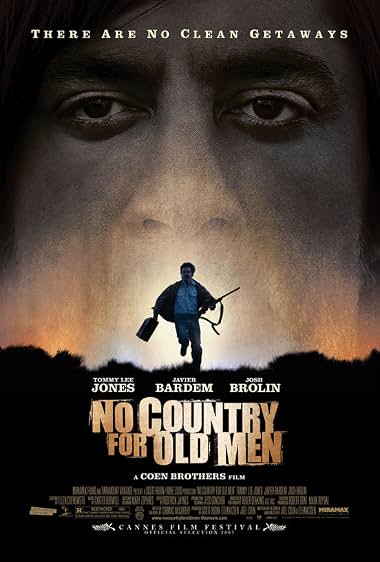
No Country for Old Men
Directed, written, and edited by Joel and Ethan Coen based on Cormac McCarthy's bleak 2005 novel, No Country for Old Men swept four Academy Awards including Best Picture, Best Director, and Best Adapted Screenplay, widely acknowledged as the greatest modern neo-Western crime thriller of the twenty-first century. Set against the desolate, sun-bleached scrubland of 1980 West Texas, the cataclysmic narrative is ignited when welder and Vietnam veteran Llewelyn Moss (Josh Brolin) stumbles upon the bloody aftermath of a desert drug shootout gone wrong, discovering a pickup truck loaded with heroin and a leather satchel containing $2.4 million in cash. Moss's fateful decision to abscond with the fortune unleashes Anton Chigurh (Javier Bardem in a chilling, Oscar-winning portrayal of psychotic sociopathy), an unstoppable hitman who executes victims with a captive bolt pistol, speaks in eerie philosophical paradoxes, and decides human lives on the flip of a coin. As Moss desperately evades Chigurh across dusty roadside motels, weary aging Sheriff Ed Tom Bell (Tommy Lee Jones) investigates the escalating carnage, lamenting his inability to comprehend or combat the senseless, remorseless wave of modern violent evil. Devoid of a traditional musical score and shot with stark, breathtaking precision by Roger Deakins, No Country for Old Men is an unyielding, haunting meditation on fate, mortality, and the terrifying randomness of human existence.
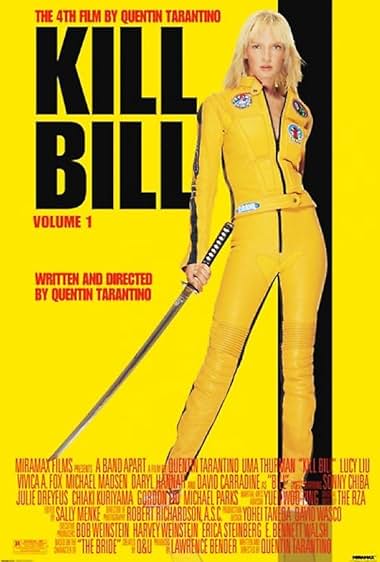
Kill Bill: Vol. 1
Written and directed with kinetic pop-culture virtuosity and blood-drenched martial arts reverence by Quentin Tarantino, Kill Bill: Vol. 1 (2003) is universally celebrated as one of the most stylish, iconic, and exhilarating revenge action epics in cinematic history, grossing over $180 million worldwide. Conceived as a passionate love letter to 1970s Shaw Brothers kung fu cinema, Japanese samurai chambara, spaghetti westerns, and anime, the narrative follows Beatrix Kiddo, universally known as 'The Bride' or 'Black Mamba' (Uma Thurman in a magnificent, physical, and emotionally fierce tour de force of martial arts mastery). A former elite assassin belonging to the deadly Deadly Viper Assassination Squad, The Bride is betrayed on her wedding rehearsal day in a rural El Paso chapel, where her treacherous mentor and former lover Bill (David Carradine) and her former squad colleagues slaughter her unborn child, fiancé, and guests, leaving her for dead with a bullet in her brain. Awakening from a four-year comatose slumber in a hospital, The Bride embarks on a relentless global crusade of vengeance, compiling a five-name hit list. Traveling to Okinawa to acquire a priceless, razor-sharp Hattori Hanzo katana forged by a legendary master swordsmith (Sonny Chiba), The Bride tracks her first target, Yakuza crime queen O-Ren Ishii (Lucy Liu), to the lavish House of Blue Leaves restaurant in Tokyo. There, she single-handedly decimates the Crazy 88 sword gang in a breathtaking, fountain-of-blood brawl and slashes through bodyguard Gogo Yubari, culminating in an ethereal, snowbound zen duel. Featuring an iconic yellow-and-black tracksuit tribute to Bruce Lee and Production I.G's violent anime sequence, Kill Bill: Vol. 1 is an undisputed action masterpiece.
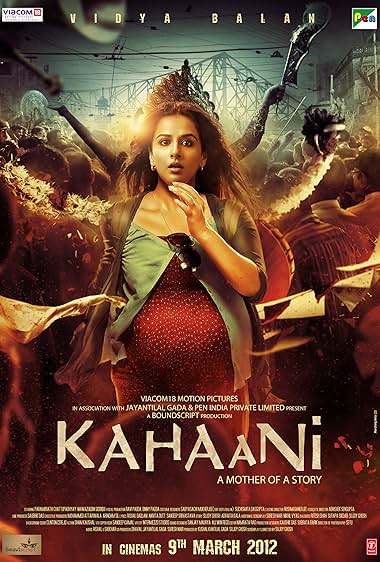
Kahaani
Directed by Sujoy Ghosh and starring Vidya Balan in an unforgettable tour de force, 2012's suspense thriller Kahaani grossed over ₹104 crore on an economical ₹8 crore budget, won three National Film Awards, and stands as one of the most brilliant, tightly plotted female-led mysteries in Indian cinematic history. Arriving alone in Kolkata during the vibrant, chaotic festivities of Durga Puja, heavily pregnant London-based software engineer Vidya Bagchi (Vidya Balan) sets out to find her missing husband Arnab, who supposedly traveled to India for an assignment at the National Data Center and vanished without a trace. Assisted by sympathetic local police sub-inspector Satyoki 'Rana' Sinha (Parambrata Chatterjee), Vidya navigates Kolkata's bustling alleyways, guest houses, and bureaucracy, only to find that all official records of Arnab's existence have been wiped clean. Her search draws the hostile attention of abrasive Intelligence Bureau officer A. Khan (Nawazuddin Siddiqui in a fiercely commanding breakthrough) and a contract killer named Bob Biswas (Saswata Chatterjee). Showcasing Setu's atmospheric cinematography, Kolkata as a living, breathing character, and an earth-shattering climax celebrating female divinity and vengeance, Kahaani is a masterpiece.
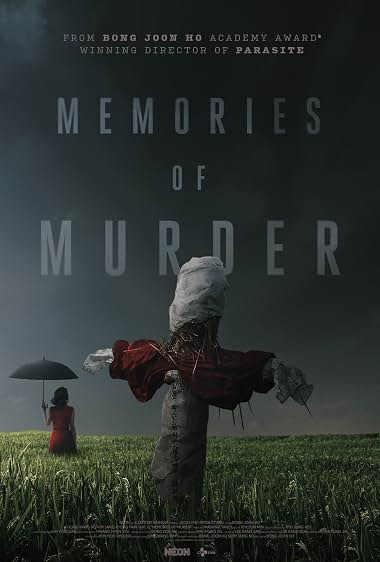
Memories of Murder
Directed by South Korean auteur Bong Joon-ho and co-written with Shim Sung-bo, Memories of Murder (Salinui chueok, 2003) is universally revered by critics and filmmakers as one of the finest, most atmospheric, and psychologically devastating crime procedurals in the history of world cinema, widely cited by David Fincher and Quentin Tarantino as an enduring benchmark for murder mysteries. Based on the real-life Hwaseong serial murders—Korea's first recorded serial killings between 1986 and 1991—the film is set in the rural province of Gyeonggi against the oppressive, rain-soaked backdrop of South Korea's decaying military dictatorship. The investigation is initially spearheaded by bungling, hot-tempered local detective Park Doo-man (superstar Song Kang-ho in a nuanced, layered masterclass blending buffoonery with growing existential dread), who relies on physical intuition, shamanistic superstitions, and violent custodial torture to force coerced confessions out of mentally disabled suspects. Desperate for professional help, the department brings in modern, analytical Seoul detective Seo Tae-yoon (Kim Sang-kyung), who meticulously pieces together empirical clues, discovering that the phantom killer only strikes on rainy nights, targeting women dressed in red while requesting a specific melancholic pop song on the radio. As the body count mounts and forensic evidence is repeatedly contaminated by incompetence and lack of modern DNA testing facilities, the detectives' rational facades disintegrate into madness and despair. Culminating in the unforgettable, haunting final freeze-frame where Song Kang-ho stares directly into the camera lens—staring directly into the eyes of the real killer who might be sitting in the theater—Memories of Murder is an unsparing, poetic tragedy on institutional failure, memory, and the banality of evil.

Fargo
Joel and Ethan Coen's 1996 neo-noir black comedy crime masterpiece Fargo stands as a pitch-perfect synthesis of regional Midwestern eccentricity, tragic greed, and shocking violence, winning two Academy Awards for Best Actress and Best Original Screenplay. Set across the blinding, frozen, snow-swept tundra of Minnesota and North Dakota, the narrative begins when pathetic, debt-ridden Minneapolis car salesman Jerry Lundegaard (William H. Macy in a sweat-drenched, iconic turn) concocts a desperate, half-baked scheme: hiring two sleazy petty criminals, Carl Showalter (Steve Buscemi) and the mute psychopath Gaear Grimsrud (Peter Stormare), to kidnap his own wealthy wife to extort a $1 million ransom from his disdainful father-in-law. When the botched abduction results in three senseless roadside murders, cheerful, seven-months-pregnant Brainerd police chief Marge Gunderson (Frances McDormand in an Oscar-winning, immortal performance of warmth and moral clarity) takes charge of the investigation. Featuring Carter Burwell's majestic Scandinavian-inspired score and Roger Deakins's vast whiteout cinematography—culminating in the infamous woodchipper sequence—Fargo is cinematic genius. Roger Deakins's stark, snow-drenched cinematography combined with Carter Burwell's haunting orchestral score cements Fargo as an enduring dark comedy milestone celebrated for its eccentric regional dialogue and eccentric moral worldview.

Indian
Directed by S. Shankar, the 1996 vigilante action thriller Indian (Hindustani) made history as India's official submission for the Best Foreign Language Film at the 69th Academy Awards, winning three National Film Awards including Best Actor for Kamal Haasan. Haasan delivers an immortal, prosthetic-laden double performance as Senapathy, a 70-year-old former veteran of Subhas Chandra Bose's Indian National Army (INA), and his corrupt modern son Chandrabose. Living in Chennai, Senapathy is sickened by the systemic cancer of bribery and administrative corruption that poisons public healthcare, transport, and police services, leading to the tragic death of his daughter Kasturi. Utilizing the ancient, lethal martial art of Varma Kalai (pressure point strikes that paralyze or kill), Senapathy launches an unyielding vigilante crusade, assassinating corrupt municipal commissioners, doctors, and treasury clerks on live television. The moral tragedy peaks when Senapathy discovers his own son Chandrabose took bribes that resulted in a fatal school bus brake failure, forcing the father to hunt down his own child in the name of justice. With A. R. Rahman's legendary score, Indian remains a monumental masterpiece.
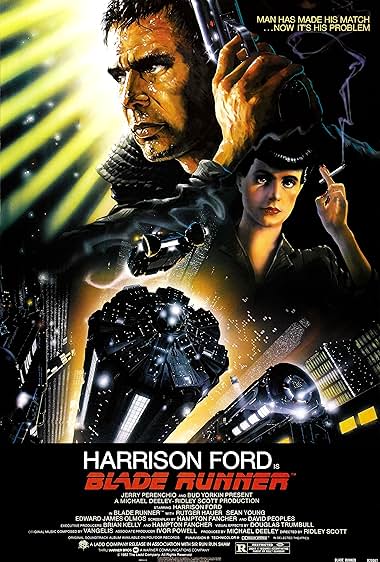
Blade Runner
Directed by Ridley Scott and adapted from Philip K. Dick's seminal 1968 novel Do Androids Dream of Electric Sheep?, the original 1982 cyberpunk sci-fi noir masterpiece Blade Runner fundamentally revolutionized modern cinema's visual grammar, setting the definitive aesthetic blueprint for dystopian futurism, industrial neo-noir, and existential science fiction. Set in the perpetually rain-slicked, smog-choked, and neon-drenched vertical megalopolis of Los Angeles in November 2019, the narrative follows world-weary former police detective Rick Deckard (Harrison Ford in a moody, cynical, and emotionally complex performance). Deckard is forcibly pulled out of retirement as a specialized 'Blade Runner'—a government operative tasked with tracking down and 'retiring' four rogue Nexus-6 bioengineered humanoid replicants who have violently escaped an off-world slave colony to seek out their creator, Dr. Eldon Tyrell, in a desperate quest to extend their programmed four-year lifespans. As Deckard conducts psychological Voight-Kampff empathy tests and falls in love with Tyrell's experimental replicant assistant Rachael (Sean Young), the moral boundary between synthetic life and authentic humanity dissolves into ambiguity. Deckard's hunt leads to a harrowing nocturnal duel across the crumbling architecture of the Bradbury Building against replicant leader Roy Batty (Rutger Hauer in an unforgettable, poetic tour de force). Spared by Batty in his final moments, Deckard listens to the immortal 'Tears in rain' monologue: 'I've seen things you people wouldn't believe... All those moments will be lost in time, like tears in rain. Time to die.' Scored by Vangelis's iconic synthesizer soundscapes and framed by Jordan Cronenweth's chiaroscuro lighting, Blade Runner remains a peerless philosophical meditation on mortality, memory, and the human soul.
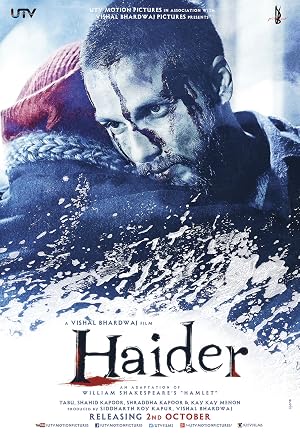
Haider
Directed by Vishal Bhardwaj and co-written with Kashmiri journalist Basharat Peer, Haider completed Bhardwaj's monumental Shakespearean tragedy trilogy (following Maqbool and Omkara), winning five National Film Awards and the People's Choice Award at the Rome Film Festival. Transposing Shakespeare's Hamlet to the snow-covered, conflict-torn Kashmir Valley in 1995, Shahid Kapoor delivers a career-defining, volcanic performance as Haider Meer, a student of poetry who returns to Srinagar to discover his doctor father has disappeared following an army raid, his ancestral home burned down, and his mother Ghazala (Tabu in an astonishing, incestuously charged performance of Queen Gertrude) living cheerfully with his devious politician uncle Khurram (Kay Kay Menon as Claudius). Driven to the brink of madness, Haider is approached by the enigmatic Roohdar (Irrfan Khan in an immortal cameo), who reveals that Khurram betrayed Haider's father to his death in an army interrogation camp. Featuring Shahid Kapoor's unhinged 'Chutzpah' town square monologue, Pankaj Kumar's pristine snow cinematography, and Vishal Bhardwaj's haunting Kashmiri folk compositions, Haider is a cinematic milestone. Vishal Bhardwaj's evocative musical compositions, Gulzar's poetic lyrics, and Pankaj Kumar's snowbound cinematography in Kashmir establish Haider as one of the most intellectually rigorous and emotionally devastating literary adaptations in world cinema.

Brahmayugam
Written and directed by Rahul Sadasivan with dialogues penned by acclaimed Malayalam novelist T.D. Ramakrishnan, 2024's period psychological folk-horror masterpiece Brahmayugam (The Age of Madness) captured universal critical acclaim and major box office success, grossing over ₹85 crore worldwide and celebrated as an audacious, groundbreaking artistic triumph in Indian genre cinema. Filmed entirely in gorgeous, high-contrast black-and-white, the film is set in the seventeenth century during the Kali Yuga against the haunting, rain-drenched wilderness of feudal Malabar. The narrative follows Thevan (Arjun Ashokan in a raw, physically demanding performance), a Paanan folk singer and runaway slave fleeing the horrors of Portuguese capture, who loses his companion to a woodland Yakshi and stumbles upon a decaying, moss-covered feudal mansion (Mana) hidden deep within the mist-shrouded jungle. Seeking shelter and food, Thevan is welcomed by the mansion's sole master, Kodumon Potti (megastar Mammootty in a demonic, terrifying, and career-defining masterclass of aristocratic menace and sinister supernatural malevolence), and his subservient, terrified cook (Sidharth Bharathan). Initially seduced by Potti's opulent feasts, game of dice (Chaupar), and flattering praise of his singing, Thevan soon realizes to his horror that he has entered a gilded psychological prison and that the mansion's master is an ancient, demonic shape-shifting entity known as a Chaathan, who feeds upon the servitude, despair, and souls of mortals. Exploring allegories of systemic feudal caste oppression, totalitarian enslavement, and the corrupting nature of absolute power, Shehnad Jalal's breathtaking monochrome cinematography and Christo Xavier's chilling tribal-choral musical score elevate Brahmayugam into an immortal gothic horror masterpiece of world cinema.
Explore All Entertainment Genres
Seamlessly discover titles across all cinematic categories.