

10 Movies & Shows Like Game of Thrones
Finished watching Game of Thrones and searching for what to binge next? Here are the 10 best matching films and series with shared themes, emotional depth, and where to stream them.
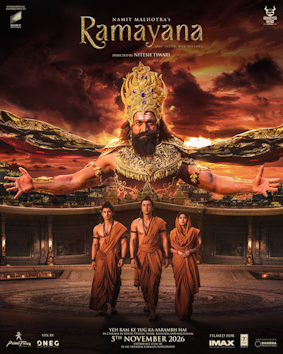
Ramayana: Part 1 is Nitesh Tiwari's monumental, visually magnificent mythological epic that brings the eternal Indian literary masterpiece to life with unprecedented technological scale, emotional reverence, and cinematic grandeur. The story chronicles the divine incarnation, righteous youth, and supreme moral trials of Lord Rama, portrayed with transcendent serenity, noble physical grace, and gentle wisdom by Ranbir Kapoor. As the beloved eldest prince of Ayodhya, Rama embodies the highest ideals of dharma, duty, and filial obedience in the ancient solar dynasty. The first chapter of this epic trilogy explores the idyllic golden age of Ayodhya under King Dasharatha and the sacred swayamvara in Mithila, where Rama wins the hand of Goddess Sita, portrayed with radiant grace, spiritual strength, and profound dignity by Sai Pallavi. Their tender, pure bond becomes the moral foundation of the entire saga. However, courtly harmony is shattered when Queen Kaikeyi, manipulated by the venomous whispers of maid Manthara, demands Dasharatha fulfill ancient boons by banishing Rama to a fourteen-year forest exile and placing her son Bharata on the throne. Upholding his father's honor without hesitation, Rama departs for the wilderness accompanied by Sita and his fiercely loyal brother Lakshmana, trading royal silk for ascetic bark garments. In the dense jungles of Panchavati, their peaceful hermitage is threatened when the demoness Surpanakha attempts to kill Sita, sparking an escalating conflict with the demonic forces of Lanka. The epic reaches its devastating turning point with the arrival of Demon King Ravana, played with imposing physical majesty, ten-headed intellectual arrogance, and terrifying power by Yash, whose treacherous abduction of Sita sets the stage for the greatest war in cosmic history. With state-of-the-art VFX from DNEG, majestic musical compositions by A. R. Rahman and Hans Zimmer, and timeless spiritual depth, Ramayana: Part 1 is a cultural milestone celebrating righteousness, devotion, and supreme courage.

Directed by visionary Indian filmmaker S. S. Rajamouli, RRR is a sweeping 2022 Telugu-language action epic that imagines a fictional friendship between two real-life twentieth-century revolutionaries during the height of British colonial rule. Set largely in 1920s Delhi, the film stars Ram Charan as Alluri Sitarama Raju and Jr NTR as Komaram Bheem, pairing mythic scale and exuberant musicality with breathless kinetic momentum across a three-hour canvas of rebellion and brotherhood. The conflict ignites when ruthless British Governor Scott Buxton and his wife abduct Malli, a gifted young girl from the Gond tribe, forcing her protector Bheem to travel undercover to Delhi in hopes of rescuing her. Unaware of Bheem's secret mission, disciplined imperial police officer Raju—privately working toward an armed Indian uprising from within the British ranks—accepts the assignment to capture the elusive tribal outsider. When the two strangers unite spontaneously to pull a trapped boy from a burning train wreck beneath a raging river bridge, an exuberant brotherhood blossoms before duty and hidden loyalties force them onto opposite sides of a deadly manhunt. Rounding out the ensemble, Alia Bhatt portrays Raju's devoted fiancée Sita, Ajay Devgn appears in an emotional flashback as freedom fighter Venkata Rama Raju, Shriya Saran plays Raju's mother Sarojini, Olivia Morris portrays sympathetic British aristocrat Jenny, and Ray Stevenson and Alison Doody embody the imperious colonial governors. Blending operatic melodrama, jaw-dropping practical and digital stunt choreography, and earnest camaraderie, Rajamouli balances wild theatricality with genuine heartbreak whenever brotherhood collides with revolutionary sacrifice across palace raids and forest ambushes. Following his monumental two-part saga Baahubali: The Beginning and Baahubali 2: The Conclusion, Rajamouli's March 2022 theatrical release became a breakout international sensation across North America, Japan, and Europe. Powered by M. M. Keeravani's rousing score, K. K. Senthil Kumar's vivid widescreen photography, Sabu Cyril's grand period production design, and the infectious dance sequence "Naatu Naatu," the film earned historic international honors and reshaped global curiosity toward Indian popular cinema.

Picking up the mythic mantle launched in Baahubali: The Beginning, S. S. Rajamouli's 2017 Telugu historical epic Baahubali 2: The Conclusion delivers the long-awaited second half of Mahishmati's dynastic saga. Prabhas returns in dual roles as noble father Amarendra Baahubali and his spirited son Mahendra Baahubali, opposite Rana Daggubati as envious usurper Bhallaladeva and Anushka Shetty as fierce Kuntala princess Devasena, anchored by a towering supporting cast and sweeping royal intrigue. Told largely in flashback by loyal royal warrior Kattappa (Sathyaraj), the film finally answers the cliffhanger that gripped audiences across India: why the devoted commander struck down the very prince he helped raise. As Queen Mother Sivagami (Ramya Krishnan) prepares to crown Amarendra king, his journey across the kingdom leads him to fall in love with Devasena and defy an arranged political marriage. Exploiting that rift, Bhallaladeva and his scheming father Bijjaladeva (Nassar) poison Sivagami's trust, stripping Amarendra of power and setting in motion a tragic conspiracy whose consequences echo decades later into Mahendra's adult rebellion. Balancing regal pageantry with sweeping battlefield invention, Rajamouli infuses every confrontation with folkloric clarity, from romantic archery duets in Kuntala and Tamannaah Bhatia's returning rebel Avanthika to audacious palm-tree catapult assaults on Mahishmati's fortress walls. Prabhas anchors both generations with warmth, humility, and physical command, while Shetty's uncompromising pride gives Devasena enduring moral weight and Sathyaraj carries Kattappa's agonizing torment with heartbreaking dignity beside Ramya Krishnan's conflicted matriarch. Released in April 2017 across Telugu, Tamil, Hindi, and Malayalam alongside major international territories, the epic became a historic cultural milestone that drew record theatrical crowds and paved the way for Rajamouli's later global hit RRR. M. M. Keeravani's symphonic score, K. K. Senthil Kumar's sweeping cinematography, V. Vijayendra Prasad's mythic story, and Sabu Cyril's monumental palace architecture helped usher in a bold new era of pan-Indian blockbuster filmmaking.
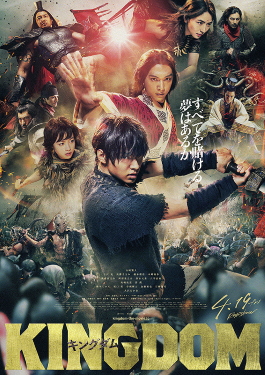
Ancient Chinese warfare returns on an unforgiving northern frontier in Kingdom 5, director Shinsuke Sato's fifth live-action adaptation of Yasuhisa Hara's bestselling historical manga. Slated for theatrical release in July 2026 across 138 bruising minutes, the blockbuster brings back Kento Yamazaki as orphan-turned-officer Xin (Shin) and Ryo Yoshizawa as determined young Qin monarch Ying Zheng (Ei Sei). Expanding beyond earlier border skirmishes, Sato pairs thundering cavalry formations with sharp royal court maneuvering inside a fractured Warring States era. Following Great General Wang Qi's unforgettable sacrifice at the Battle of Mayang, the state of Qin scrambles to steady its shaken army and fill a towering leadership void. Entrusted with Wang Qi's massive curved glaive, Shin leads his loyal peasant comrades of the newly elevated Hi Shin Unit into an independent thousand-man command, forcing him to weigh split-second battlefield instincts against disciplined tactical formations. Beside him, quiet sword prodigy Kyou Kai anchors the vanguard as veteran commanders test whether these upstart infantrymen truly merit promotion. Simultaneously inside the capital, King Ying Zheng fends off scheming ministers who doubt his dream of binding seven rival kingdoms under unified law. Determined to prove Qin's momentum remains unbroken, the young ruler authorizes an ambitious offensive across the open northern plains of Zhao—a bold gamble meant to break neighboring resistance in one stroke. Standing directly in their path, however, is Zhao's calm prime minister and master tactician Riboku (Li Mu), whose hidden supply lines and patient encirclements turn confidence into deadly traps. Pressed into brutal mountain passes and dust-choked plains, Shin and his brothers-in-arms learn how unforgiving strategy can be when outnumbered by seasoned generals. Blending visceral hand-to-hand choreography with sweeping logistical drama, Sato keeps the human cost of imperial ambition sharply visible beneath clashing banners. Positioned as a pivotal turning point for the acclaimed saga, Kingdom 5 advances Shin and Ying Zheng deeper into history's stormiest campaign.

Peter Jackson brought J.R.R. Tolkien's legendary literary fantasy mythos to an emotionally staggering, earth-shaking culmination in 2003's The Lord of the Rings: The Return of the King, shattering global box office records with $1.146 billion and sweeping all 11 Academy Awards for which it was nominated, tying Titanic and Ben-Hur for the most Oscars in cinematic history. As Sauron's colossal armies besiege the white stone fortress of Minas Tirith in the kingdom of Gondor, Gandalf the White (Sir Ian McKellen) rallies the desperate defenders alongside Aragorn (Viggo Mortensen), who must conquer his ancestral doubts, summon the cursed Army of the Dead from the Dimholt, and claim the ancient crown of Gondor. Simultaneously, King Théoden leads the Rohirrim in the glorious, thunderous cavalry charge of the Pelennor Fields. Meanwhile, small hobbits Frodo Baggins (Elijah Wood) and Samwise Gamgee (Sean Astin in an emotionally transcendent turn) crawl across the ash-choked volcanic wastes of Mordor, tormented by exhaustion, thirst, and the treacherous psychological sabotage of Gollum (Andy Serkis). Frodo's tragic surrender to the One Ring's hypnotic malevolence inside Mount Doom and Sam's unwavering devotion—'I can't carry it for you, but I can carry you!'—provide cinema's most powerful testament to love, friendship, and ordinary heroism. Augmented by Howard Shore's immortal symphonic score and groundbreaking Weta digital battlecraft, The Return of the King is the definitive fantasy epic.
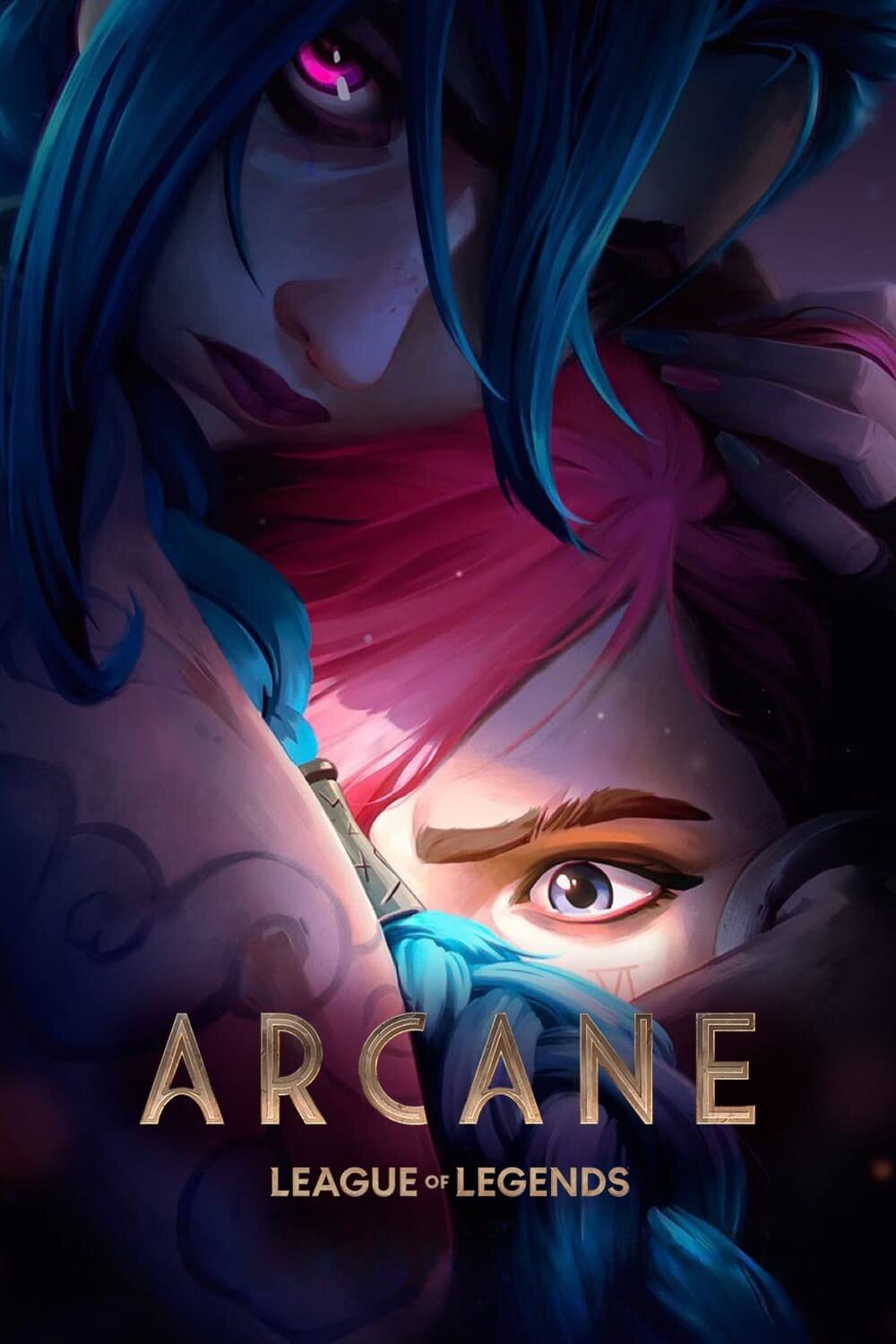
Created by Christian Linke and Alex Yee and animated in Paris by studio Fortiche Production for Netflix, Arcane shattered longtime skepticism surrounding video-game television. Spanning eighteen episodes across two completed chapters (2021 and 2024), this landmark English animated drama adapts lore from League of Legends into an emotionally bruising tale of class rebellion and sisterhood. In the bright academy city of Piltover, scientific prodigy Jayce Talis (Kevin Alejandro) and brilliant scholar Viktor (Harry Lloyd) harness unstable magical crystals dubbed Hextech, promising utopia while deepening neglect inside Zaun, the polluted subterranean slum pumping raw minerals beneath their bridges.Out in Zaun’s neon alleys, orphaned sisters Violet “Vi” (Hailee Steinfeld) and Powder (Ella Purnell) survive under gritty crime boss Vander (J.B. Blanc) until an explosive heist turns grief into irreversible division. Adopted by ruthless industrialist Silco (Jason Spisak), scarred Powder reinvents herself as chaotic bomb-maker Jinx—clashing heart-wrenchingly against Vi and idealistic enforcer Caitlyn Kiramman (Katie Leung) as civic riots ignite full-scale civil war across divided bridges.Through Season 2’s sweeping escalations across 2024, Zaun rebel leader Ekko (Reed Shannon), calculating Piltover councilor Mel Medarda (Toks Olagundoye), stoic mentor Heimerdinger (Mick Wingert), loyal tough Sevika (Amirah Vann), and imposing Noxian general Ambessa Medarda (Ellen Thomas) confront volatile arcane corruption spiraling far beyond peace treaties. Sisterly grief intertwines violently with apocalyptic science and alternate timelines before an unforgettable rooftop and Hexgate finale permanently reshapes both twin cities.Becoming the first streaming series ever to win the Primetime Emmy Award for Outstanding Animated Program upon its Netflix debut run, this monumental English production stands alongside Spider-Man: Into the Spider-Verse in expanding the dramatic boundaries of adult Western animation.

Peter Jackson's monumental high-fantasy triumph, The Lord of the Rings: The Fellowship of the Ring, achieved what Hollywood had long deemed impossible: a breathtaking, faithful, and emotionally resonant adaptation of J.R.R. Tolkien's legendary literary mythos. Set across the breathtaking, sprawling landscapes of New Zealand's Middle-earth, the epic saga begins as young, unassuming hobbit Frodo Baggins (Elijah Wood) inherits the One Ring—an instrument of absolute evil forged by the Dark Lord Sauron to enslave the world. Guided by the wise, formidable wizard Gandalf the Grey (Sir Ian McKellen), Frodo must undertake an impossible quest to destroy the Ring in the fires of Mount Doom in the dread land of Mordor. To safeguard Frodo, the Fellowship of the Ring is formed: hobbits Samwise Gamgee, Merry, and Pippin, the exiled human warrior Aragorn (Viggo Mortensen), Gondorian prince Boromir (Sean Bean), elven archer Legolas (Orlando Bloom), and dwarven warrior Gimli (John Rhys-Davies). Infused with Howard Shore's majestic, leitmotif-driven symphonic score, groundbreaking Weta Workshop practical creature design, and emotional themes of loyalty, sacrifice, and the triumph of the ordinary, the film won four Academy Awards and inaugurated cinema's greatest fantasy trilogy.

The middle chapter of Peter Jackson's immortal Tolkien saga, The Lord of the Rings: The Two Towers, masterfully deepened the emotional stakes, dark atmospheric tension, and visual ambition of the fantasy epic, grossing nearly $950 million worldwide and winning two Academy Awards. Following the fracturing of the Fellowship, the narrative splits across three perilous journeys. Frodo Baggins (Elijah Wood) and Samwise Gamgee (Sean Astin) trek into the dead marshes, captured by the tragic, schizophrenic creature Gollum / Sméagol (Andy Serkis in a historic, motion-capture revolution that permanently transformed modern visual effects acting). Across the plains of Rohan, Aragorn (Viggo Mortensen), Legolas (Orlando Bloom), and Gimli track captured hobbits Merry and Pippin, reuniting with the resurrected Gandalf the White (Ian McKellen) to free King Théoden of Rohan (Bernard Hill) from the dark sorcery of Saruman's treacherous spy Gríma Wormtongue. The narrative converges on the legendary, rain-swept Siege of Helm's Deep—a 40-minute nocturnal battle masterpiece featuring 10,000 Uruk-hai soldiers that remains the gold standard of cinematic siege warfare. Infused with Howard Shore's evocative Hardanger fiddle themes, ancient walking Ents razing Isengard, and Samwise's stirring monologue on why stories matter, The Two Towers is a colossal, emotionally resonant cinematic triumph.
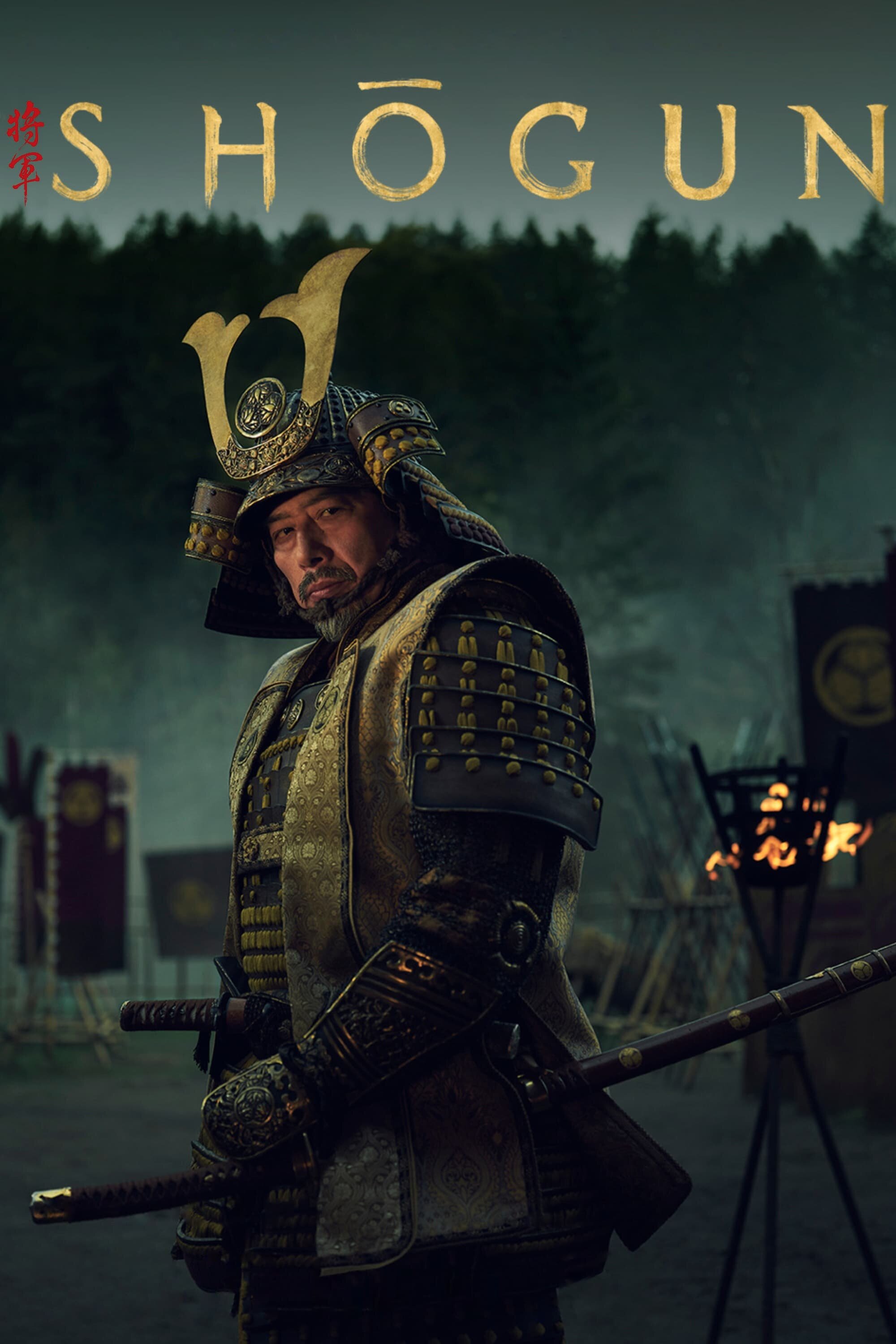
Adapted from James Clavell’s 1975 historical novel by creators Rachel Kondo and Justin Marks, Shōgun unfolds across feudal Japan in the turbulent spring of 1600 as the five-member Council of Regents tears itself apart following the Taiko’s death. Hiroyuki Sanada anchors the FX and Disney+ historical drama series as Lord Yoshii Toranaga, a patient master strategist besieged inside Osaka Castle by rival Ishido Kazunari. When an armed Protestant Dutch merchant vessel called the Erasmus washes ashore in a storm-battered fishing village, its stranded English navigator John Blackthorne (Cosmo Jarvis) becomes an unexpected pawn whose knowledge of European firearms and Catholic Jesuit trade upsets Osaka’s delicate balance of power.Blackthorne’s survival draws him directly into the orbit of Toda Mariko, portrayed by Anna Sawai, a sharp, fluent Christian noblewoman forced to interpret between two suspicious civilizations while shielding a bitter family disgrace. Alongside them stands Kashigi Yabushige (Tadanobu Asano), an opportunistic Izu warlord whose constant side-switching injects dry wit and danger into every treaty negotiation. From crimson moonlit escapes through Osaka’s harbor to volcanic earthquakes along the coast, every quiet tea ceremony carries military weight.Unlike the 1980 television version that framed events exclusively through European eyes, this bilingual Japanese and English production centers Osaka’s court politics, honor codes, and women caught within strict feudal duty—including Ochiba no Kata (Fumi Nikaido), mother to the young heir, grieving courtesan Kiku (Yuka Kouri), and dutiful Usami Fuji (Moeka Hoshi), whose private loyalties steer clan alliances before blades are drawn. Supported by sweeping period craftsmanship across ten hour-long episodes, the series swept a record-breaking eighteen Primetime Emmy Awards in 2024—including Best Drama Series, directing honors for Frederick E.O. Toye, and lead acting trophies for Sanada and Sawai—before earning multi-season renewal for streaming viewers on Disney+.
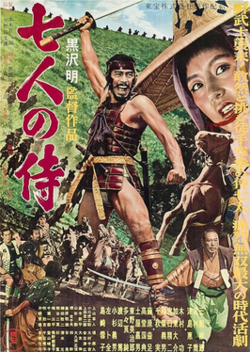
Seven Samurai is Akira Kurosawa's universally acclaimed, monumental cinematic masterpiece, widely revered as one of the greatest, most influential, and flawless films in world history, establishing the foundational grammar of modern ensemble action storytelling. Set in late sixteenth-century feudal Japan during the war-torn Sengoku period, a destitute, defenseless farming village learns that a merciless band of forty heavily armed mounted bandits plans to raid their hamlet and seize their entire autumn barley harvest. Facing inevitable starvation and slaughter, the desperate village elders decide to hire masterless samurai—ronin—to defend them, offering nothing as compensation except three daily meals of white rice. The villagers recruit Kambei Shimada, a wise, battle-weary veteran ronin of deep moral integrity who takes pity on their plight and orchestrates the strategic recruitment of six other warriors: his loyal disciple Katsushiro; the cheerful archer Gorobei; the amiable tactician Shichiroji; the stoic master swordsman Kyuzo; the resourceful wood-chopper Heihachi; and Kikuchiyo, a wildly erratic, boisterous rogue who claims samurai lineage but was born a destitute peasant. Over the weeks leading to the bandit assault, Kambei fortifies the village perimeter and trains the terrified peasants to fight with bamboo spears, while Kikuchiyo bridges the deep class resentment between the samurai and the mistrustful farmers. The climax erupts in a torrential, muddy downpour as the samurai and villagers wage a desperate, breathless battle against the bandits, culminating in profound victory tinged with tragic philosophical grief. Seven Samurai remains an immortal monument to human resilience and cinematic artistry.
Want to revisit the original?
Explore complete cast, director breakdown, trivia, and reviews for Game of Thrones.
Back to Game of Thrones Profile