

10 Movies & Shows Like Jodhaa Akbar
Finished watching Jodhaa Akbar and searching for what to binge next? Here are the 10 best matching films and series with shared themes, emotional depth, and where to stream them.
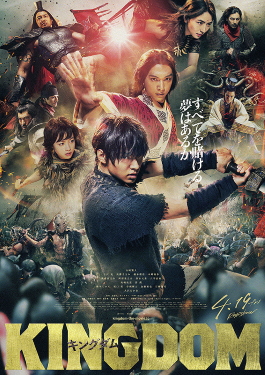
Ancient Chinese warfare returns on an unforgiving northern frontier in Kingdom 5, director Shinsuke Sato's fifth live-action adaptation of Yasuhisa Hara's bestselling historical manga. Slated for theatrical release in July 2026 across 138 bruising minutes, the blockbuster brings back Kento Yamazaki as orphan-turned-officer Xin (Shin) and Ryo Yoshizawa as determined young Qin monarch Ying Zheng (Ei Sei). Expanding beyond earlier border skirmishes, Sato pairs thundering cavalry formations with sharp royal court maneuvering inside a fractured Warring States era. Following Great General Wang Qi's unforgettable sacrifice at the Battle of Mayang, the state of Qin scrambles to steady its shaken army and fill a towering leadership void. Entrusted with Wang Qi's massive curved glaive, Shin leads his loyal peasant comrades of the newly elevated Hi Shin Unit into an independent thousand-man command, forcing him to weigh split-second battlefield instincts against disciplined tactical formations. Beside him, quiet sword prodigy Kyou Kai anchors the vanguard as veteran commanders test whether these upstart infantrymen truly merit promotion. Simultaneously inside the capital, King Ying Zheng fends off scheming ministers who doubt his dream of binding seven rival kingdoms under unified law. Determined to prove Qin's momentum remains unbroken, the young ruler authorizes an ambitious offensive across the open northern plains of Zhao—a bold gamble meant to break neighboring resistance in one stroke. Standing directly in their path, however, is Zhao's calm prime minister and master tactician Riboku (Li Mu), whose hidden supply lines and patient encirclements turn confidence into deadly traps. Pressed into brutal mountain passes and dust-choked plains, Shin and his brothers-in-arms learn how unforgiving strategy can be when outnumbered by seasoned generals. Blending visceral hand-to-hand choreography with sweeping logistical drama, Sato keeps the human cost of imperial ambition sharply visible beneath clashing banners. Positioned as a pivotal turning point for the acclaimed saga, Kingdom 5 advances Shin and Ying Zheng deeper into history's stormiest campaign.

Adapted from James Clavell’s 1975 historical novel by creators Rachel Kondo and Justin Marks, Shōgun unfolds across feudal Japan in the turbulent spring of 1600 as the five-member Council of Regents tears itself apart following the Taiko’s death. Hiroyuki Sanada anchors the FX and Disney+ historical drama series as Lord Yoshii Toranaga, a patient master strategist besieged inside Osaka Castle by rival Ishido Kazunari. When an armed Protestant Dutch merchant vessel called the Erasmus washes ashore in a storm-battered fishing village, its stranded English navigator John Blackthorne (Cosmo Jarvis) becomes an unexpected pawn whose knowledge of European firearms and Catholic Jesuit trade upsets Osaka’s delicate balance of power.Blackthorne’s survival draws him directly into the orbit of Toda Mariko, portrayed by Anna Sawai, a sharp, fluent Christian noblewoman forced to interpret between two suspicious civilizations while shielding a bitter family disgrace. Alongside them stands Kashigi Yabushige (Tadanobu Asano), an opportunistic Izu warlord whose constant side-switching injects dry wit and danger into every treaty negotiation. From crimson moonlit escapes through Osaka’s harbor to volcanic earthquakes along the coast, every quiet tea ceremony carries military weight.Unlike the 1980 television version that framed events exclusively through European eyes, this bilingual Japanese and English production centers Osaka’s court politics, honor codes, and women caught within strict feudal duty—including Ochiba no Kata (Fumi Nikaido), mother to the young heir, grieving courtesan Kiku (Yuka Kouri), and dutiful Usami Fuji (Moeka Hoshi), whose private loyalties steer clan alliances before blades are drawn. Supported by sweeping period craftsmanship across ten hour-long episodes, the series swept a record-breaking eighteen Primetime Emmy Awards in 2024—including Best Drama Series, directing honors for Frederick E.O. Toye, and lead acting trophies for Sanada and Sawai—before earning multi-season renewal for streaming viewers on Disney+.
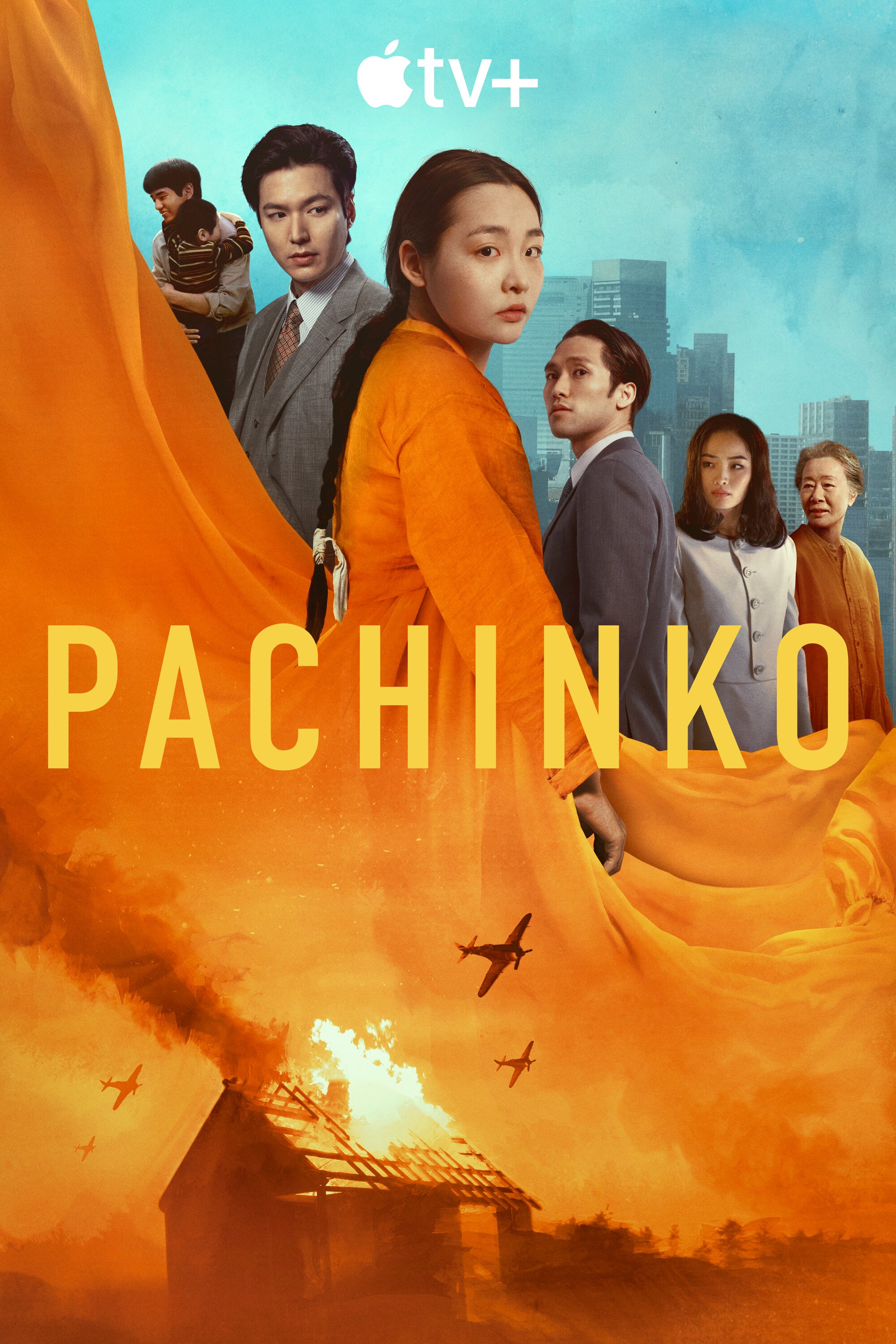
Pachinko is a sweeping Korean romance and historical epic television series streaming on Apple TV+, chronicling the hopes, passionate romances, and fierce perseverance of four generations of a Korean immigrant family across Korea, Japan, and America.

Descendants of the Sun is a legendary Korean romance drama television series streaming on Apple TV, capturing the fateful love story between a special forces captain and a skilled surgeon dispatched to a war-torn fictional country on humanitarian operations.

The Longest Day in Chang'an is a lavish Mandarin historical action mystery drama television series streaming on Apple TV+ and Prime Video. During the Lantern Festival in ancient Chang'an, an imprisoned detective and a Taoist intelligence officer have just 24 hours to foil a devastating terrorist conspiracy.

The Legend of Bhagat Singh (2002), directed with monumental cinematic rigor, patriotic fervor, and historical authenticity by Rajkumar Santoshi, stands as an indisputable summit of Indian biographical cinema, earning Ajay Devgn his second National Film Award for Best Actor. Produced by Tips Industries and written by veteran screenwriter Anjum Rajabali with dialogues by Piyush Mishra, the film provides an uncompromising, deeply researched chronicle of the life, intellectual philosophy, and supreme martyrdom of Shaheed Bhagat Singh, who was hanged by the British colonial regime in 1931 at the tender age of twenty-three. The narrative begins with the harrowing trauma of the 1919 Jallianwala Bagh massacre, where a young Bhagat witnesses the slaughter of innocent citizens, planting the seeds of lifelong revolutionary defiance. As he grows into a charismatic, fiercely intellectual youth, Bhagat rejects conventional domestic comfort to join the Hindustan Socialist Republican Association (HSRA) alongside fellow freedom fighters Chandrashekhar Azad (Akhilendra Mishra), Sukhdev (Sushant Singh), and Rajguru (D. Santosh). Following the brutal police lathi-charge that killed Lala Lajpat Rai, Bhagat and his comrades avenge Rai's death by assassinating British police officer J.P. Saunders, subsequently bombing the Central Legislative Assembly in Delhi to 'make the deaf hear' before voluntarily surrendering to turn the colonial courtroom into a public ideological battleground. Inside Lahore Central Jail, Bhagat leads a historic 116-day hunger strike demanding basic human rights for political prisoners, enduring horrific physical torture without flinching. Ajay Devgn's portrayal of Bhagat Singh is universally hailed as a transcendent acting tour-de-force: embodying intellectual brilliance, razor-sharp socialist ideology, incandescent moral courage, and serene spiritual equanimity as he kisses the hangman's noose. Enhanced by A. R. Rahman's soul-stirring, timeless patriotic compositions—including 'Mera Rang De Basanti Chola', 'Sarfaroshi Ki Tamanna', 'Desh Mere Desh', and 'Pagdi Sambhal Jatta'—the film won two National Film Awards and three Filmfare Awards, standing as an immortal national treasure. The Legend of Bhagat Singh remains the definitive cinematic tribute to India's foremost socialist revolutionary, celebrated for its unflinching historical veracity and profound intellectual depth. Ajay Devgn's transcendent, National Award-winning portrayal captured not merely the mythic courage of Bhagat Singh, but the restless intellectual fire of a young philosopher who envisioned a truly egalitarian, secular republic free from all exploitation. Guided by Rajkumar Santoshi's masterly direction and A. R. Rahman's incandescent musical score, Devgn breathed immortal life into the revolutionary icon, creating an emotionally overwhelming cinematic experience that continues to inspire patriotic devotion and civic consciousness across generations.
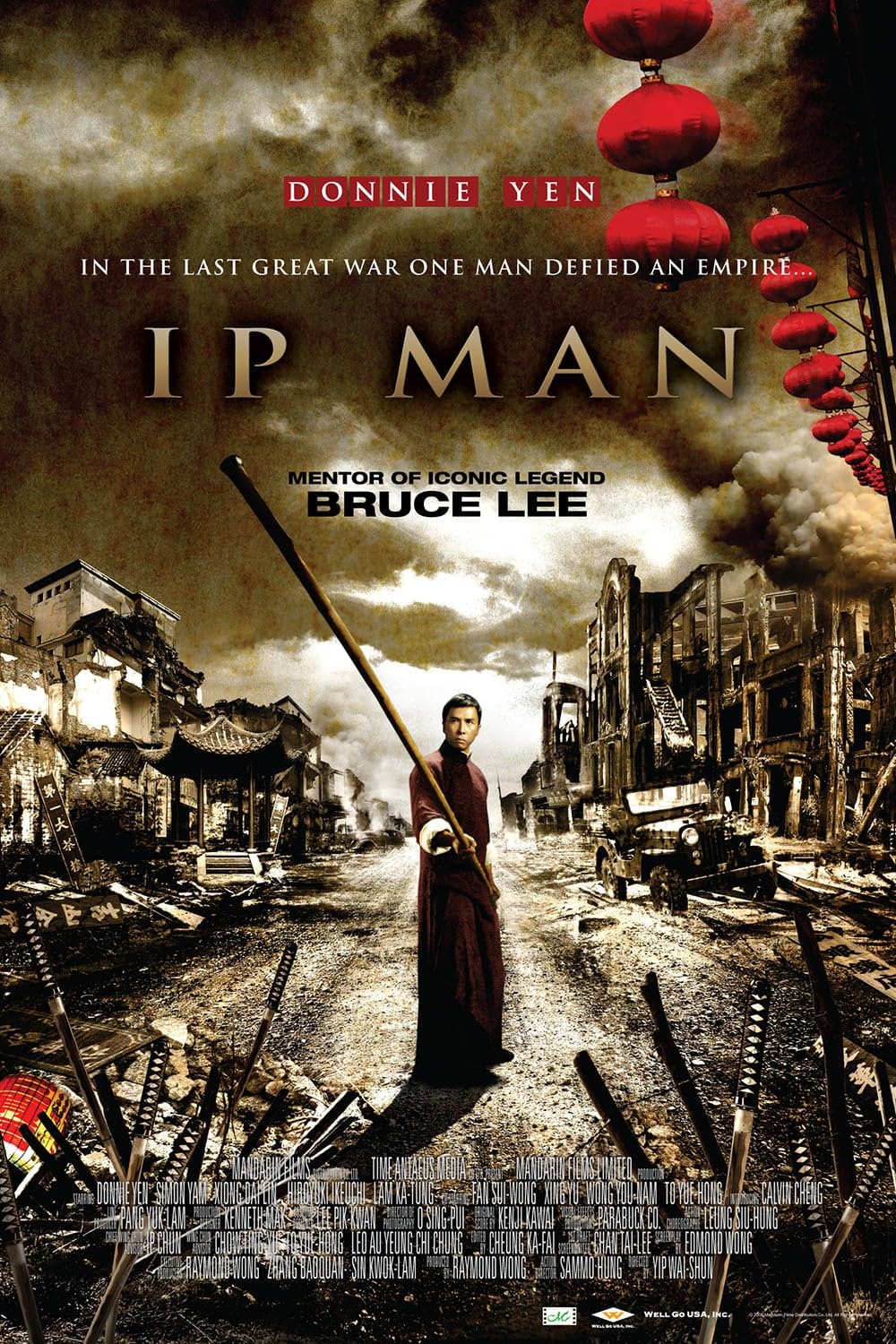
Wilson Yip directs Donnie Yen in this seminal Cantonese historical action drama chronicling the life of Wing Chun grandmaster Ip Man in 1930s Foshan, who rises to defend his community and national pride during the Japanese occupation of China.
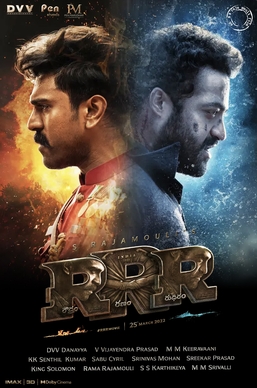
RRR (2022), directed with earth-shattering mythic vision, visual grandeur, and kinetic dynamism by global visionary auteur S. S. Rajamouli, is an unprecedented, Oscar-winning worldwide cinematic phenomenon that grossed nearly 1400 crores globally, winning the Academy Award for Best Original Song and universal international acclaim. While the breathtaking fictional epic revolves around the friendship between two legendary real-life Indian revolutionaries, Alluri Sitarama Raju (Ram Charan) and Komaram Bheem (Jr. NTR), the entire ideological foundation, emotional soul, and narrative engine of the epic is anchored by Ajay Devgn in an unforgettable, monumental extended guest appearance as Sardar Venkata Rama Raju. Appearing in the film's legendary, soul-stirring flashback chapter, Venkata Rama Raju is a former British Indian Army weapons training instructor who secretly operated as an undercover nationalist revolutionary leader, stockpiling firearms and training tribal villagers to mount an armed insurrection against the British Crown. When the colonial army surrounds their village with artillery, Venkata Rama Raju makes the supreme, heartbreaking sacrifice: he commands his young son, Rama Raju, to use him as human target practice to demonstrate firearm proficiency to the British officers, ensuring young Raju is inducted into the British police force to covertly arm every freedom fighter across India with rifles. Devgn's performance is an awe-inspiring tour-de-force of incandescent moral courage, paternal sacrifice, and revolutionary martyrdom. His roaring war slogan—'Load, Aim, Shoot!'—and his unblinking serenity as he embraces martyrdom by detonating dynamite to incinerate the colonial battalion provide the emotional bedrock that justifies every subsequent heroic act by Ram Charan's Raju. Photographed with mythic scale by K. K. Senthil Kumar and backed by M. M. Keeravani's thunderous musical compositions, Devgn's performance in RRR left an indelible imprint on global audiences. In S. S. Rajamouli's global Oscar-winning magnum opus RRR, Ajay Devgn delivered a performance of transcendent mythic weight as Sardar Venkata Rama Raju, providing the foundational ideological spark and moral soul that drives the entire epic. His heartbreaking, selfless sacrifice—commanding his own son to use him as target practice to deceive the colonial British battalion—stands as one of the most emotionally devastating moments in Indian cinematic history. Devgn's roaring battle cry 'Load, Aim, Shoot!' continues to echo across global screens as an immortal symbol of revolutionary martyrdom.

Border (1997), written, produced, and directed with monumental patriotic grandeur, raw realism, and devastating emotional power by J. P. Dutta, stands as an indisputable cinematic masterpiece and one of the highest-grossing, most celebrated war films in Indian cinema history. Recreating the historic 1971 Battle of Longewala, the film features Suniel Shetty in arguably the most revered, emotionally stirring, and defining performance of his career as Subedar Ratan Singh, a courageous officer of the Border Security Force (BSF) stationed in the unforgiving, sun-scorched desert outpost of Rajasthan alongside the 23rd Battalion Punjab Regiment led by Major Kuldip Singh Chandpuri (Sunny Deol). Subedar Ratan Singh represents the soul of the frontline soldier: a fiercely patriotic son of Rajasthan who loves his native Thar desert as his mother, while carrying a tender emotional ache for his newlywed bride Kammo (Sharbani Mukherjee). When a massive Pakistani mechanized armored division comprising over forty tanks and thousands of infantry troops crosses the international border in a surprise nighttime offensive, Ratan Singh and his small contingent of 120 Indian soldiers find themselves heavily outmatched and outgunned. Refusing to surrender an inch of sovereign Indian territory, Ratan Singh fights with ferocious, awe-inspiring valor, utilizing anti-tank mines and heavy rocket launchers to decimate enemy armored columns. The climactic scene of Subedar Ratan Singh charging enemy tanks with anti-tank mines strapped to his chest, embracing heroic martyrdom while clutching the sacred desert soil of his motherland, remains one of the most heartbreaking and spiritually electrifying moments in Indian film lore. Anu Malik composed an immortal, timeless soundtrack featuring Javed Akhtar's soul-stirring lyrics, highlighted by the nationwide patriotic anthem 'Sandese Aate Hain' and 'Ae Jaate Hue Lamhon'. Winning multiple National Film Awards and Filmfare Awards, Border emerged as a monumental all-time blockbuster, forever immortalizing Suniel Shetty in the national consciousness as an iconic cinematic patriot. Suniel Shetty's portrayal of Subedar Ratan Singh in Border represents an immortal cinematic tribute to the valor and ultimate sacrifice of Indian soldiers. His legendary climactic charge across the sand dunes with anti-tank mines remains an indelible, emotionally transcendent moment in Indian cultural history, cementing Shetty's reputation as a national cinematic icon of patriotism.

Based on an emotional true story, A Taxi Driver stars Song Kang-ho as a widowed Seoul cab driver who unknowingly takes German journalist Jürgen Hinzpeter to the city of Gwangju during the violent 1980 pro-democracy uprising.
Want to revisit the original?
Explore complete cast, director breakdown, trivia, and reviews for Jodhaa Akbar.
Back to Jodhaa Akbar Profile