
 TonightOnScreen Catalog
Explore Entertainment
Search our curated catalog of cinema releases, binge-worthy series, and where to stream them.

Indian
Directed by S. Shankar, the 1996 vigilante action thriller Indian (Hindustani) made history as India's official submission for the Best Foreign Language Film at the 69th Academy Awards, winning three National Film Awards including Best Actor for Kamal Haasan. Haasan delivers an immortal, prosthetic-laden double performance as Senapathy, a 70-year-old former veteran of Subhas Chandra Bose's Indian National Army (INA), and his corrupt modern son Chandrabose. Living in Chennai, Senapathy is sickened by the systemic cancer of bribery and administrative corruption that poisons public healthcare, transport, and police services, leading to the tragic death of his daughter Kasturi. Utilizing the ancient, lethal martial art of Varma Kalai (pressure point strikes that paralyze or kill), Senapathy launches an unyielding vigilante crusade, assassinating corrupt municipal commissioners, doctors, and treasury clerks on live television. The moral tragedy peaks when Senapathy discovers his own son Chandrabose took bribes that resulted in a fatal school bus brake failure, forcing the father to hunt down his own child in the name of justice. With A. R. Rahman's legendary score, Indian remains a monumental masterpiece.

Omkara
Directed by Vishal Bhardwaj, the 2006 crime tragedy Omkara adapted Shakespeare's Othello into the rustic, gun-toting hinterlands of Western Uttar Pradesh with ferocious authenticity and literary brilliance, winning three National Film Awards. Ajay Devgn stars with smoldering intensity as Omkara 'Omi' Shukla, an outlaw gang leader and political enforcer for corrupt local politician Bhaisaab (Naseeruddin Shah). Omi elopes with the fair, innocent Dolly Mishra (Kareena Kapoor Khan in an acclaimed performance of Desdemona). When Omi promotes the educated, loyal Kesu Firangi (Vivek Oberoi as Cassio) over his faithful, limping lieutenant Ishwar 'Langda' Tyagi (Saif Ali Khan in a career-defining, historic performance of Iago), Langda's ego is mortally wounded. Langda plots a venomous psychological revenge, using an embroidered bridal waistband (kamarbandh) to convince the deeply insecure Omi that Dolly is having an illicit affair with Kesu. Driven to madness by the green-eyed monster of jealousy, Omi suffocates his beloved on their wedding bed before discovering the truth too late. Featuring Saif's unhinged genius and the iconic dance track 'Beedi Jalaile', Omkara is an undisputed classic.
Maqbool
Vishal Bhardwaj's 2003 crime masterpiece Maqbool kicked off his legendary Shakespearean trilogy by brilliantly adapting Macbeth into the ruthless, superstitious Mumbai underworld. Irrfan Khan delivers a career-defining, tour de force performance as Miyan Maqbool, the loyal, right-hand enforcer of aging underworld don Jahangir Khan, known respectfully as 'Abbaji' (Pankaj Kapur in a National Film Award-winning masterclass in understated power and casual menace). Maqbool is secretly in love with Nimmi (Tabu in an unforgettable, seductive turn as Lady Macbeth), Abbaji's young mistress. Nimmi insidiously fuels Maqbool's ambition, urging him to murder Abbaji in his bed and seize the syndicate. Two corrupt, astrology-obsessed police inspectors, Pandit and Purohit (Om Puri and Naseeruddin Shah playing the legendary Three Witches), predict that Maqbool will indeed take over the empire, but his reign will end in blood. When Maqbool executes the assassination, he is consumed by guilt, visual hallucinations, and the mutiny of loyal gang members. Maqbool established Vishal Bhardwaj and Irrfan Khan as titans of realistic Indian cinema. With unforgettable turns by Pankaj Kapur as the ruthless underworld don Jahangir Khan (Abbaji) and Tabu as the seductive Nimmi, Maqbool proved that classical literary tragedy could seamlessly illuminate the gritty realities of Mumbai's underworld, becoming a timeless classic of contemporary world cinema.
Article 15
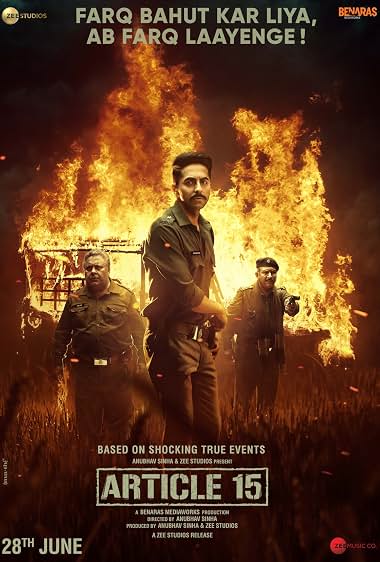
Anubhav Sinha's hard-hitting 2019 crime procedural drama Article 15 stands as one of the most courageous, socially provocative, and critically lauded films in modern Hindi cinema, winning three Filmfare Awards. Inspired by true events, the film stars Ayushmann Khurrana as Ayan Ranjan, a privileged, foreign-educated IPS officer who receives his first posting in the rural hinterlands of Lalgaon, Uttar Pradesh. When two teenage Dalit girls are found gang-raped and hanged from a banyan tree, local subordinate officers—led by the deeply corrupt, casteist Circle Officer Brahmadutt Singh (Manoj Pahwa) and Jatav officer Nishad (Zeeshan Ayyub)—attempt to cover up the crime as an honor killing to protect high-caste landlords. Horrified by the entrenched, dehumanizing caste hierarchy that dictates who can touch whom or draw water from which well, Ayan invokes Article 15 of the Indian Constitution, which prohibits discrimination on grounds of religion, race, caste, sex, or place of birth. Navigating swampy fields, political threats, and departmental apathy, Ayan leads a tireless manhunt for a missing third victim, delivering an unsparing, searing indictment of institutional caste prejudice. Anubhav Sinha's uncompromising directorial vision, Ewan Mulligan's gritty cinematography, and Ayushmann Khurrana's measured intensity make Article 15 a watershed moment in socially conscious Indian cinema that confronts prejudice with unflinching honesty.
Chandu Champion
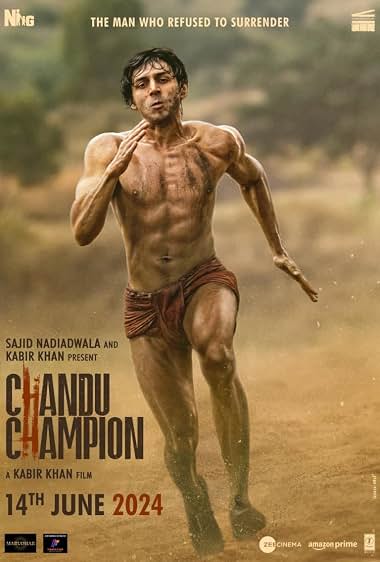
Directed by Kabir Khan and produced by Sajid Nadiadwala, Chandu Champion is an inspiring, emotionally profound biographical sports drama that earned universal critical acclaim and showcased an extraordinary dramatic transformation from Kartik Aaryan. The film dramatizes the unbelievable, real-life journey of Murlikant Petkar, India's first-ever Paralympic gold medalist. From being mocked and labeled 'Chandu' (loser) in his childhood village of Islampur, Petkar's relentless dream of Olympic glory leads him to join the Indian Army as a jawan and boxer under the compassionate, strict mentorship of Coach Tiger Ali (Vijay Raaz in an exquisite, soul-stirring performance). During the 1965 Indo-Pak war, Petkar's camp is bombed by enemy aircraft; he survives nine bullet wounds and is run over by an army vehicle, waking from a two-year coma with permanent paraplegia. Overcoming severe societal pity and physical disability, Petkar transforms into an international freestyle swimmer, capturing the historic gold medal at the 1972 Summer Paralympics in Heidelberg with a world-record time. A masterclass in human resilience, grit, and triumph over impossible odds. Kartik Aaryan's astounding physical transformation, disciplined method acting, and director Kabir Khan's nuanced emotional pacing illuminate Petkar's relentless perseverance, delivering an inspiring sports biopic that celebrates unsung national heroes with immense dignity.

Fargo
Joel and Ethan Coen's 1996 neo-noir black comedy crime masterpiece Fargo stands as a pitch-perfect synthesis of regional Midwestern eccentricity, tragic greed, and shocking violence, winning two Academy Awards for Best Actress and Best Original Screenplay. Set across the blinding, frozen, snow-swept tundra of Minnesota and North Dakota, the narrative begins when pathetic, debt-ridden Minneapolis car salesman Jerry Lundegaard (William H. Macy in a sweat-drenched, iconic turn) concocts a desperate, half-baked scheme: hiring two sleazy petty criminals, Carl Showalter (Steve Buscemi) and the mute psychopath Gaear Grimsrud (Peter Stormare), to kidnap his own wealthy wife to extort a $1 million ransom from his disdainful father-in-law. When the botched abduction results in three senseless roadside murders, cheerful, seven-months-pregnant Brainerd police chief Marge Gunderson (Frances McDormand in an Oscar-winning, immortal performance of warmth and moral clarity) takes charge of the investigation. Featuring Carter Burwell's majestic Scandinavian-inspired score and Roger Deakins's vast whiteout cinematography—culminating in the infamous woodchipper sequence—Fargo is cinematic genius. Roger Deakins's stark, snow-drenched cinematography combined with Carter Burwell's haunting orchestral score cements Fargo as an enduring dark comedy milestone celebrated for its eccentric regional dialogue and eccentric moral worldview.

The Social Network
Directed with razor-sharp surgical precision by David Fincher and written by Aaron Sorkin, The Social Network won three Academy Awards and is hailed as the definitive modern tragedy of the 21st century. Jesse Eisenberg delivers a career-defining, Oscar-nominated performance as Mark Zuckerberg, a brilliant, socially insecure 19-year-old Harvard sophomore who, dumped by his girlfriend in the fall of 2003, creates a misogynistic campus website called Facemash that crashes Harvard's servers. Evolving this coding concept into 'TheFacebook' alongside his wealthy, loyal best friend and CFO Eduardo Saverin (Andrew Garfield in a heartbreaking, emotionally volcanic turn), the platform spreads like wildfire across global universities. When aristocratic rowing champions the Winklevoss twins claim Zuckerberg stole their intellectual property, and charismatic Napster co-founder Sean Parker (Justin Timberlake) seduces Mark into Silicon Valley venture capital, Eduardo is ruthlessly diluted out of the company. Anchored by Sorkin's machine-gun dialogue, Kirk Baxter and Angus Wall's Oscar-winning rhythmic editing, and Trent Reznor and Atticus Ross's groundbreaking ambient electronic score, The Social Network is a peerless Greek tragedy.

Company
Directed by Ram Gopal Varma, the 2002 neo-noir gangster thriller Company is widely hailed as the second installment in Varma's acclaimed Gangster Trilogy, winning seven Filmfare Awards and screening at the Austin Film Festival. Inspired by the real-life split between Dawood Ibrahim and Chhota Rajan in the D-Company syndicate, the film stars Ajay Devgn in an iconic, smoldering performance as Malik, a quiet, ruthless, and calculating underworld kingpin who runs organized crime like a sleek transnational corporation. Malik recruits Chandu (Vivek Oberoi in a sensational, multi-award-winning debut), an ambitious, fearless young slum enforcer. Together, they eliminate rival gang leaders and move their operations overseas to Hong Kong and Kenya to evade Mumbai Joint Commissioner of Police Veerappalli (Malayalam superstar Mohanlal in an extraordinary, naturalistic performance). However, misunderstandings engineered by corrupt politicians and malicious henchmen cause a fatal rift between Malik and Chandu, triggering a vicious international war of assassinations. Featuring Sandeep Chowta's atmospheric electronic score and Hemant Chaturvedi's cold cinematography, Company is a genre-defining triumph.
Haider
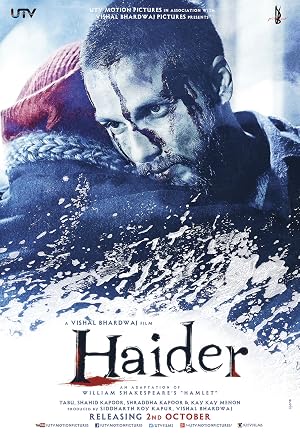
Directed by Vishal Bhardwaj and co-written with Kashmiri journalist Basharat Peer, Haider completed Bhardwaj's monumental Shakespearean tragedy trilogy (following Maqbool and Omkara), winning five National Film Awards and the People's Choice Award at the Rome Film Festival. Transposing Shakespeare's Hamlet to the snow-covered, conflict-torn Kashmir Valley in 1995, Shahid Kapoor delivers a career-defining, volcanic performance as Haider Meer, a student of poetry who returns to Srinagar to discover his doctor father has disappeared following an army raid, his ancestral home burned down, and his mother Ghazala (Tabu in an astonishing, incestuously charged performance of Queen Gertrude) living cheerfully with his devious politician uncle Khurram (Kay Kay Menon as Claudius). Driven to the brink of madness, Haider is approached by the enigmatic Roohdar (Irrfan Khan in an immortal cameo), who reveals that Khurram betrayed Haider's father to his death in an army interrogation camp. Featuring Shahid Kapoor's unhinged 'Chutzpah' town square monologue, Pankaj Kumar's pristine snow cinematography, and Vishal Bhardwaj's haunting Kashmiri folk compositions, Haider is a cinematic milestone. Vishal Bhardwaj's evocative musical compositions, Gulzar's poetic lyrics, and Pankaj Kumar's snowbound cinematography in Kashmir establish Haider as one of the most intellectually rigorous and emotionally devastating literary adaptations in world cinema.

Baahubali: The Beginning
S. S. Rajamouli's 2015 fantasy epic Baahubali: The Beginning is the watershed landmark that single-handedly conceived the modern 'Pan-Indian Film' industry. Set in the fictional, grand kingdom of Mahishmati, the film opens with Queen Mother Sivagami (Ramya Krishna) drowning in a river while holding an infant boy aloft above the raging waters. Raised by tribal villagers beneath towering waterfalls, the boy grows into the extraordinarily strong, adventurous Shivudu (Prabhas). Driven by curiosity and love for rebel warrior Avantika (Tamannaah Bhatia), Shivudu scales the colossal waterfalls and learns that his mother is Devansena (Anushka Shetty), held in chains for 25 years by the tyrannical Emperor Bhallaladeva (Rana Daggubati). Shivudu rescues Devasena and discovers his royal identity: he is Mahendra Baahubali, the son of the beloved, deceased King Amarendra Baahubali. Through an extended flashback of grand chariot warfare against the barbarian Kalakeya hordes, Sivagami crowns Amarendra as the true king, leading to the greatest cliffhanger in cinematic history: loyal royal slave Kattappa (Sathyaraj) confessing in tears that he was the one who murdered Baahubali. A cultural phenomenon that broke every box office record in India.

Pushpa 2: The Rule
Sukumar's record-setting 2024 pan-Indian action epic Pushpa 2: The Rule continues the seismic saga of Pushpa Raj (Allu Arjun) as he transitions from a rogue smuggler into the supreme, unassailable kingpin of the multi-billion-dollar international red sandalwood syndicate. Building upon the explosive ending of The Rise, Pushpa's bitter, humiliating rivalry with the sadistic, vengeful police officer Bhanwar Singh Shekhawat (Fahadh Faasil) erupts into all-out psychological and physical warfare. When Pushpa mysteriously vanishes from a high-security hospital, violent riots erupt across Andhra Pradesh as rural masses hail him as a folk hero, while intelligence agencies launch a massive manhunt. Featuring Allu Arjun's breathtaking, critically lauded 'Gangamma Jathara' traditional sari fight sequence, high-octane international smuggling networks spanning Japan and China, and emotional depth explored alongside Srivalli (Rashmika Mandanna), Pushpa 2 set unprecedented pre-release and opening day box office records across India. With Devi Sri Prasad's thunderous compositions and Mirosław Brożek's sweeping cinematography, The Rule elevated Indian mass cinema to staggering international heights.

La La Land
Written and directed by Damien Chazelle at just 31 years of age, La La Land is a dazzling, vibrant modern musical that reinvents classic Hollywood technicolor romanticism with contemporary emotional realism. Set against the sun-drenched freeways, planetarium skies, and smoky jazz clubs of modern Los Angeles, the film follows the intoxicating romance between Mia Dolan (Emma Stone in her first Oscar-winning role), an aspiring actress juggling soul-draining auditions while working as a Warner Bros. lot barista, and Sebastian Wilder (Ryan Gosling), a purist jazz pianist who dreams of opening his own club to preserve dying musical heritage. As their seasons together unfold—bursting into joyously choreographed musical numbers like 'Another Day of Sun' and the hilltop tap dance 'A Lovely Night'—their passionate support for each other's dreams ironically pulls them down diverging artistic paths. Chazelle balances classic MGM escapism with bittersweet truth, culminating in a legendary, wordless alternate-reality epilogue that captures what might have been. Earning a record-tying 14 Academy Award nominations and winning six Oscars including Best Director, Best Actress, and Justin Hurwitz's score, La La Land is cinema's purest love letter to the dreamers.